Supreme Court Deliberates on Election Day Definition in Landmark Case
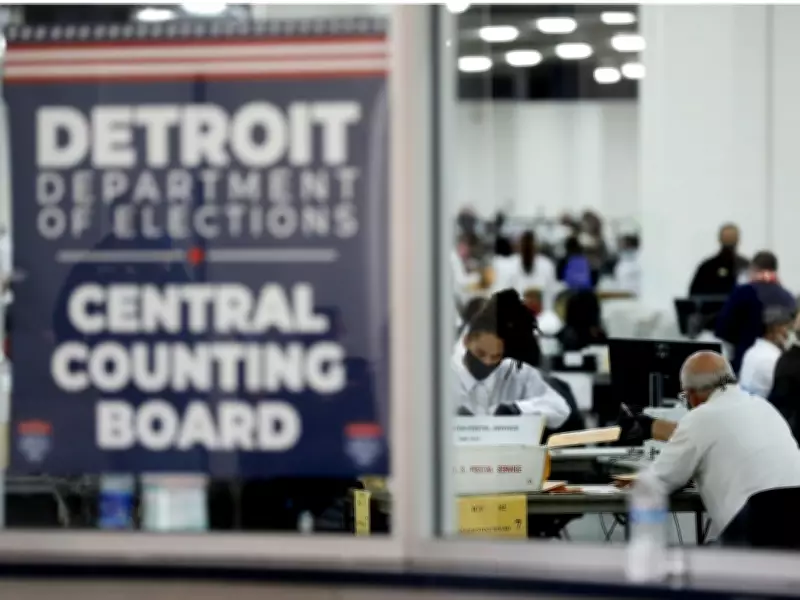
The United States Supreme Court recently heard arguments in a pivotal case that questions the very meaning of Election Day, a development that has sparked significant concern among Democratic circles. The case, Watson v. Republican National Committee, centers on a Mississippi statute permitting the counting of mail-in ballots received well after the official Election Day.
Challenging Post-Election Ballot Counting
Mississippi is one of fourteen states, including major players like California and New York, that implement a "grace period" for ballot returns. In Mississippi, this window extends for five business days post-Election Day, though other states allow even longer durations. The Republican National Committee is contesting this law, arguing it undermines the integrity and finality of the electoral process.
Defenders of the Mississippi law advocate for states' rights, citing the U.S. Constitution's provision that grants state legislatures the authority to determine the "times, places, and manner of holding federal elections." However, it is Congress that historically set the Election Day date, establishing it as the Tuesday after the first Monday in November back in 1824, a tradition that has remained unchanged for nearly two centuries.

National Implications for Election Integrity
At the heart of this legal battle is what many consider a cornerstone of democratic civic virtue: the principle that Election Day represents the single day when all votes are tallied and results are definitively known. The erosion of this concept through extended ballot-counting periods has raised alarms about potential fraud and public confidence in electoral outcomes.
The Supreme Court's decision in this case could have far-reaching consequences, potentially impacting the upcoming midterm elections in November. Justice Brett Kavanaugh has previously expressed support for limiting ballot counting to Election Day to prevent "chaos and suspicions of impropriety" that may arise if absentee ballots continue to arrive and alter election results post-deadline.
State Variations and Legal Precedents
New York's law, for instance, allows ballots postmarked by Election Day to be counted up to seven days later, and even ballots lacking a postmark are presumed to have been timely submitted. Critics, including House Speaker Mike Johnson, argue that such provisions invite cheating, pointing to instances in California during the 2024 elections where Republican leads diminished as late ballots were counted.
Despite the controversy, mail-in voting is firmly entrenched in the American electoral system, with approximately 30% of voters utilizing this method in the 2024 presidential election. Of the 24 million mail-in ballots cast, about 725,000 arrived late in states with grace periods and were subsequently counted. While this represents a small percentage overall, in tightly contested races, these late ballots can disproportionately influence outcomes.
Shifts in State Policies and Future Outlook
In anticipation of the Supreme Court's ruling, states like Ohio, Kansas, North Dakota, and Utah have already eliminated their grace periods. A clear majority of states—36 in total—currently require ballots to arrive by Election Day to be counted, a standard that proponents argue does not constitute widespread disenfranchisement but rather ensures electoral transparency.
Democrats contend that striking down Mississippi's grace period could create chaos for the midterms, but opponents counter that states would have ample time, over five months, to inform voters of earlier mailing deadlines. They emphasize that submitting ballots with sufficient lead time is a minor inconvenience compared to the privilege of participating in a representative democracy.
The Supreme Court's deliberations are ongoing, with the three liberal justices—Elena Kagan, Sonia Sotomayor, and Ketanji Brown Jackson—showing interest in the argument that Election Day merely signifies when voters decide, not when votes are counted. However, the overarching consensus is that the court's decision will shape the future of election integrity and public trust in the democratic process for years to come.