The Trump administration is responding to America's political violence problem with a renewed focus on domestic terrorism. However, legal experts and civil liberties advocates warn that the federal government's broad definition of terrorism is once again threatening constitutionally protected rights by targeting ideology rather than just violent acts.
A Broad and Concerning Definition
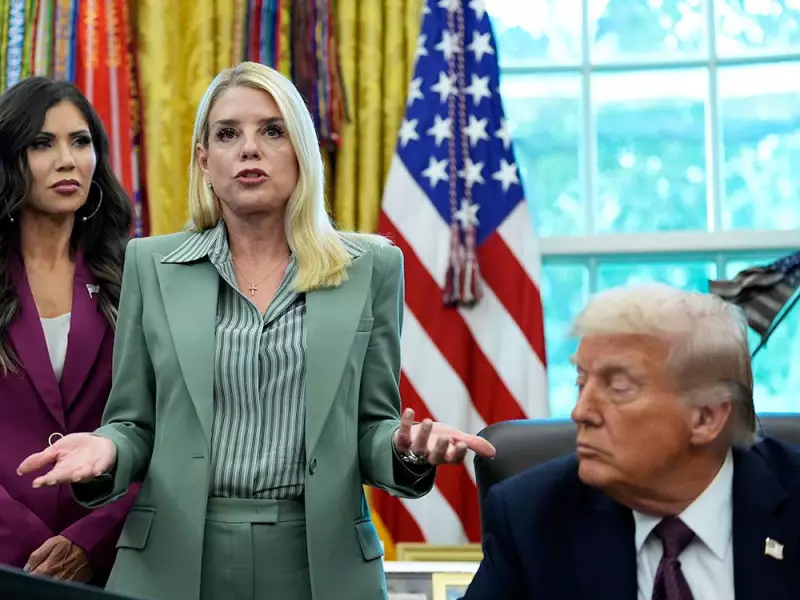
In early December 2025, a memo from the office of Attorney General Pam Bondi was revealed by journalist Ken Klippenstein. The directive instructed federal prosecutors and law enforcement to prioritize cases against "Antifa-aligned extremists." The memo defined this extremism with an exceptionally wide range of beliefs and actions.
These included not only serious threats like support for political assassinations, but also ideological stances such as "extreme views in favor of mass migration and open borders; adherence to radical gender ideology, anti-Americanism, anti-capitalism, or anti-Christianity" and "hostility towards traditional views on family, religion, and morality." This framing effectively labels a set of political and social viewpoints as potential terrorism.

Constitutionally Protected Activities Under Scrutiny
The Bondi memo and related statements from officials have explicitly categorized non-violent activities as forms of violence. Homeland Security Secretary Kristi Noem stated in July 2025 that violence includes "doxing them, it's videotaping them where they're at when they're out on operations." This refers to revealing the identities of government agents and recording Immigration and Customs Enforcement (ICE) activities.
These assertions directly clash with First Amendment protections. Recording law enforcement in public is a protected right, provided the person does not interfere. Similarly, publishing such recordings or the identities of public officials is generally protected speech. The Foundation for Individual Rights and Expression (FIRE) emphasizes that disclosing information about government agents to hold them accountable is a crucial freedom.
A Recurring Threat to Dissent
This is not a novel approach. The article notes that presidents from both major parties have historically persecuted political opponents under the banner of fighting extremism. The Trump administration's September 2025 presidential directive on domestic terrorism, which referenced the assassination of commentator Charlie Kirk, set the stage for this expansive focus.
The result, critics argue, is a predictable erosion of civil liberties. By conflating violent crime with ideological dissent and peaceful activism, the government risks criminalizing political opposition and chilling free speech. The administration's response to genuine violence, therefore, creates a significant collateral threat to the foundational rights of all Americans.