UK High Court Declares Government's Ban on Palestine Action Protest Group Unlawful
In a landmark ruling with far-reaching implications for civil liberties and protest rights, Britain's High Court has determined that the government acted illegally in outlawing the activist organization Palestine Action. The decision, delivered on February 13, 2026, represents a significant legal setback for authorities who had sought to suppress the group's activities amid heightened tensions surrounding the ongoing Israel-Hamas conflict.
A Legal Victory for Activists Amidst International Tensions
The court found that the government's move to ban Palestine Action lacked proper legal justification and violated established principles of freedom of assembly and expression. This ruling comes at a time when protests related to the Middle East conflict have become increasingly frequent across the United Kingdom, with activists demanding greater accountability and policy changes regarding international relations.
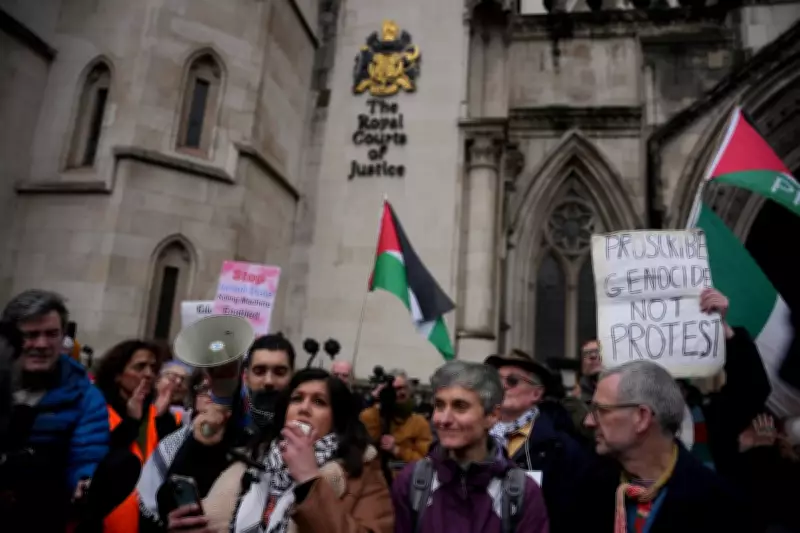
Supporters of Palestine Action celebrated the decision outside the Royal Court of Justice in London, where the case was heard. The group, known for its direct action campaigns targeting companies and institutions it alleges are complicit in human rights violations, has faced increasing scrutiny from law enforcement in recent years.

Broader Implications for Protest Rights and Government Authority
Legal experts suggest this ruling could establish important precedents regarding the limits of government power to restrict protest organizations, particularly those operating within controversial political contexts. The court's decision emphasizes that even during periods of international conflict and domestic tension, fundamental democratic rights must be protected through proper legal channels.
The timing of this ruling is particularly significant, as it coincides with ongoing debates about the appropriate balance between national security concerns and civil liberties in democratic societies. The government had argued that Palestine Action's activities posed a threat to public order and safety, but the court found insufficient evidence to justify such an extreme measure as outright prohibition.
Context of the Israel-Hamas Conflict and UK Response
The Israel-Hamas war has sparked widespread protests across Europe and North America, with activists calling for ceasefires, humanitarian aid for Gaza, and changes to foreign policy regarding the conflict. In the United Kingdom, these demonstrations have sometimes led to clashes with police and accusations of antisemitism, creating complex challenges for authorities attempting to maintain public order while respecting protest rights.
This legal development occurs against a backdrop of increasing scrutiny of protest management in democratic nations, as governments worldwide grapple with how to respond to mass movements while upholding constitutional protections. The High Court's decision reinforces the principle that even unpopular or controversial protest groups are entitled to legal protection unless clear and compelling evidence justifies their suppression.
The ruling does not prevent the government from pursuing other legal avenues to regulate protest activities, but it does establish that outright bans require substantial justification that was lacking in this particular case. Legal observers anticipate that this decision may influence similar cases involving protest rights and government authority in the future.