Extensive Chinese Influence Network Uncovered in Canadian Society
A comprehensive new investigation has revealed the substantial expansion of Beijing's overseas influence infrastructure, identifying more than 2,000 organizations across Canada, the United States, the United Kingdom, and Germany that the Chinese Communist Party can potentially mobilize to advance its political agenda. The findings come amid growing concerns about foreign interference in democratic nations.
Detailed Mapping of Pro-Beijing Organizations
The report, titled Harnessing the People: Mapping Overseas United Front Work in Democratic States and prepared by the Jamestown Foundation, was released in Ottawa by the Macdonald-Laurier Institute. It specifically identifies 575 organizations embedded within Canada across eight distinct fields of soft power opportunity.
These organizations span multiple sectors of Canadian society:

- 182 identity-based organizations
- 109 business and trade associations
- 97 educational and student organizations
- 76 cultural and friendship associations
- 42 professional organizations
- 18 political party and policy-focused groups
- 51 media platforms of various kinds
Historical Context and Strategic Development
The investigation reveals that this extensive network results from decades of systematic cultivation dating back to the 1930s. According to the report, the Chinese Communist Party has spent generations assiduously cultivating overseas Chinese community organizations while co-opting local leaders and institutions to embed its preferences within civil society.
This represents what Chinese President Xi Jinping has described as China's secret weapon against resistance from democratic Western nations—the United Front Work Department. The network operates through what the report describes as protracted co-optation of existing civil society organizations and the global expansion of United Front elements based in China.
Government Response and Security Concerns
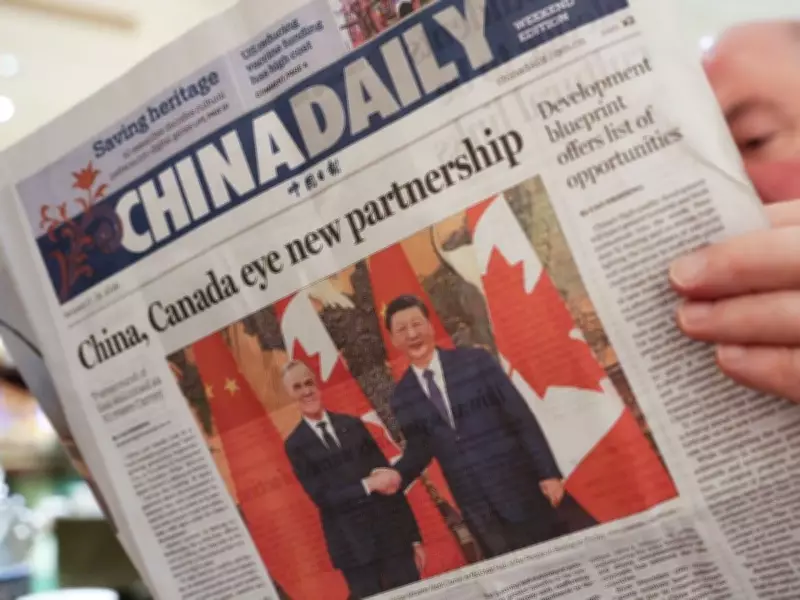
Former national security analyst Dennis Molinaro, author of Under Assault: Interference and Espionage in China's Secret War Against Canada, expressed concern about the Canadian government's response. Molinaro noted that with Prime Minister Mark Carney's recent strategic partnership agreement with Chinese President Xi Jinping, it may be too late to expect effective measures to curb China's growing influence operations within Canada's diaspora communities.
It's the government that sets the intelligence agenda, Molinaro stated. And we know which way this government has decided to go.
Previous Warnings from Security Agencies
The Jamestown-MLI findings provide granular quantitative detail about the United Front Work Department's expansion into activism, lobbying, and political interference, but Canadian security agencies have issued warnings for years. In January 2020, the Canadian Security Intelligence Service published a report titled Beijing's Political Warfare in Canada: Tracking the Footprints of the United Front Work Department.
This was among several documents outlining UFWD subversions published by multiple Canadian security bodies, including:
- The National Security and Intelligence Committee of Parliamentarians
- Public Safety Canada
- The National Security and Intelligence Review Agency
The investigation comes at a critical moment for Canadian national security policy, as the country balances international partnerships with protecting its democratic institutions from foreign influence operations. The detailed mapping of these 575 organizations provides unprecedented insight into the scope and scale of Beijing's soft power operations within Canadian society.