Australia and Japan Finalize Major $6.5 Billion Naval Defense Agreement
In a significant move to bolster maritime security and strategic cooperation, Australia and Japan have officially sealed a comprehensive $6.5 billion warship procurement deal. The landmark agreement, announced on April 18, 2026, includes an initial order for three advanced Mogami-class stealth frigates from Japan, marking a deepening of defense ties between the two key Indo-Pacific allies.
Strengthening Naval Capabilities with Stealth Technology
The Mogami-class frigates, renowned for their advanced stealth capabilities and multi-role functionality, represent a substantial upgrade to Australia's naval fleet. These vessels are designed to operate effectively in both anti-submarine and anti-surface warfare roles, featuring state-of-the-art radar systems and enhanced electronic warfare capabilities. The procurement underscores Australia's commitment to modernizing its maritime defense infrastructure while leveraging Japan's cutting-edge naval technology.
Strategic Implications for Regional Security
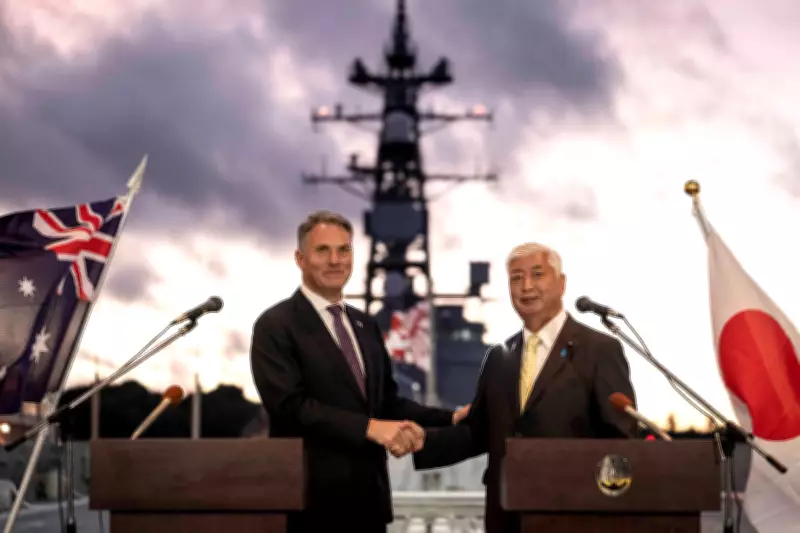
This defense agreement comes at a time of increasing geopolitical tensions in the Indo-Pacific region, with both nations seeking to enhance their naval presence and interoperability. The deal follows extensive diplomatic and military consultations, highlighted by a joint press announcement aboard the Japan Maritime Self-Defense Force (JMSDF) Mogami-class frigate JS Mikuma in September 2025. During that event, Japan's Defence Minister Gen Nakatani and Australia's Defence Minister Richard Marles emphasized the shared commitment to maintaining a free and open Indo-Pacific.

The $6.5 billion investment represents one of the largest bilateral defense contracts between Australia and Japan in recent history. It includes not only the initial three frigates but also provisions for potential future orders, technology transfer agreements, and joint training exercises. The collaboration is expected to create numerous high-skilled jobs in both countries' defense sectors while fostering greater technological exchange.
Technical Specifications and Delivery Timeline
The Mogami-class frigates ordered by Australia will feature several customizations to meet specific operational requirements of the Royal Australian Navy. Key specifications include:
- Advanced stealth design reducing radar cross-section
- Integrated combat systems with enhanced sensor suites
- Vertical launch systems for missile defense capabilities
- Extended operational range for prolonged maritime patrols
- Helicopter landing facilities for anti-submarine warfare operations
Delivery of the first frigate is scheduled to commence within the next three years, with all three vessels expected to be fully operational by 2030. The agreement also includes comprehensive maintenance support and crew training programs to ensure seamless integration into Australia's existing naval operations.
Broader Defense Cooperation Framework
This warship deal builds upon the longstanding security partnership between Australia and Japan, which has expanded significantly in recent years through joint military exercises, intelligence sharing, and technology cooperation. Both nations have increasingly aligned their defense strategies in response to regional security challenges, with this frigate procurement representing a tangible manifestation of their shared strategic priorities.
The agreement demonstrates how like-minded democracies are strengthening their defense industrial bases while enhancing collective security capabilities in an increasingly complex geopolitical environment. It also reflects Japan's growing role as a defense exporter following revisions to its arms export policies, allowing for greater international collaboration on advanced military technologies.
As both nations implement this substantial defense agreement, analysts anticipate further joint initiatives in areas such as cybersecurity, space domain awareness, and undersea warfare capabilities. The successful execution of this $6.5 billion deal is expected to serve as a model for future defense cooperation between democratic partners in the Indo-Pacific region.