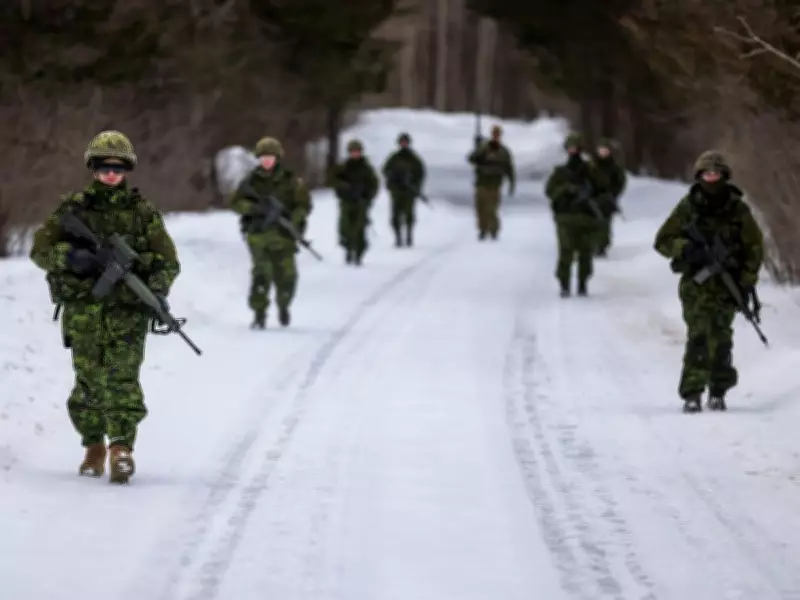
Applications to Canada's armed forces have surged by 12.9% over the past eight months, according to federal Minister of National Defence David McGuinty. This significant increase comes as global uncertainty motivates more Canadians to consider military service, though the Canadian Armed Forces (CAF) still faces a substantial personnel shortfall.
Recruitment Numbers and Targets
As of early January 2026, prospective recruit applications for the regular force have increased by approximately 12.9% compared to the previous fiscal year, confirmed by the Department of National Defence (DND). Despite this encouraging trend, the CAF's regular force stood at 65,677 members in late December, which is 5,823 people short of the target outlined in the "Our North, Strong and Free" plan. This strategic initiative commits to rebuilding the military to 71,500 regular force members by March 31, 2032.
Application and Enrollment Process
Applicants must submit eligibility documents to confirm their age, citizenship, and education (ACE) as part of the recruitment process, explains Kened Sadiku, DND media relations officer. They can begin training while undergoing administrative intake, but recruits who fail to meet security clearance, personality, medical, or other suitability requirements are released from the CAF.

In 2024-25, the ACE documents of 21,700 individuals were confirmed, marking a substantial increase from 12,269 in 2023-24 and 9,865 in 2022-23. Enrollment numbers have also risen in tandem with application increases, including direct enrollments into the regular force and transfers from organizations like the Cadet Organizations Administration and Training Service, Rangers, and Supplementary Reserve. For 2024-25, the enrollment number reached 6,710, up from 4,334 in 2023-24 and 3,924 in 2022-23.
Regional Recruitment Patterns
Ontario and Quebec serve as the largest sources of intake into the regular force, followed closely by Alberta. In 2024-25, these provinces contributed 2,431, 1,407, and 778 recruits, respectively. Notably, there were no recruits from the northern regions of the country, highlighting potential geographic disparities in military recruitment efforts.
Minister McGuinty's Perspective
Minister McGuinty attributes the surge in CAF applicants to a growing desire among Canadians "to make sure that Canada remains a secure and sovereign country." This sentiment has been amplified by recent geopolitical tensions, including former U.S. President Donald Trump's escalated attacks on Canada's economy and threats to annex the country as "the 51st state." In response, the Liberal government has significantly increased military spending.
Defense Initiatives and Investments
The government has launched numerous initiatives to bolster national defense, such as Ottawa's new Defence Industrial Strategy, which aims to inject funds and create 125,000 defense jobs in Canada while diverting spending from the U.S. to other allies. There is also a revitalized focus on securing Canada's north, alongside substantial investments in military personnel and equipment.
Members of the Canadian Armed Forces are receiving a 20% pay hike and improved living conditions at military bases. Additionally, ongoing big-ticket purchases—some initiated during the Stephen Harper government—include new submarines, fighter jets, and warships, reflecting a long-term commitment to modernizing the military.
This recruitment surge underscores a pivotal moment for Canada's defense capabilities, as global uncertainties drive increased public interest in military service while the CAF works to address its personnel gaps through strategic recruitment and modernization efforts.