Canada Must Confront Iran's Covert Operations Network Within Its Borders
Several alarming incidents have recently brought to light the persistent and dangerous activities of Iranian regime networks operating within Canadian territory, raising urgent national security concerns that demand immediate attention from authorities.
The Ideological Foundation of Iranian Hostility
In his revealing work "From Auschwitz to Tehran," author Eran Hermoni documents a telling exchange from October 2000 between Spanish Prime Minister José María Aznar and Iran's Supreme Leader Ayatollah Ali Khamenei. When Aznar inquired about Khamenei's first thoughts upon waking each morning, the Iranian leader responded with chilling directness: "To eliminate Israel." This statement, while shocking, aligns perfectly with the Islamic Republic's longstanding revolutionary ideology that frames its struggle as civilizational conflict against both Israel and Western nations collectively.
Khamenei frequently characterized Western civilization as "deceitful, hypocritical and filled with lies," rhetoric that has consistently justified Tehran's decades-long campaign of international terror and subversion. Although Khamenei has since passed away, the extensive operational machinery he established remains fully functional and continues to pose significant threats globally.

Iran's Global Network and Canadian Connections
The Islamic Republic maintains a sophisticated worldwide network comprising operatives, sympathizers, and proxy groups directly connected to the Islamic Revolutionary Guard Corps (IRGC). This infrastructure extends from Hezbollah in Lebanon to covert sleeper cells strategically embedded throughout Western nations, enabling Tehran to project power far beyond its geographical borders.
Canada has unfortunately emerged as a prominent hub within this network, serving as a center for transnational criminal activities linked to Iranian regime actors. These illicit operations include sophisticated money laundering schemes, intimidation campaigns targeting dissidents, and various organized crime enterprises that undermine Canadian security and sovereignty.
Recent Incidents and Growing Concerns
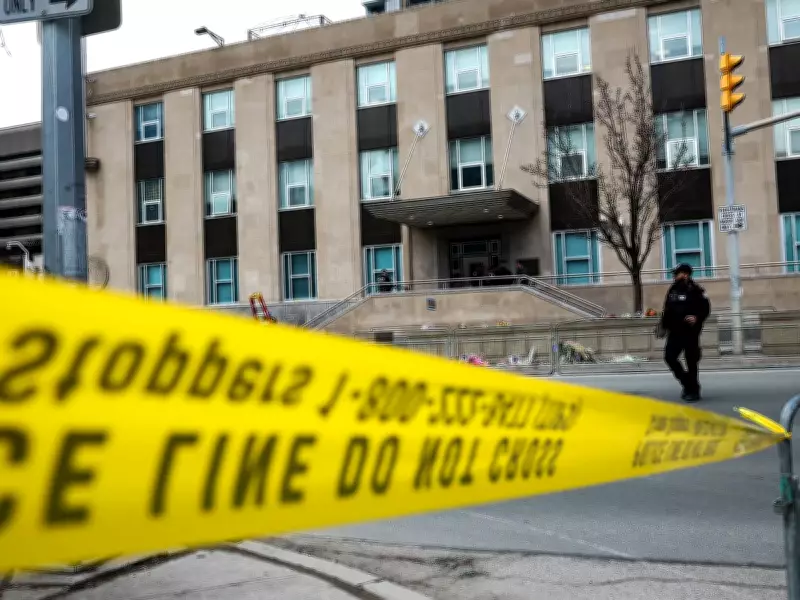
The situation appears to be escalating, with recent developments suggesting increased threat levels. On March 10, 2026, shots were fired at the United States consulate in downtown Toronto in what authorities have officially designated a "national security incident." This alarming event occurred against a backdrop of heightened tensions as the United States and Israel intensify their military campaigns against Iranian interests.
Western security services increasingly fear that Tehran might activate dormant sleeper networks abroad in retaliation for these military actions. Earlier this week, a United States federal alert warned law enforcement agencies about intercepted encrypted communications believed to have originated in Iran shortly after Khamenei's death on February 28. Intelligence officials reportedly believe these messages could serve as an "operational trigger" for sleeper assets positioned across multiple countries, including Canada.
Historical Precedents and Current Realities
These security warnings are not based on mere conjecture but on Iran's demonstrated history of orchestrating attacks far beyond Middle Eastern borders. Just last week, a Pakistani national was convicted of plotting with Iranian officials to assassinate prominent United States government figures, including former President Donald Trump. This assassination attempt follows a longstanding pattern of Iranian aggression.
In 2011, an Iranian agent attempted to recruit members of a Mexican drug cartel to assassinate the Saudi ambassador in Washington. Further back in 1994, a Hezbollah operative acting on Tehran's direct orders bombed a Jewish community center in Buenos Aires, resulting in 85 tragic deaths. These historical incidents underscore the persistent threat posed by Iranian networks.

Canada's Response and Ongoing Challenges
Ottawa formally designated the IRGC as a terrorist entity in January 2020 after the organization shot down Ukraine International Airlines Flight 752, killing all 176 people aboard including 55 Canadian citizens and 30 permanent residents. While this designation carries significant symbolic weight, it has proven insufficient in dismantling the regime's operational networks that continue to function on Canadian soil.
The Canadian government now faces mounting pressure to implement more effective measures against these covert Iranian operations. Security experts emphasize that without decisive action, Canada remains vulnerable to potential attacks orchestrated by Tehran's shadow networks, particularly as international tensions continue to escalate. The recent incidents in Toronto serve as stark reminders that the threat is not abstract but immediate and requires comprehensive security responses.