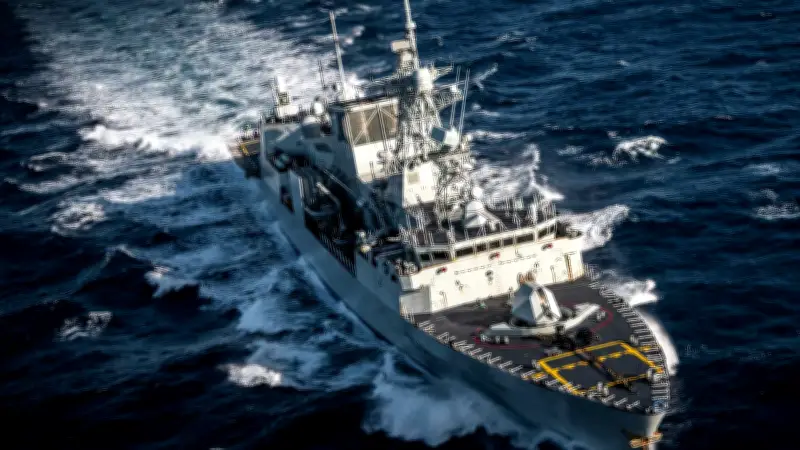
Canada has deployed a third naval frigate to participate in United States-led warfare drills in the Indo-Pacific region, the Department of National Defence confirmed on Tuesday. The Halifax-class frigate HMCS Charlottetown departed from Halifax, Nova Scotia, on June 20 and is expected to join multinational exercises later this summer.
Deployment Details
The HMCS Charlottetown, a 134-meter frigate with a crew of approximately 240 personnel, will take part in the Rim of the Pacific (RIMPAC) exercise, the world's largest international maritime warfare drill. This marks the third Canadian frigate to deploy to the region in recent months, following HMCS Vancouver and HMCS Regina, which are already operating in the Indo-Pacific as part of Operation Projection.
“This deployment demonstrates Canada's continued commitment to upholding the rules-based international order in the Indo-Pacific region,” said Defence Minister Bill Blair in a statement. “Our sailors are highly trained and ready to operate alongside our allies to ensure peace and stability.”

Strategic Context
The Indo-Pacific has become a focal point for global military activity, with China's growing naval presence prompting increased allied exercises. Canada's contribution comes amid heightened tensions over territorial disputes in the South China Sea and Taiwan Strait. According to the Canadian Armed Forces, the frigate will conduct anti-submarine warfare, surface warfare, and air defense drills alongside ships from the United States, Japan, Australia, and other partner nations.
“The Indo-Pacific is vital to Canada's economic and security interests,” said Vice-Admiral Angus Topshee, Commander of the Royal Canadian Navy. “By deploying multiple assets, we are signaling our dedication to regional security and our ability to project power far from our shores.”
Previous Deployments
HMCS Vancouver departed in April 2026 for a six-month deployment, and HMCS Regina followed in May. Both frigates have already participated in bilateral exercises with the Japanese Maritime Self-Defense Force and the U.S. Navy. The addition of HMCS Charlottetown brings Canada's total naval presence in the region to three warships, the largest sustained deployment in decades.
The Canadian government has also committed to increasing defense spending in the Indo-Pacific, including investments in new Arctic patrol ships and drone surveillance capabilities. The Liberal government's 2025 defense policy review emphasized the region as a priority for military engagement.