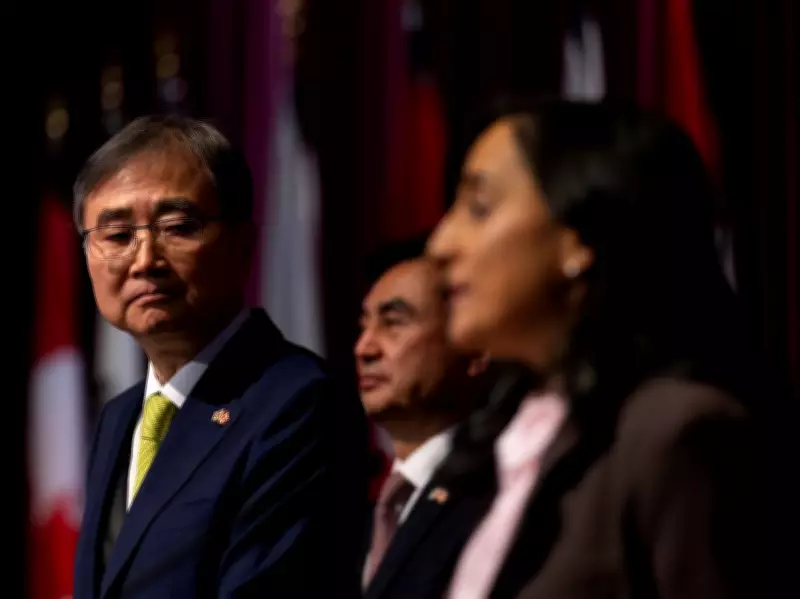
In a significant diplomatic move, Canada and South Korea have formalized a new defense agreement, marking a strategic step to enhance military collaboration and diversify international trade partnerships. The signing ceremony took place in Ottawa on Wednesday, February 25, 2026, following months of negotiations that concluded in October of the previous year.
Strengthening Defense Ties
The agreement focuses on the exchange and protection of classified military and defense information, establishing a legal framework to improve cooperation in areas such as defense procurement, industrial security, and joint research initiatives. Defense Minister David McGuinty emphasized the importance of this development, stating, "This is an important step for our two countries. It's critical that Canada expands its defense industry, but it's equally important that we enhance our defense relations around the world."
Geopolitical Context and Strategic Partnerships
The pact aligns with Prime Minister Mark Carney's recent call for middle powers to band together in response to economic coercion by larger nations. In a speech at the World Economic Forum in Davos last month, Carney urged collaboration against "American hegemony" and the pressures exerted by great powers on smaller countries. Foreign Affairs Minister Anita Anand highlighted that this strategy of trade diversification is a pragmatic aspect of Canada's foreign policy, responding to the current global environment, including economic challenges.

During the meeting in Ottawa, Canadian officials, including McGuinty and Anand, met with their South Korean counterparts, Ahn Gyuback and Cho Hyun. The countries agreed to update their strategic partnership to reflect contemporary geopolitical realities and to begin negotiations on a broader defense cooperation agreement, which would include a legal framework for military force collaboration.
Economic and Security Linkages
South Korean Foreign Minister Cho Hyun underscored the close connection between security and economy, noting, "We believe that security and economy are very closely linked so our two countries will continue to deepen our economic cooperation." He expressed hope that the nations would become the closest partners in defense, industry, and other sectors, with plans to increase trade and investments.
Gyuback added that Canada is a key security partner, and both countries will work to promote peace and stability across the Indo-Pacific and Arctic regions. This cooperation comes as the Carney government aims to double non-U.S. exports over the next decade, a response to the unstable geopolitical and trading environment following the re-election of U.S. President Donald Trump.
Submarine Procurement and Industrial Benefits
The defense agreement coincides with a competitive procurement process for Canada's submarine fleet. South Korean firm Hanwha Oceans is vying with German manufacturer TKMS for a multi-billion-dollar contract to supply up to 12 new submarines to Canada. Hyun advocated for South Korea's technology, claiming it could deliver submarines two years ahead of Germany, with a track record of being on time and on budget.
Anand clarified that the procurement process is ongoing and not subject to political intervention, with manufacturers currently compiling bids to meet technical requirements. Industry Minister Melanie Joly noted that Canada seeks industrial benefits beyond the submarines themselves, aiming to expand manufacturing of vehicles from South Korean, German, and Chinese automakers. This follows recent agreements, including one signed last month to bring South Korean auto manufacturing to Canada and a joint declaration with Germany to boost cooperation in auto and battery manufacturing and critical minerals.
Political Reactions and Criticisms
Conservative critic for national defense James Bezan voiced skepticism about the agreement, arguing in a statement that non-binding agreements do not enhance the operational strength of the Canadian Armed Forces. He called for the government to prioritize purchasing necessary equipment based on defense needs, stating, "Nearly a year into his term, and Carney has changed the rhetoric, but not the reality of what kit our armed forces have to do their jobs."

Despite such criticisms, the defense pact represents a concerted effort by Canada to forge stronger international alliances and adapt to a shifting global landscape. As Anand summarized, "This is an era where one cannot separate defense and security, on the one hand, from economic results on the other." The agreement with South Korea is poised to play a pivotal role in Canada's strategy to bolster both its military capabilities and economic resilience in the years ahead.