Canada's Military Leadership Considers Options to Support Gulf Allies
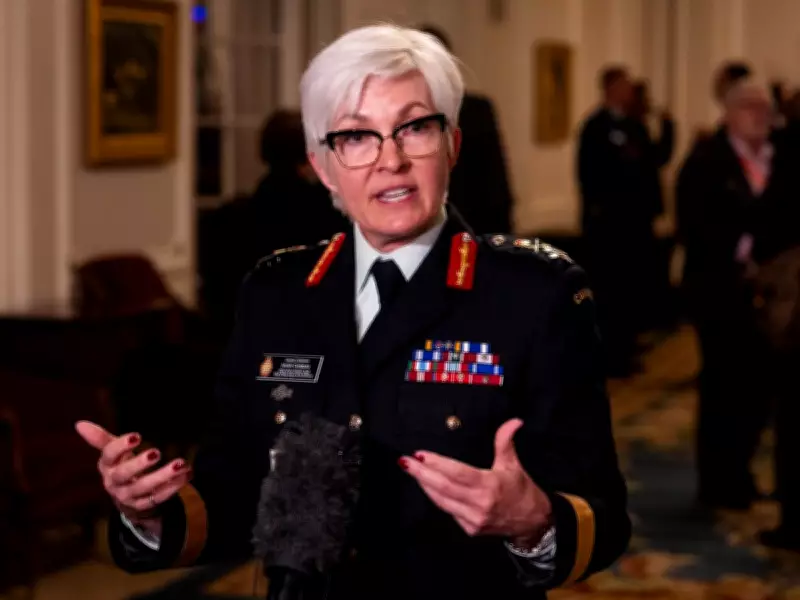
Canada's Chief of the Defence Staff, General Jennie Carignan, has announced she will meet with European counterparts to discuss potential military options for supporting Gulf states amid escalating tensions with Iran. The discussions come as several Gulf nations face Iranian missile and drone strikes following the initiation of Operation Epic Fury by the United States and Israel.
Distinguishing Canadian Involvement from U.S.-Israel Operations
Speaking at the Ottawa Conference on Security and Defence, General Carignan made a clear distinction between potential Canadian support for Gulf partners and direct participation in Operation Epic Fury. "We are not talking about participating in Epic Fury, per se," she emphasized to reporters. "This is not the mission that we are considering."
Instead, Carignan explained that Canada is examining how it might provide defense and support to Gulf allies who are facing direct threats from Iranian attacks. "Our Gulf partners may require defense and support," she stated, "so within that context, this would be the type of military options that we could consider."

Adapting to Dynamic Ground Conditions
The general described the situation as "dynamic" and stressed that any Canadian military role would need to be carefully adjusted to the specific threats present. She identified ballistic missiles and drone strikes as the primary threats currently being assessed by military planners.
"Any type of military platforms we would send in those conditions would have to be equipped or protected with other types of systems," Carignan explained. "This is why there's a range of different options under consideration."
International Context and Legal Framework
The military discussions occur against a backdrop of increasing regional violence. Since Operation Epic Fury began, Iranian missile and drone strikes have targeted multiple Gulf states including:
- Bahrain
- Kuwait
- Oman
- Qatar
- Saudi Arabia
- United Arab Emirates
Carignan noted that the Law of Armed Conflict now applies to the situation, which establishes rules of behavior during armed conflicts and aims to minimize civilian casualties. "Therefore any states being attacked can take defensive measures for self-defense," she clarified, adding that any Canadian operation would need to fall within this framework of legitimate defense.
Political Context and Current Actions
Prime Minister Mark Carney, during a visit to Australia, declined to rule out future Canadian military participation in the conflict, stating "we will defend our allies when it makes sense" and noting that "one can never categorically rule out participation."
These comments followed reports that NATO defense systems intercepted an Iranian missile headed toward Turkey, a NATO member state. Meanwhile, Canada has already taken preliminary steps by deploying liaison officers to the region and reaching out to Middle Eastern partners to gather current intelligence about the developing situation.
When questioned about potential Canadian capabilities in the region, General Carignan did not exclude the possibility of sending additional personnel. The military is currently evaluating what specific contributions Canada might make to support Gulf allies while maintaining a clear distinction from the U.S.-Israel offensive operations against Iran.