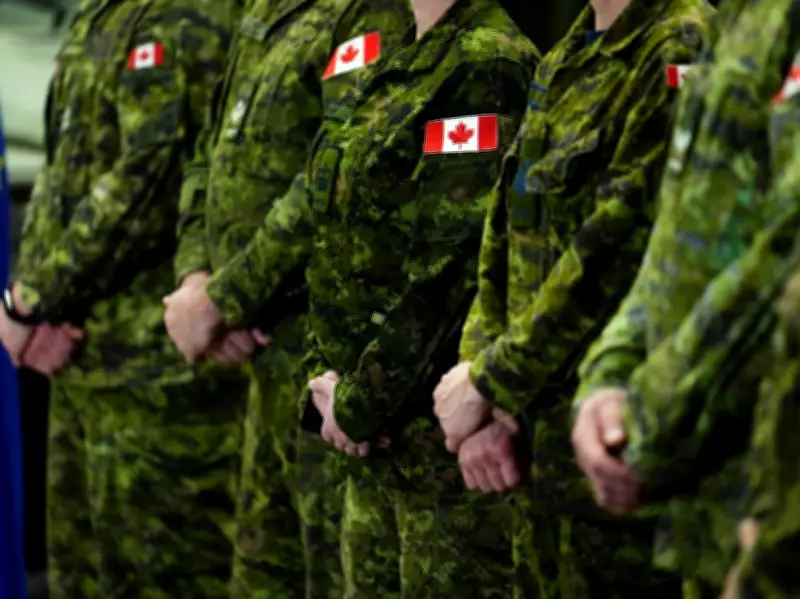
Canada's Military Readiness Questioned Amid Global Conflict
Prime Minister Mark Carney has faced significant criticism for his ambiguous and contradictory statements regarding Canada's position on the escalating U.S.-Israeli conflict in Iran. During recent parliamentary debates and public addresses, Carney's messaging has been described as confusing and lacking clear direction, raising concerns about Canada's foreign policy coherence during international crises.
Contradictory Statements on Military Involvement
Conservative foreign affairs critic Michael Chong summarized Carney's contradictory position succinctly on social media platform X, highlighting the government's mixed messaging. "We support the U.S. acting with airstrikes. But we also regret having to support the U.S. acting with airstrikes. And we also call for a ceasefire of the airstrikes," Chong stated, capturing the confusing nature of Canada's official stance.
In a parliamentary debate on March 10, Carney attempted to clarify his position, declaring that Canada will "never participate" in the Iran war. "Canada's stance is clear: Canada supports the necessity to prevent Iran's nuclear program and the export of terrorism," he told the House of Commons. "Canada is not participating in the United States and Israeli offensive and will never participate in it."

Military Capability Limitations
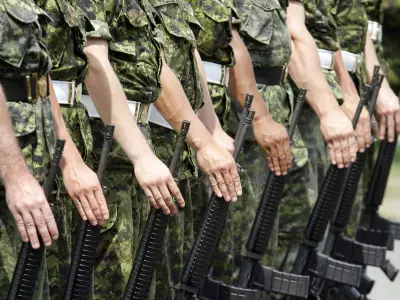
The fundamental question remains: How could Canada participate in such military action even if the government wanted to? Over the past two decades, successive administrations have allowed military recruitment to dwindle to historically low levels, creating significant personnel shortages across all branches of the armed forces.
Morale within the military ranks has reached concerning lows, while equipment modernization has fallen dangerously behind schedule. Canada's procurement processes for new hardware have become notoriously convoluted and time-consuming, leaving soldiers with outdated or non-functional equipment in many cases.
Specific capability gaps include:
- No aircraft carriers since the last one was decommissioned in 1970
- Aging submarine fleet consisting of four second-hand vessels purchased from Britain that require urgent replacement
- Delayed fighter jet procurement with the government still evaluating options years into the process
International Context and Comparisons
Canada is not alone in facing military readiness challenges. Britain's government under Prime Minister Keir Starmer was caught unprepared by the Iran invasion, revealing similar deficiencies in naval capabilities. When a British base in Cyprus was attacked recently, the United Kingdom struggled to deploy a destroyer for assistance, requiring France to offer a warship for accompaniment.
These international examples highlight a broader trend of Western nations neglecting military preparedness despite increasing global instability and conflict potential.
Practical Implications and Domestic Alternatives
Given these limitations, Carney's decision to avoid direct military involvement appears pragmatic rather than ideological. Canada lacks the necessary firepower to contribute meaningfully to protecting oil passage through critical waterways like the Gulf of Hormuz, forcing the government to consider alternative approaches.
The most viable option appears to be ramping up domestic oil production to reduce dependence on potentially disrupted international supplies. This strategy would require significant investment in pipeline infrastructure and energy development projects across the country.
The government's planned submarine replacement program, which aims to deliver twelve new vessels by 2032, represents a long-term solution but does little to address immediate capability gaps. Similarly, ongoing fighter jet evaluations continue without clear timelines for acquisition and deployment.
As global tensions escalate and military conflicts become more frequent, Canada's defense shortcomings raise serious questions about national security and international influence. The current situation underscores the need for comprehensive military modernization and strategic clarity in foreign policy decision-making.