CSIS Contradicts Government Official, Says India Remains Top Foreign Interference Threat
Canada's intelligence agency has publicly contradicted a senior government official's recent claim that Indian agents are no longer involved in foreign interference activities within Canadian borders. The Canadian Security Intelligence Service (CSIS) maintains that India continues to be one of the primary perpetrators of espionage and transnational repression targeting Canada.
Spy Agency's Unchanged Assessment
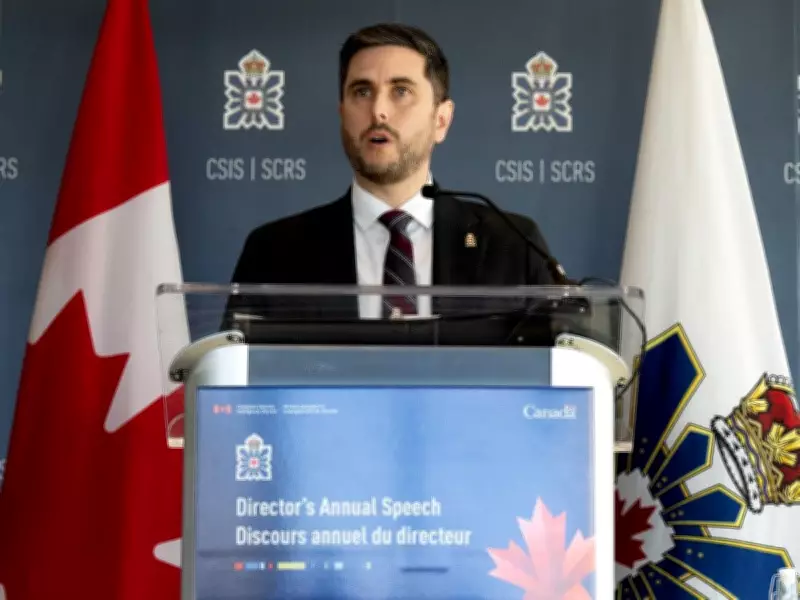
In a statement to National Post on Saturday, CSIS spokesperson Eric Balsam confirmed that the agency's threat assessment regarding foreign interference has not changed. "CSIS's threat assessment of the main perpetrators of foreign interference and espionage against Canada has not changed," Balsam stated unequivocally.
This marks the first instance where a Canadian security agency has directly contradicted statements made by a senior government official. The official had claimed during a background briefing last week that India is no longer interfering in Canadian affairs, stating "We're confident that that activity is not continuing."

Historical Context and Recent Developments
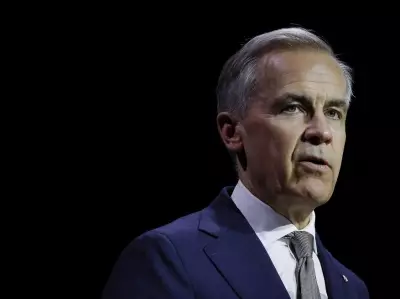
CSIS Director Dan Rogers had previously identified "China, Russia, India and others" as the most active perpetrators of foreign interference targeting Canada as recently as February 3. This assessment comes amid Prime Minister Mark Carney's diplomatic visit to India, where he is scheduled to meet with Indian Prime Minister Narendra Modi to discuss trade relations and bilateral cooperation.
The timing of CSIS's statement creates additional pressure on Prime Minister Carney to clarify his government's position regarding Indian involvement in transnational repression activities within Canada. The official who claimed India had ceased interference activities had noted that "If we believed that the government of India was actively interfering in the Canadian democratic process, we probably wouldn't be taking this trip."
Background of Bilateral Tensions
The relationship between Canada and India has been strained since 2023, when then Prime Minister Justin Trudeau announced in the House of Commons that Canada possessed credible evidence linking Indian government agents to the murder of British Columbia Sikh-Canadian leader Hardeep Singh Nijjar. This was followed by a fall 2024 press conference where the Royal Canadian Mounted Police (RCMP) once again connected the Indian government to a series of violent crimes in Canada, including murder, arson, extortion, and threats.
The Indian government has consistently denied these allegations, with its high commissioner in Canada quickly seizing on the senior official's statement last week to reiterate India's position that it has never engaged in transnational repression efforts to suppress critics abroad.
Diplomatic Implications
The contradictory statements between CSIS and the senior government official highlight the complex diplomatic balancing act facing the Canadian government. While seeking to rebuild diplomatic relations and establish new trade agreements with India—Asia's third largest economy—the government must also address ongoing security concerns raised by its own intelligence agencies.
Prime Minister Carney's ten-day visit to India, Australia, and Japan represents a significant diplomatic effort to strengthen international partnerships, but the CSIS statement suggests that security concerns regarding Indian interference activities remain unresolved within Canada's intelligence community.