Danish Prime Minister Flies to Greenland for Critical Arctic Security Discussions
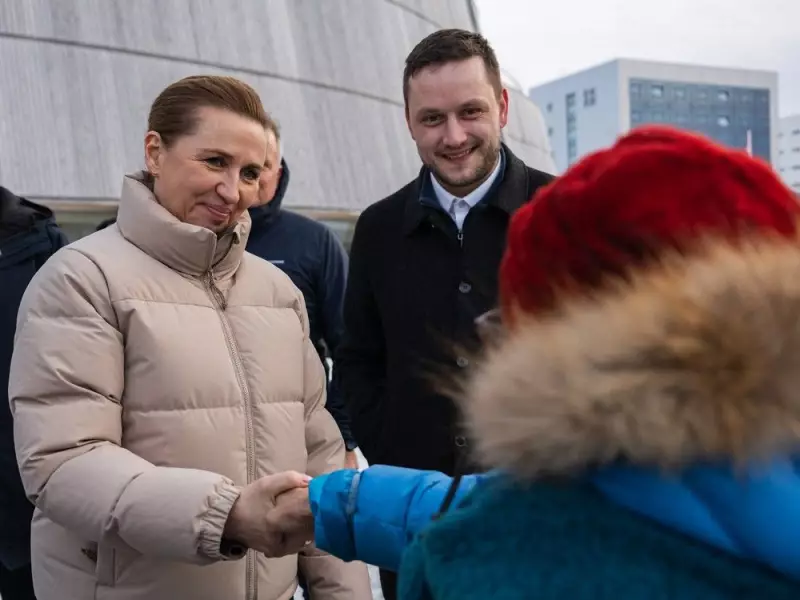
Danish Prime Minister Mette Frederiksen has embarked on a significant diplomatic journey to Greenland, arriving in the capital city of Nuuk on Friday for high-level talks with the territory's premier, Jens-Frederik Nielsen. This visit comes in the wake of a notable de-escalation from former U.S. President Donald Trump regarding his previous threats to acquire the Arctic territory, which is an autonomous part of the Kingdom of Denmark.
Post-NATO Summit Discussions on Arctic Engagement
Frederiksen's trip follows her participation in a European Union leaders' summit in Brussels, where she also met with NATO Secretary General Mark Rutte. In a statement posted on social media platform X, Frederiksen emphasized a shared perspective with Rutte, stating, "We agree that NATO should increase its engagement in the Arctic." She further elaborated that "defence and security in the Arctic are a matter for the entire alliance," highlighting the broader strategic importance of the region for NATO members.
The discussions in Nuuk are set to focus on Greenland's future, particularly in light of recent developments involving the United States. Trump has indicated that he reached a "framework" agreement with Rutte concerning Greenland and has publicly stated he will not use military force to take over the territory. While Danish and Greenlandic leaders have welcomed these comments as signs of reduced tension, they remain cautiously optimistic, acknowledging the possibility of future policy shifts.

Sovereignty and Self-Determination as Core Principles
For both Danish and Greenlandic officials, the fundamental priorities in any agreement are clear:
- Sovereignty and territorial integrity of Greenland
- Greenlanders' right of self-determination
These principles are non-negotiable, as reiterated by Frederiksen and Nielsen. However, they have expressed openness to discussing all other aspects related to enhancing Arctic security. In Copenhagen, Denmark's Foreign Minister Lars Lokke Rasmussen clarified on Friday that only a framework—not a formal agreement—has been established regarding Greenland after talks involving Rutte and Trump. Rasmussen noted that efforts are underway to develop a comprehensive plan between the U.S. and Denmark, which will incorporate a NATO dimension to address regional defence needs.
Greenland's Premier Open to NATO Presence
In a related development, Greenland's Premier Jens-Frederik Nielsen stated on Thursday that he is receptive to various options, including the establishment of a permanent NATO mission in the territory. This openness aligns with the broader goal of strengthening Arctic security while respecting Greenland's autonomous governance.
Throughout this diplomatic episode, Frederiksen has maintained a firm stance. Initially, she appeared to dismiss the solution proposed by Rutte, asserting that he "has no mandate" to negotiate on behalf of Denmark regarding Greenland's sovereignty. However, she later softened her position, indicating that negotiations are the preferred path forward, provided they are conducted "in a proper and respectful manner." Frederiksen remarked in Brussels, "We are now testing whether that can be done," reflecting a pragmatic approach to the ongoing dialogue.
Frederiksen's Leadership Amid Crises
Often referred to as Denmark's 'Iron Lady'—a nickname originally associated with former UK Prime Minister Margaret Thatcher—Frederiksen has cultivated a reputation as a resilient and uncompromising leader. She is no stranger to political challenges, having previously faced scrutiny from Trump during his first term in 2019 when he expressed interest in Greenland. At that time, Trump labeled her "nasty" and cancelled a planned visit to Denmark.

More recently, Frederiksen secured reelection by a narrow margin in 2022 following an early ballot called amid controversy over a pandemic-era mink cull, where she was accused of overstepping her authority. Her ability to navigate complex crises underscores her experience in handling sensitive international and domestic issues, making her a key figure in the current Arctic security discussions.
As Frederiksen and Nielsen convene in Nuuk, the outcome of their talks will likely shape the future of Arctic defence cooperation and reinforce the importance of diplomatic engagement in maintaining regional stability. The involvement of NATO and the careful balancing of sovereignty concerns with security needs remain central to these pivotal negotiations.