Regional Security Crisis Emerges Following Cartel Leader's Death
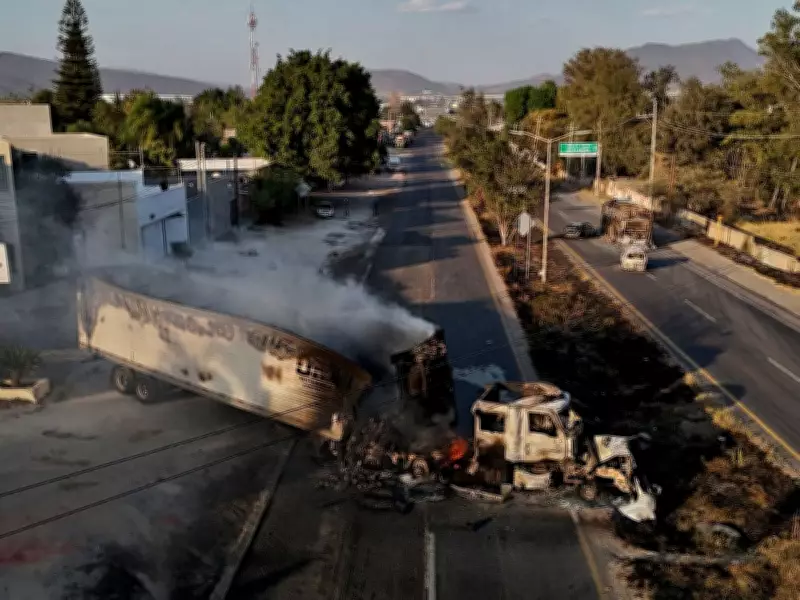
The violent aftermath following the Mexican military's elimination of powerful drug lord Nemesio "El Mencho" Oseguera Cervantes has created a dangerous security vacuum that experts warn could destabilize multiple nations across Latin America. The leader of the Jalisco New Generation Cartel (CJNG) was killed during a military operation last Sunday, triggering immediate retaliatory violence across Mexico that included highway blockades and vehicle burnings.
Unforeseen Consequences Beyond Mexican Borders
Security analysts are now warning that the true impact of El Mencho's death may extend far beyond Mexico's national boundaries, potentially unleashing a wave of unforeseen consequences throughout the region's complex criminal networks. The CJNG represents one of the world's most powerful and ruthless criminal organizations, controlling a vast international empire of fentanyl, methamphetamine and cocaine trafficking operations spanning approximately forty countries according to United States Drug Enforcement Agency assessments.
The power vacuum created by El Mencho's elimination threatens to trigger significant organizational fractures within the CJNG structure. With no clear successor yet emerging to assume control, analysts predict potential internal divisions that could send shockwaves across Latin America, potentially unleashing violence comparable to the recent outbreaks witnessed in Mexico. The cartel's extensive international reach means that repercussions could be felt thousands of kilometers from the original conflict zone.

Guatemala Faces Immediate Border Threats
Among the nations considered most vulnerable to the fallout from El Mencho's killing is Guatemala, according to regional security experts. Adam Isacson, defence director at the Washington Office on Latin America (WOLA), identified northern Guatemala and the Mexican border state of Chiapas as critical areas requiring close monitoring. "One place to watch is northern Guatemala and Chiapas, where the CJNG appears to have mostly elbowed the Sinaloa cartel aside very violently lately," Isacson noted.
In recent years, Chiapas has served as the battleground for a fierce territorial contest between the CJNG and its primary rival, the Sinaloa cartel. While the Jalisco organization managed to establish substantial dominance throughout the region, Sinaloa forces have maintained a persistent presence. Isacson suggested that "if Mencho's departure weakens the CJNG, Guatemala will feel it," indicating that the Sinaloa cartel might exploit any organizational fractures within the CJNG to reclaim control of strategic Chiapas territories.
Such renewed conflict would further destabilize Guatemala's border regions, which have already experienced significant organized crime challenges in recent years due to their strategic importance for both drug trafficking and human smuggling operations. Guatemalan media outlets have previously linked the CJNG to the so-called Chiapas and Guatemala cartel, a local organized crime group reportedly backed by Jalisco interests.
In response to the developing security situation, Guatemalan authorities announced immediate measures to bolster border defences just hours after confirmation of El Mencho's death. Official statements indicated that "following reports of the alleged death of 'El Mencho,' the Guatemalan Army, as part of Operation Ring of Fire, increased its operations including monitoring, control, patrols, surveillance, presence and security in strategic sectors of the Guatemala-Mexico border area."
Ecuador's Vulnerability to Criminal Spillover
The potential consequences extend beyond immediate border regions to nations far removed geographically from the original conflict. Ecuador's major port city of Guayaquil represents another vulnerable location where El Mencho's death could trigger significant criminal repercussions. The CJNG maintains extensive criminal networks throughout South America, with Guayaquil serving as a critical transit point for international drug shipments.

The interconnected nature of Latin America's criminal underworld means that power shifts within major organizations like the CJNG inevitably create ripple effects across the entire region. Local gangs in Guayaquil that maintain operational relationships with the Jalisco cartel could experience destabilization as their primary international partner undergoes internal restructuring following its leader's elimination.
Security experts emphasize that the coming weeks will prove critical in determining whether the CJNG can maintain organizational cohesion or whether internal power struggles will fragment the criminal empire, potentially triggering violent confrontations not only within Mexico but across multiple Latin American nations where the cartel maintains significant operational presence.