Explosion Rocks Tehran Amid Escalating Middle East Conflict
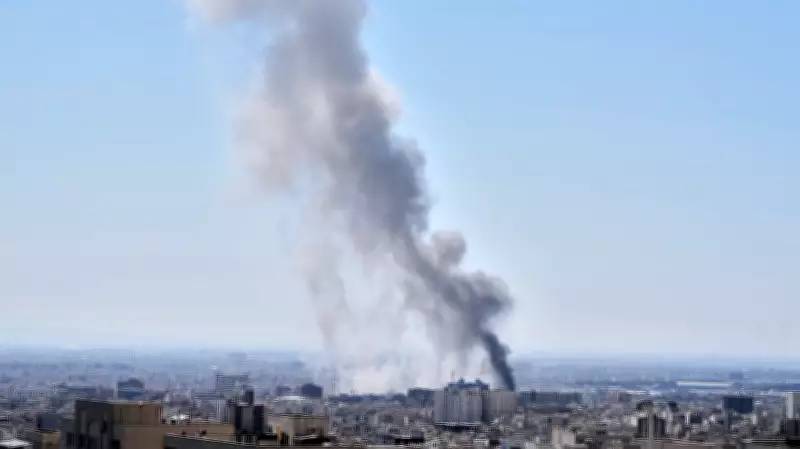
An explosion shook Iran's capital, Tehran, on Sunday, sending a massive plume of smoke into the sky as Israel declared it would launch "non-stop strikes" against Iranian leaders and military targets. This incident occurred in a critical area housing the national police headquarters, state television, the Revolutionary Court, and a Defense Ministry building, though the exact target remains unclear. Concurrently, Iran retaliated with missile attacks on Israel and Gulf Arab states, intensifying the conflict sparked by the killing of Supreme Leader Ayatollah Ali Khamenei in a surprise U.S. and Israeli assault.
Regional Retaliation and Casualties Mount
In response to the strikes, Iran fired missiles and drones at Israel and nearby Arab nations hosting U.S. forces. Loud explosions were reported in Tel Aviv, with at least six fatalities in central Israel from a strike, according to rescue services. The Magen David Adom rescue service noted that many missiles were intercepted, but casualties included seven dead and over 120 injured across Israel. Iranian attacks extended to the United Arab Emirates, where shrapnel killed two in Abu Dhabi and caused fires at key locations like the Burj Al Arab hotel. Oman, Saudi Arabia, Jordan, Kuwait, Bahrain, and Qatar also reported interceptions or impacts, highlighting the widening regional unrest.
Leadership Vacuum and Global Implications
The death of Ayatollah Khamenei, who held ultimate authority in Iran for decades, has created a significant leadership void. Iran quickly formed a council to govern until a new supreme leader is chosen, with no immediate signs of internal unrest despite U.S. President Donald Trump's calls for regime change. This event marks a dramatic shift in U.S. foreign policy, as Trump, who campaigned on avoiding "forever wars," has now engaged in military action against Iran for the second time in eight months. The conflict threatens global markets, particularly oil prices, with 20% of the world's traded oil passing through the Strait of Hormuz, a potential flashpoint if Iran disrupts commercial traffic.

International Reactions and Escalating Tensions
Iran's parliamentary speaker, Mohammad Bagher Qalibaf, warned in a televised address that retaliation would be devastating, while Trump responded on social media with threats of unprecedented force. The attack has stoked regional protests, including a storming of the U.S. Consulate in Karachi, Pakistan, where clashes led to several deaths. Reports from Iran indicate civilian casualties, with at least 115 killed in a strike on a girls' school in southern Iran, though Israeli and U.S. officials are investigating. Satellite imagery suggests Iran is rebuilding nuclear infrastructure damaged in previous strikes, raising concerns about renewed nuclear capabilities despite Iran's claims of peaceful intentions.
Broader Impact and Future Outlook
The air war has disrupted flights across the Middle East and drawn condemnation from various nations. Saudi Arabia emphasized it did not allow its territory to be used against Iran, while Jordan reported intercepting numerous drones and missiles. As tensions soar, with the U.S. deploying its largest Middle East military force in decades, the risk of prolonged conflict and regional instability grows. Democrats have criticized Trump for acting without congressional authorization, though the White House claims it briefed leaders in advance. The situation remains fluid, with ongoing strikes and retaliations shaping the future of Middle East geopolitics.