Strait of Hormuz Blockades Escalate as Iran Fires on Tanker Amid U.S. Pressure
The strategic Strait of Hormuz descended into further chaos on Saturday as Iran reversed its earlier move to reopen the critical waterway and fired upon a commercial tanker attempting to transit. This aggressive action came as the United States continued its campaign to blockade Iranian ports, pushing the two nations toward renewed conflict and deepening the global energy crisis.
Iran Reimposes Control and Issues Warning
Iran's joint military command declared on Saturday that "control of the Strait of Hormuz has returned to its previous state ... under strict management and control of the armed forces." The command explicitly warned that it would persist in blocking transit through the strait for as long as the U.S. blockade of Iranian ports remained active. This statement marked a sharp reversal from Friday, when Iranian Foreign Minister Abbas Araghchi had declared the strait open following the announcement of a 10-day truce between Israel and the Iranian-backed Hezbollah militant group in Lebanon.
Violent Incident and Disrupted Shipping
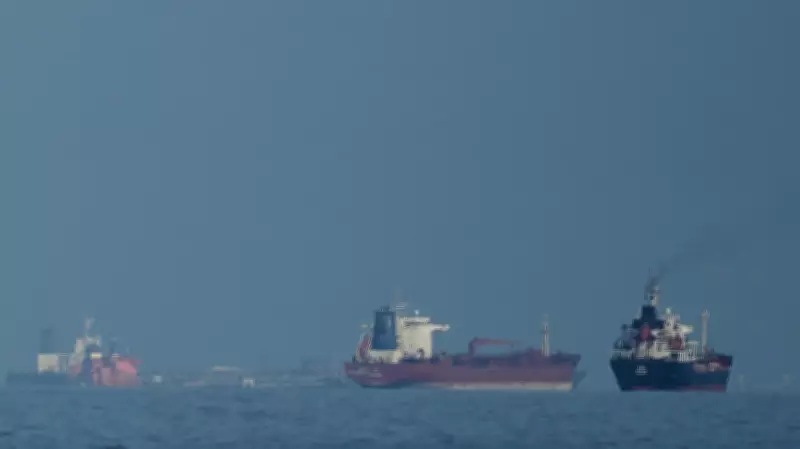
The British military's United Kingdom Maritime Trade Operations center reported that two gunboats from Iran's Revolutionary Guard opened fire on a tanker navigating the Strait of Hormuz. While the tanker and its crew were reported safe, the vessel and its destination were not identified. According to TankerTrackers.com, multiple vessels, including an Indian-flagged super tanker, were forced to turn around in the strait after being fired upon by Iranian forces. Data from the firm Kpler indicated that movement through the strait remained confined to corridors requiring explicit Iranian approval.

U.S. Maintains Firm Stance
U.S. President Donald Trump initially appeared to support reopening the strait but later clarified that the American blockade "will remain in full force" regardless of Iranian actions until a comprehensive deal is reached, which includes addressing Iran's nuclear program. U.S. Central Command stated on social media that American forces had sent 21 ships back to Iran since the blockade commenced on Monday.
Ceasefire Talks and Regional Diplomacy
Despite the escalating tensions in the Strait of Hormuz, Pakistani officials expressed optimism that the United States and Iran were edging closer to an agreement ahead of the April 22 ceasefire deadline. The ceasefire in Lebanon, a key demand from Iranian negotiators, was viewed as a positive development. Pakistan's Foreign Minister Ishaq Dar, speaking at a diplomatic forum in Antalya, Turkey, noted that the fighting between Israel and Hezbollah had been a major sticking point, with talks in Islamabad concluding "very close" to an agreement last weekend.
Pakistan's army chief Field Marshal Asim Munir visited Tehran, while Prime Minister Shehbaz Sharif met with Turkish President Recep Tayyip Erdogan and Qatar's Emir Tamim bin Hamad Al Thani. Pakistan is anticipated to host a second round of talks between Iran and the U.S. early next week.
Uncertainty Surrounds Lebanon Truce
Questions lingered regarding the durability of the Lebanon truce, as it remained unclear to what extent Hezbollah would adhere to a ceasefire it did not negotiate. The agreement leaves Israeli troops occupying a portion of southern Lebanon. President Trump stated that Israel is "prohibited" by the U.S. from further strikes on Lebanon, asserting that "enough is enough" in the Israel-Hezbollah war. The U.S. State Department clarified that this prohibition applies only to offensive attacks and not to actions taken in self-defense.
Israeli Prime Minister Benjamin Netanyahu confirmed that Israel agreed to the ceasefire "at the request of my friend President Trump," but emphasized that the campaign against Hezbollah was not complete. He claimed Israel had destroyed approximately 90% of Hezbollah's missile and rocket stockpiles and indicated that Israeli forces had not finished dismantling the group.
Human Cost and Regional Impact
The conflict, which began with U.S. and Israeli strikes on February 28, has resulted in significant casualties:

- At least 3,000 people killed in Iran
- More than 2,290 killed in Lebanon
- 23 killed in Israel
- More than a dozen killed in Gulf Arab states
- Thirteen U.S. service members killed
In Beirut, displaced families began moving toward southern Lebanon and Beirut's southern suburbs despite official warnings against returning home until the ceasefire's stability could be assured. The Lebanese army and U.N. peacekeepers reported sporadic artillery shelling in parts of southern Lebanon even after the ceasefire took effect.
The back-and-forth over control of the Strait of Hormuz—a chokepoint for roughly one-fifth of the world's oil—highlights how fragile the current ceasefire remains and the profound risks to global energy security and regional stability.