Iran's top prosecutor has issued a stark warning, stating that while economic protests are understandable, any move to create instability will be met with force. This declaration comes directly after Israel's intelligence agency voiced public support for the demonstrators.
Official Warning Amidst Unrest
On Wednesday, Iran's Prosecutor General Mohammad Movahedi-Azad addressed the nation via state media. He acknowledged the legitimacy of grievances over tough economic conditions but drew a firm line against any escalation.
"Peaceful livelihood protests are part of social and understandable realities," Movahedi-Azad stated. However, he added a clear threat: "Any attempt to turn economic protests into a tool of insecurity, destruction of public property, or implementation of externally designed scenarios will inevitably be met with a legal, proportionate and decisive response."

Mossad's Provocative Message
The official's comments followed a provocative social media post from Israel's Mossad intelligence agency, Iran's arch-foe. Using its Persian-language account on X, the spy agency directly addressed Iranian protesters.
The Mossad message, posted just days before the warning, claimed the agency was "with you on the ground" and encouraged Iranians to "go out into the streets together." This rare public intervention significantly raised tensions surrounding the domestic demonstrations.
Scope and Cause of the Protests
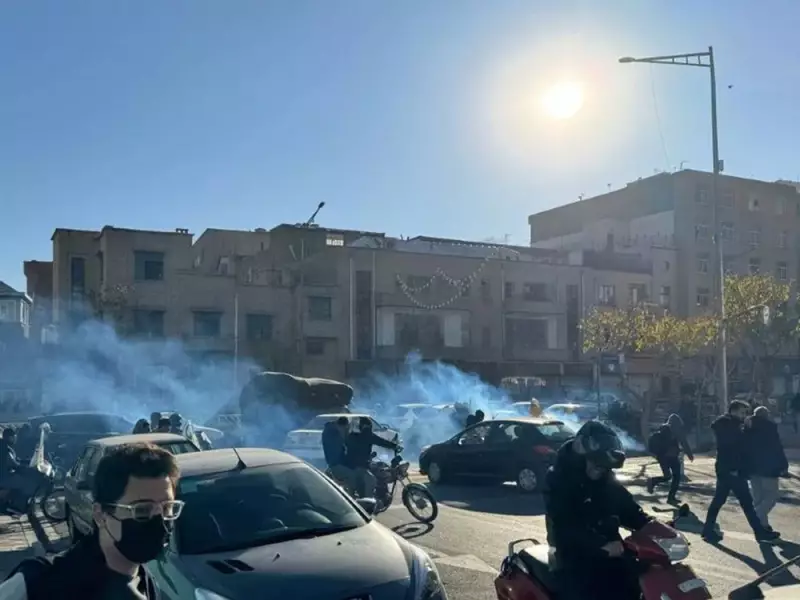
The spontaneous protests began on Sunday, December 29, 2025, in Tehran's largest mobile phone market, where shopkeepers closed their businesses. The core driver is widespread dissatisfaction with Iran's severe economic stagnation and galloping hyperinflation.
The movement gained momentum over three days, with students from at least 10 universities in the capital and other cities joining by Tuesday. This included some of Iran's most prestigious institutions. Despite this, the protests have remained limited in scale and largely concentrated in central Tehran, leaving most of the sprawling metropolis of 10 million people unaffected.
Iran's economy has languished for years, heavily burdened by U.S. and international sanctions related to its nuclear program. The currency crisis has deepened recently, with the rial losing more than a third of its value against the U.S. dollar since the previous year.
Unusual Calm in the Capital
By early Wednesday, the streets of Tehran were unusually calm, with the typical chaotic traffic absent. This followed a sudden government announcement of a bank holiday with just one day's notice.
Authorities also closed schools, banks, and public institutions, officially citing cold weather and the need to save energy. Prestige universities like Beheshti and Allameh Tabataba'i announced a shift to online classes for the following week, attributing it to the same reasons, as reported by the state-run IRNA news agency.
Officials have not linked these closures to the protests. Daytime temperatures in Tehran were in the low single digits Celsius, which is not abnormal for the season.