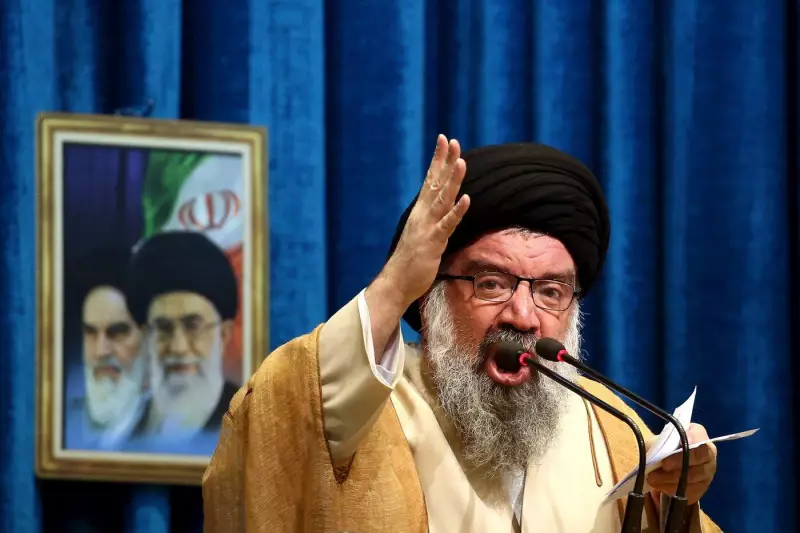
A senior Iranian cleric has publicly called for the execution of individuals involved in ongoing anti-government protests, a move that has drawn a sharp response from U.S. President Donald Trump, who labeled it a "red line." The remarks by Ahmad Khatami, made during a Friday prayer ceremony, underscore the escalating tensions within Iran and its fraught relationship with the United States.
A Call for Severe Punishment
During a sermon delivered in Tehran, cleric Ahmad Khatami explicitly urged the judiciary to deal harshly with those leading the demonstrations that have periodically shaken the country. "I call on the judiciary to confront the leaders of these protests firmly and without mercy," Khatami stated, advocating for capital punishment under the charge of "enmity against God." His comments reflect a hardline stance within the Iranian establishment aimed at quelling dissent through fear of the most severe penalties.
International Reaction and Trump's 'Red Line'
The call for executions quickly garnered international attention, with U.S. President Donald Trump issuing a forceful response. In a statement, Trump declared the Iranian cleric's position a clear "red line" for his administration. "The world is watching," Trump said. "The call for executing peaceful protesters is an affront to humanity and will be met with serious consequences." This rhetoric marks a significant escalation in the war of words between the two nations, adding another layer of complexity to an already volatile geopolitical situation.

Context of Ongoing Unrest
The protests referenced by Khatami are part of a series of public demonstrations driven by economic hardship, political repression, and social grievances. Iranian authorities have historically responded to such unrest with a combination of internet blackouts, mass arrests, and, at times, lethal force. Khatami's sermon, delivered on January 5, 2018, as noted in the original report, and republished in context on January 16, 2026, signals a continued and perhaps intensified strategy of intimidation by certain factions within the Iranian power structure.
The situation presents a critical challenge for global diplomacy. While the Trump administration has taken a confrontational stance, other nations and international bodies may face pressure to respond to what human rights groups would likely condemn as an incitement to violence against civilians. The direct linkage between internal Iranian crackdowns and U.S. foreign policy threats sets the stage for a potentially dangerous new phase in their longstanding conflict.