Israel Expands Military Campaign with Strikes on Iran and Lebanon
Israel intensified its military operations on Monday, launching new air strikes directly targeting Tehran while expanding its campaign to include attacks on Iran-backed Hezbollah militants in Lebanon. This escalation comes as U.S. President Donald Trump signaled that the joint U.S.-Israeli military assault on Iranian targets could persist for several weeks, deepening the conflict that has rapidly spread across the Middle East.
Hezbollah Retaliation and Israeli Response
The Israeli military confirmed it was attacking sites connected to Lebanon’s Shi’ite Muslim armed group Hezbollah, a key ally of Tehran in the region. This action followed Hezbollah’s acknowledgment that it had launched missiles and drones toward Israel in retaliation for the killing of Iran’s Supreme Leader Ali Khamenei. Israeli forces reported intercepting one projectile from Lebanon, with others landing in open areas.
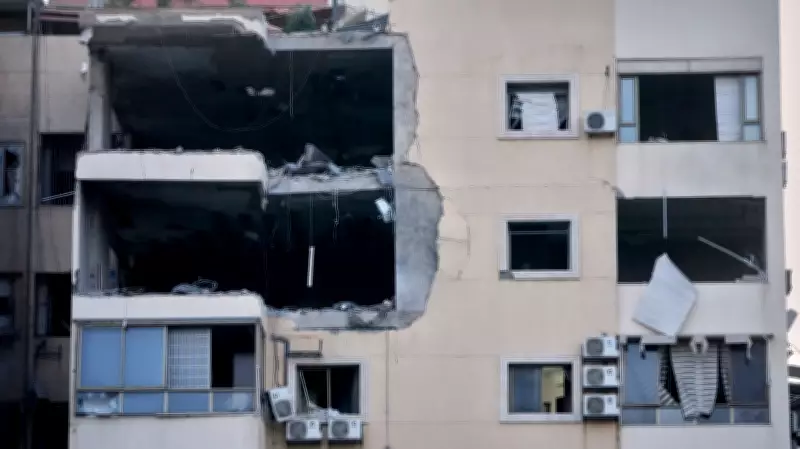
In a significant development, Israel carried out air strikes on the Hezbollah-controlled southern suburbs of Beirut, resulting in more than a dozen explosions that rocked the Lebanese capital. The strikes, which began around 2:40 a.m. local time, prompted widespread panic, with residents fleeing on foot and by car, clogging roads as they sought safety. Israel also stated it had targeted senior Hezbollah militants near Beirut.

Ceasefire Breakdown and Regional Escalation
This renewed violence marks a breakdown of the U.S.-brokered ceasefire agreed upon by Israel and Lebanon in 2024, which had followed over a year of fighting that left Hezbollah severely weakened. The tit-for-tat attacks between Hezbollah and Israel have widened the conflict, which originated from the United States and Israel’s joint attack on Iran on Saturday. The ongoing hostilities have sent oil prices soaring and severely disrupted air travel across the region.
Despite assurances from the U.S. ambassador to Lebanon that Israel would not escalate against Lebanon absent hostile acts, the Israeli military held Hezbollah fully responsible for any escalation. It issued warnings for residents of dozens of villages in southern and eastern Lebanon to evacuate immediately.
U.S. Involvement and Political Implications
The Israeli military announced late Sunday that its air force had established aerial superiority over Tehran, with a wave of strikes targeting intelligence, security, and military command centers across the Iranian capital. Meanwhile, the conflict has resulted in the first U.S. casualties, with three service personnel confirmed killed on a base in Kuwait on Sunday. Trump paid tribute to them as true American patriots but warned that more casualties are likely.
An extended military campaign poses significant political risks for Trump’s Republican party ahead of the U.S. midterm elections, which could determine control of Congress. A Reuters/Ipsos poll on Sunday indicated that only about one in four Americans approve of the operation. However, in a video statement, Trump vowed that military strikes on Iran would continue until all our objectives are achieved, claiming the assault had so far wiped out Iran’s military command and destroyed nine Iranian navy ships and a naval building.
Iran’s Leadership Vacuum and Regional Fallout
In Iran, President Masoud Pezeshkian revealed that a leadership council, comprising himself, the judiciary head, and a member of the powerful Guardian Council, had temporarily assumed the duties of Supreme Leader following Khamenei’s death. This creates a power vacuum that could lead to chaos, though the Trump administration has not outlined longer-term aims for the country.
Trump called on Iran’s military and police, including the Islamic Revolutionary Guards Corps, to cease fighting, promising immunity for those who surrender and threatening certain death for resisters. He reiterated calls for the Iranian people to revolt against the government, stating in a pre-recorded video, I call upon all Iranian patriots who yearn for freedom to seize this moment... America is with you.

Economic and Logistical Disruptions
The conflict has triggered severe economic and logistical disruptions. Iran’s Revolutionary Guards claimed to have hit three U.S. and UK oil tankers in the Gulf and the Strait of Hormuz, and attacked military bases in Kuwait and Bahrain with drones and missiles. Shipping data showed hundreds of vessels, including oil and gas tankers, dropping anchor in nearby waters, with traders anticipating sharp increases in crude oil prices.
Global air travel was heavily impacted as continued air strikes forced major Middle Eastern airports to close, including Dubai—the world’s busiest international hub—in one of the most significant aviation interruptions in recent years. While Oman’s foreign ministry indicated Tehran was open to de-escalation, Iranian Foreign Minister Abbas Araqchi suggested on social media that Iran was prepared to keep fighting.
Uncertain Future for Iran
The longer-term prospects for Iran remain unclear, particularly regarding how it will rebuild its leadership and replace Khamenei, who had held power since 1989. Experts note that while his death and that of other leaders deal a major blow to Iran, it may not necessarily end the country’s entrenched clerical rule or the influence of the Revolutionary Guards. A new analysis of Iranian social media suggests the public is already looking beyond Khamenei for a replacement, indicating potential shifts in the political landscape.
As the situation evolves, the international community watches closely, with top Trump administration officials set to brief the full U.S. Senate and House of Representatives on Tuesday to address the escalating crisis.