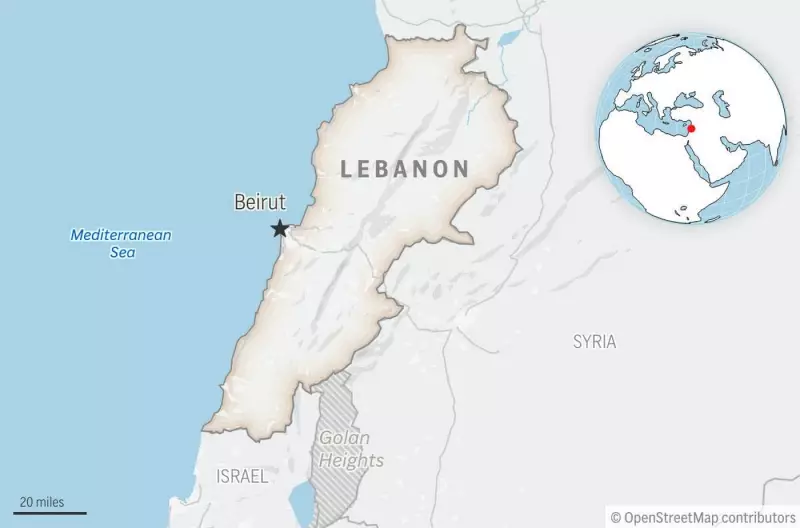
The Israeli military has launched a series of strikes against Hezbollah positions within Lebanon, targeting what it described as infrastructure belonging to the Iran-backed militant group. The operations, confirmed on January 9, 2026, mark a significant escalation in cross-border hostilities between the two adversaries.
Scope of the Military Operations
According to statements from the Israel Defense Forces (IDF), the strikes were carried out in 'several areas' across southern Lebanon. While the IDF did not immediately disclose the exact number or precise nature of all targets, the action is reported to be a response to recent rocket fire and drone incursions from Lebanese territory into northern Israel.
The Lebanese capital, Beirut, is a focal point for Hezbollah's political and military leadership, though the recent strikes are believed to have concentrated on operational sites in the south, closer to the Israeli border. This military action underscores the persistent volatility along the frontier, which has seen repeated exchanges of fire since the outbreak of the Israel-Hamas war.

Regional Context and Rising Tensions
This escalation occurs within a complex regional landscape. The conflict between Israel and Hamas in Gaza has frequently spilled over into tensions with other Iranian proxy groups, including Hezbollah in Lebanon and Houthi forces in Yemen. Analysts warn that sustained clashes on the Israel-Lebanon border risk triggering a broader, full-scale war.
The strike also follows public statements from Iran's supreme leader, which were interpreted as signaling a potential crackdown on dissent. Regional observers note that the interconnected nature of these conflicts means developments in one theatre often have immediate repercussions in another, creating a cycle of retaliation.
Implications for Regional Stability
The direct targeting of Hezbollah assets deepens concerns about an expanding regional conflict. Hezbollah, which possesses a vast arsenal of rockets and missiles, is considered a far more formidable military opponent than Hamas. A sustained confrontation could lead to widespread destruction in both Lebanon and Israel.
International calls for de-escalation are likely to intensify following these strikes. The situation remains fluid, with the potential for further Israeli responses to any retaliatory attacks from Hezbollah. The ongoing volatility presents a major challenge for diplomatic efforts aimed at containing the conflict and preventing a wider regional war.