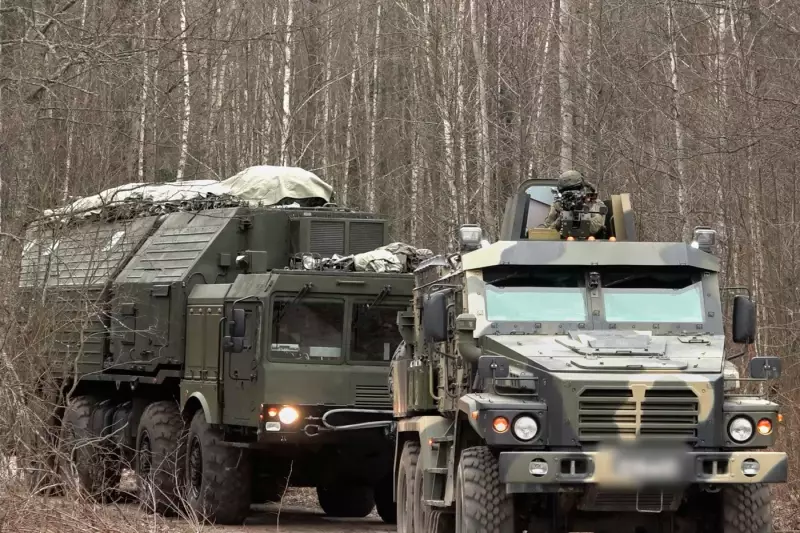
Russia has announced a significant escalation in its military capabilities, declaring that its new Oreshnik missile systems are now in active service. The nuclear-capable weapons were confirmed as operational by Moscow on December 30, 2025, marking a pivotal moment in the ongoing conflict with Ukraine and raising fresh concerns for Western allies.
Details of the New Missile System
The Russian Defense Ministry released video evidence on Monday, December 29, 2025, showing the Oreshnik missile system undergoing training exercises. The footage, provided by the ministry's press service, was filmed at an undisclosed location in Belarus, highlighting the close military cooperation between Moscow and Minsk. The deployment of such advanced, strategic weaponry in Belarus places it closer to NATO's eastern flank and within striking distance of key Ukrainian and European targets.
While specific technical details of the Oreshnik system remain classified, its designation as "nuclear-capable" is the most critical and alarming feature. This capability allows the missiles to deliver both conventional and nuclear warheads over considerable distances, fundamentally altering the strategic calculus in Eastern Europe. The announcement appears timed to demonstrate Russian military resilience and technological advancement despite international sanctions and the prolonged war effort.

Strategic Implications and Global Response
This development is seen by analysts as a direct challenge to Western military support for Ukraine and a signal of Russia's long-term strategic intentions. The activation of a new generation of strategic weapons during an active war is a rare and provocative move, intended to project strength and possibly deter further aid to Kyiv. For Canadian observers and policymakers, this underscores the volatile and increasingly dangerous nature of the security environment, where arms escalation continues unabated.
The move is likely to prompt urgent discussions within NATO regarding enhanced deterrence and defense postures. It also complicates any near-term prospects for diplomatic negotiations, as Russia continues to bolster its offensive capabilities. The deployment in Belarus further entrenches that country's role as a key staging ground for Russian military operations, a situation that has persisted since the early days of the 2022 invasion.
Broader Context and Canadian Perspective
For Canadians, particularly the large Ukrainian diaspora, news of advanced Russian weaponry entering service reinforces deep-seated skepticism about the prospects for a "fair" peace. Many Ukrainian-Canadians have expressed doubts that Moscow is genuinely interested in ending the war on terms that respect Ukraine's sovereignty, viewing such military advancements as evidence of a commitment to a prolonged conflict. This sentiment echoes in communities across Canada, from Toronto to Edmonton, where the war remains a central issue.
The announcement comes amidst a complex global backdrop, including debates over foreign policy shifts in other nations and ongoing domestic challenges within Canada, from public health to economic concerns. However, the introduction of the Oreshnik system serves as a stark reminder that geopolitical tensions driven by military aggression remain a dominant and dangerous force on the world stage, with direct implications for international stability and Canadian security interests.