The United States government has formally acknowledged its role in a catastrophic aviation disaster that claimed 67 lives. Federal authorities have admitted to acts of negligence that contributed to a mid-air collision between a commercial airliner and a military helicopter over the nation's capital.
The Collision and Immediate Aftermath
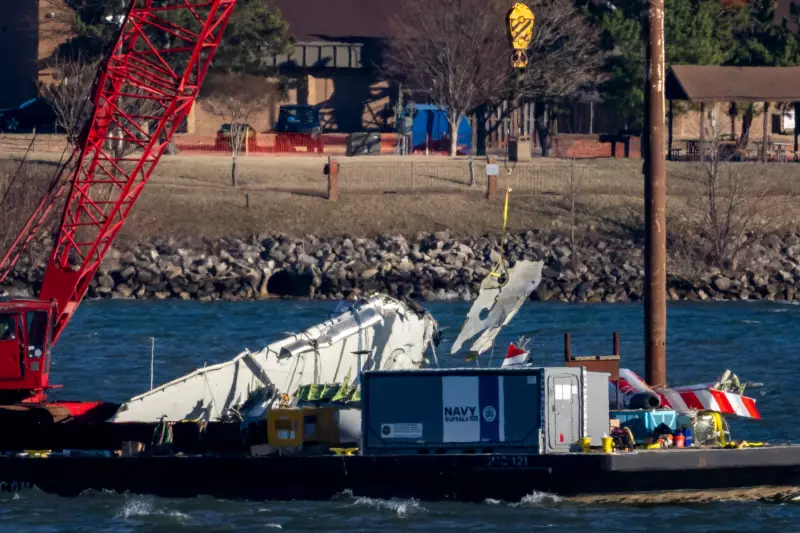
The tragic incident occurred in the skies near Ronald Reagan Washington National Airport on February 4, 2025. An American Airlines passenger jet and a U.S. Army Black Hawk helicopter collided before plunging into the Potomac River in Arlington, Virginia. The scene was one of devastation, with emergency crews and salvage vessels, like the one captured in Associated Press photographs, working for days to recover wreckage and victims from the water.
The death toll was staggering, with all passengers and crew from both aircraft perishing, totaling 67 lives lost. The crash immediately raised urgent questions about air traffic control procedures and the coordination of military and civilian flight paths in the densely restricted airspace around Washington, D.C.

Investigation Reveals Systemic Failures
A lengthy investigation by the National Transportation Safety Board (NTSB), in coordination with the Department of Defense, pinpointed critical failures. The probe concluded that lapses in communication and procedural adherence by government-contracted air traffic controllers and military flight planners were direct causes of the accident.
The official admission of negligence, confirmed on December 17, 2025, marks a significant moment of accountability. It validates preliminary findings that suggested the doomed flight paths should never have been allowed to intersect. Investigators found that a combination of human error and potentially flawed technology for tracking mixed-traffic airspace created the fatal conditions.
Accountability and the Path Forward
This formal concession by the U.S. government is a pivotal step for the victims' families seeking answers and justice. It lays the groundwork for potential legal settlements and compels a sweeping review of aviation safety protocols. The Department of Defense and the Federal Aviation Administration have jointly pledged to implement all recommended changes from the NTSB's final report.
Key reforms are expected to focus on enhanced radar integration, stricter communication protocols between civilian and military aviation authorities, and updated training for controllers managing complex airspace. The goal is to prevent a repeat of the systemic breakdown that led to one of the deadliest aviation accidents on U.S. soil in decades.
As salvage operations concluded and the final report was released, the focus shifted from recovery to prevention. The admission of fault, while a painful acknowledgment for the government, is seen by safety advocates as a necessary catalyst for meaningful change in how the nation's most sensitive flight corridors are protected.