The United States government took a significant step on Tuesday, formally designating the branches of the Muslim Brotherhood in Egypt, Jordan, and Lebanon as terrorist organizations. This action fulfills longstanding requests from key Arab allies and aligns with the views of many U.S. conservatives.
A Sustained Effort Against Extremism
In an official statement, Secretary of State Marco Rubio framed the designations as the beginning of a broader campaign. "These designations reflect the opening actions of an ongoing, sustained effort to thwart Muslim Brotherhood chapters' violence and destabilization wherever it occurs," Rubio declared. He further emphasized that the U.S. would employ all available tools to cut off resources for these groups.
The practical consequences of this decision are severe for the designated entities. It mandates the blocking of any assets they hold within the United States and criminalizes financial transactions with them. Additionally, it creates major obstacles for members seeking to travel to the U.S.

Rationale and Regional Connections
The move, initiated by the Trump administration in November, was justified in part by the groups' alleged support for Hamas, the Palestinian armed faction already classified as a terrorist organization by Washington. The U.S. Treasury Department stated that both the Egyptian and Jordanian branches of the Brotherhood have coordinated with Hamas.
The State Department provided further details on the Lebanese branch's activities, accusing the Sunni Muslim movement of allying with the Iranian-backed Shiite militant group Hezbollah. The department claimed the Lebanese Muslim Brotherhood had "pushed for a more formal alignment with the Hezballah-Hamas axis" and participated in rocket attacks against Israel.
The Brotherhood's Rise and Fall
Founded in Egypt in 1928, the pan-Islamist Muslim Brotherhood once held significant influence across the Arab world. Its political zenith came in 2012 with the democratic election of Mohamed Morsi as Egypt's president following the Arab Spring uprising that ousted longtime autocrat Hosni Mubarak.
However, Morsi's presidency was short-lived. He was deposed in a 2013 military coup led by then-general Abdel Fattah al-Sisi, who subsequently launched a sweeping crackdown that decimated the Brotherhood's structure in its birthplace. The movement has since been in retreat, facing concerted pressure from major Arab powers like Egypt, Saudi Arabia, and the United Arab Emirates, which view its vision of a unified Islamic caliphate as a direct threat to their rule.
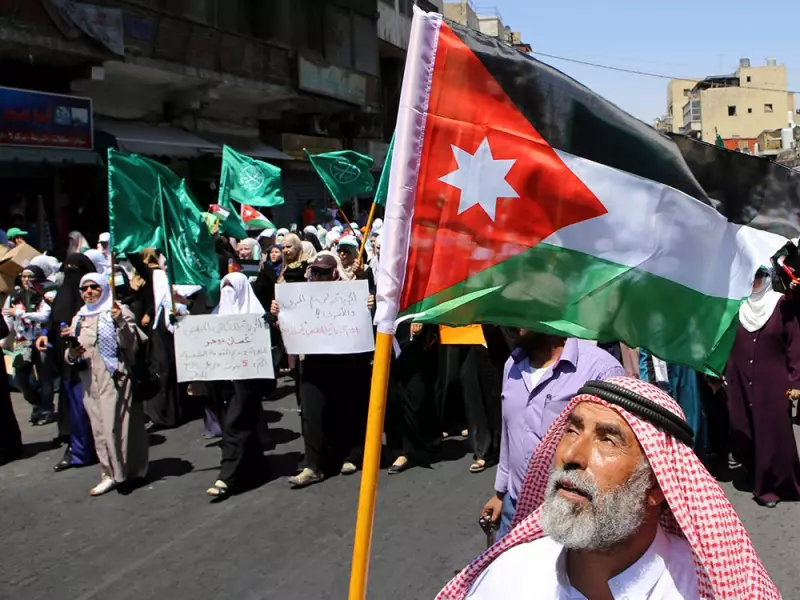
In Jordan, the Brotherhood's political wing remains the largest opposition bloc in parliament, representing a unique case where it operates with a degree of political tolerance, though now under the shadow of the U.S. designation.