In a significant escalation of hostilities, the United States and Iran have engaged in a tense exchange of threats following military strikes near sites associated with Iran's nuclear programs. The situation, unfolding in March 2026, has heightened concerns about the potential for a wider war in the Middle East, with both nations issuing stern warnings.
Recent Strikes and Immediate Aftermath
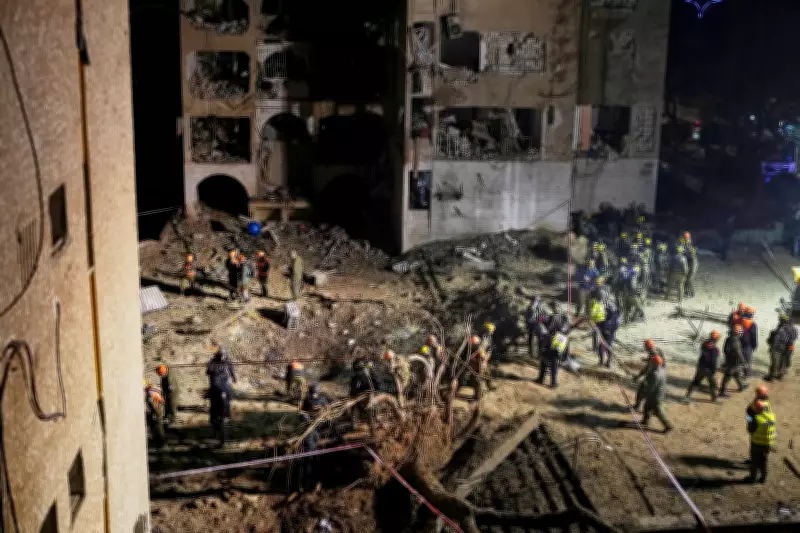
The immediate catalyst for this latest flare-up was a series of strikes, including one where Israeli security forces and rescue teams were observed working at a site in Arad, southern Israel, that had been hit by an Iranian missile. This incident, documented on March 22, 2026, underscores the direct military engagements occurring in the region. The strikes targeted locations believed to be connected to nuclear development, a perennial flashpoint in international relations.
Diplomatic and Military Posturing
In response, U.S. and Iranian officials have publicly traded accusations and threats. The U.S. has emphasized its commitment to regional security and its allies, while Iran has warned of severe consequences for any further aggression. This verbal sparring reflects the deep-seated animosity and strategic rivalry between the two nations, which has persisted for decades.

The timing of these events is particularly sensitive, coming amid ongoing international efforts to monitor and contain Iran's nuclear ambitions. The strikes near nuclear-linked sites have inevitably drawn global attention, with many world leaders calling for restraint to prevent a full-scale conflict.
Broader Regional Implications
The threats of expanding war have sent shockwaves through the Middle East, a region already grappling with multiple conflicts and political instability. Neighboring countries are closely monitoring the situation, fearing that any escalation could draw in other actors and destabilize the area further. The potential for miscalculation or unintended consequences remains high, given the complex web of alliances and enmities in the region.
Historical Context and Current Tensions
This latest confrontation is rooted in a long history of proxy wars, sanctions, and diplomatic standoffs. Iran's nuclear program has been a central issue, with previous agreements like the JCPOA (Joint Comprehensive Plan of Action) facing challenges and revisions. The current administration's approach, as seen in these recent strikes and threats, signals a hardening of positions on both sides.
International observers are urging de-escalation, highlighting the catastrophic humanitarian and economic impacts that a broader war could entail. The United Nations and other diplomatic channels are likely to be activated in an attempt to mediate and reduce tensions.
Looking Ahead: Uncertainty and Risk
As of late March 2026, the situation remains fluid and unpredictable. Both the U.S. and Iran have demonstrated a willingness to engage in military actions, and the rhetoric suggests that neither side is backing down. The risk of a spiral into a larger conflict is real, with potential global ramifications for energy markets, security alliances, and international law.
In conclusion, the exchange of threats between the U.S. and Iran following strikes near nuclear sites marks a dangerous new phase in their longstanding rivalry. The world watches anxiously, hoping for diplomatic breakthroughs to avert a devastating war.