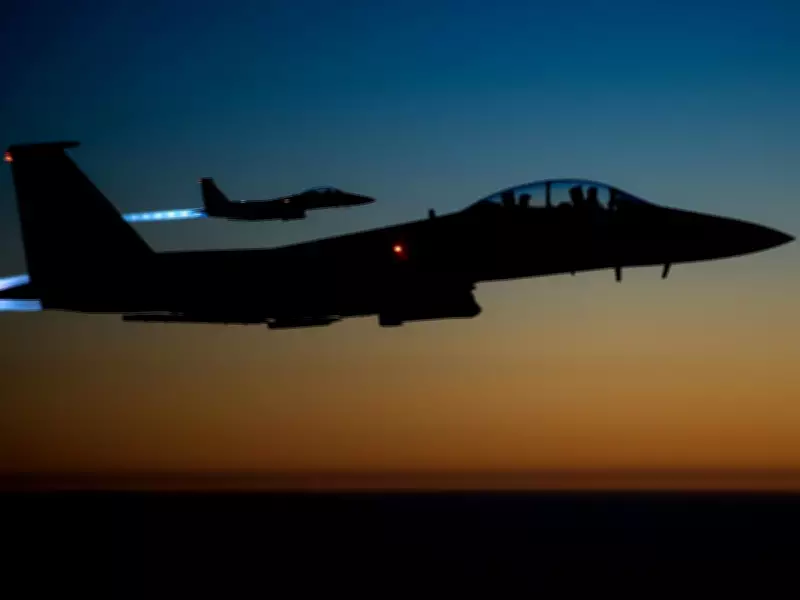
In a significant development in the ongoing Middle East conflict, Iran has shot down a U.S. fighter jet for the first time during the war, with the U.S. successfully rescuing one of the two crew members involved. According to a U.S. official who requested anonymity due to the sensitivity of the information, a search-and-rescue operation is actively underway to locate the second crew member of the F-15E Strike Eagle.
Historic Combat Loss and Alliance Impact
This incident marks the first known combat loss of a U.S. or Israeli fighter jet, delivering a substantial blow to the alliance after nearly five weeks of intense warfare. The conflict has already triggered a global energy crisis, exacerbating tensions in the region. The White House confirmed that U.S. President Donald Trump has been briefed on the downed jet, while U.S. Central Command has not yet responded to requests for comment.
Iran's Claims and Regional Escalation
Iran's semi-official Tasnim news agency reported on Friday that the country had shot down a "highly advanced American fighter jet," with other Iranian media outlets publishing photos purportedly showing wreckage from the aircraft. The Iranian government has not officially commented on the incident, but the attack comes amid a series of escalated regional strikes.

Iran has continued its assaults across the Middle East following renewed threats from President Trump against Iranian infrastructure. In recent developments, the United Arab Emirates' largest natural gas processing facility, Habshan, suspended operations after debris from a projectile interception caused a fire. Additionally, a drone attack ignited Kuwait's Mina Al Ahmadi oil refinery, which has a daily capacity of 346,000 barrels.
Infrastructure Damage and Military Assessments
Further damage was reported in Kuwait, where a power and water desalination plant was hit in an early Friday attack, while Saudi Arabia stated it intercepted several drones in the morning hours. These incidents highlight the widening impact of the conflict on critical energy and civilian infrastructure.
On Thursday, President Trump posted a video of a destroyed bridge and warned that "much more to follow" would occur if Iran did not agree to a deal to end the conflict. Despite these threats, Iran has remained defiant, with Foreign Minister Abbas Araghchi asserting that strikes on civilian structures "will not compel Iranians to surrender." Iran has shown little willingness to accept Trump's peace demands, instead presenting conditions largely unacceptable to the U.S. and Israel.
Military Capabilities and Strategic Implications
A CNN report cited sources familiar with the matter, indicating that approximately half of Iran's missile launchers remain intact despite over 12,000 U.S. and Israeli strikes since the war began in late February. The assessment also noted that thousands of one-way attack drones are still in Iran's arsenal, though some launchers may be inaccessible rather than destroyed.
President Trump has signaled a potential shift in strategy, suggesting he might withdraw U.S. forces from the conflict within two to three weeks, even if the vital Strait of Hormuz remains effectively closed. However, his messaging has been inconsistent, reflecting the complex and volatile nature of the situation. As the war continues, the rescue of the F-15 crew member offers a glimmer of hope amid escalating violence and strategic challenges.