Water System Attacks Emerge as Critical New Warfare Threat in Middle East
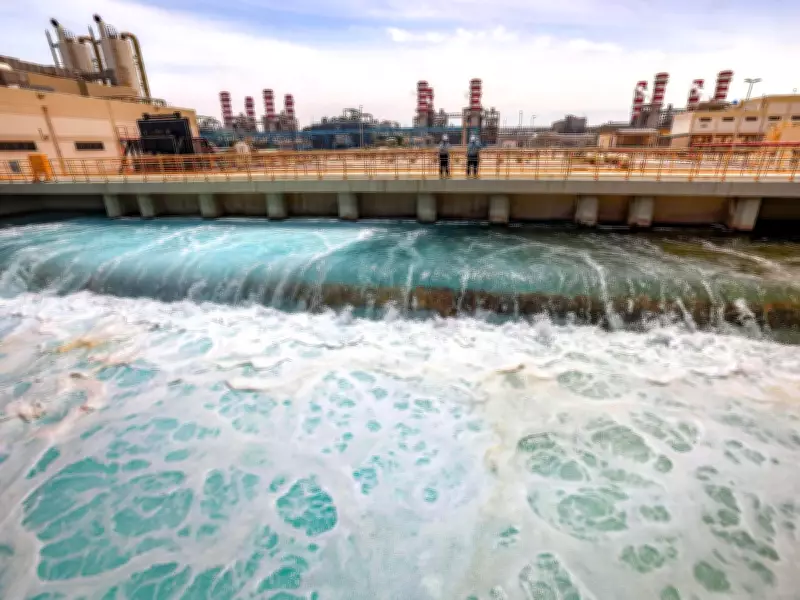
Attacks on water infrastructure, historically uncommon in warfare, have emerged as a dangerous new dimension in Middle Eastern conflicts, with recent strikes targeting desalination plants that provide life-sustaining water to millions across the arid region.
Recent Incidents Highlight Growing Vulnerability
Bahrain's interior ministry reported Sunday that an Iranian drone attack damaged a water desalination facility, accusing Tehran of indiscriminately targeting civilian infrastructure. While Bahrain's national communication office later stated the attack had no impact on water supplies or network capacity, the incident underscores the growing vulnerability of critical water systems.
The strike followed accusations from Iran that the United States attacked a desalination plant on Qeshm Island that supplies water to approximately 30 villages. Iran's Revolutionary Guard force claimed the United States launched the attack from a base in Bahrain.

Strategic Importance of Desalination in Arid Region
The Middle East ranks among the driest regions globally, with water availability approximately ten times lower than the global average according to World Bank data. This scarcity makes desalination plants absolutely essential to both economic stability and drinking water supplies throughout the region.
Approximately 42 percent of the world's total desalination capacity is located in the Middle East, according to research published in the journal Nature. The dependence on desalinated water varies by country but remains critically high across the region: desalination provides 42 percent of drinking water in the United Arab Emirates, 70 percent in Saudi Arabia, 86 percent in Oman, and 90 percent in Kuwait, according to a 2022 report from the French Institute of International Relations.
"Over there, without desalinated water, there is nothing," emphasized water economist Esther Crauser-Delbourg in an interview with AFP.
Historical Warnings About Water Infrastructure Vulnerability
Intelligence agencies have long recognized the strategic vulnerability of Middle Eastern water systems. As far back as 2010, the CIA warned that disrupting desalination facilities in most Arab countries "could have more serious consequences than the loss of any other industry or commodity."
A 2008 U.S. diplomatic cable published by WikiLeaks suggested Riyadh might need to evacuate within a week if the Jubail desalination plant or its pipelines suffered severe damage. The water supply proves particularly strategic for major urban centers including Dubai and Riyadh.
Multiple Vulnerabilities Beyond Direct Attacks
Beyond direct military strikes, desalination plants face multiple vulnerabilities including power outages and seawater contamination from sources such as oil spills, according to security experts. The facilities require constant power to operate and depend on clean seawater inputs for effective desalination processes.
Enhanced Security Measures Implemented
In response to growing threats, security around critical water infrastructure has been significantly strengthened. Philippe Bourdeaux, regional director for Africa and the Middle East at French water management firm Veolia, confirmed enhanced security measures including tightened access controls around plant perimeters.
"The recent events are of course prompting us to be extremely vigilant," Bourdeaux stated. "In some countries, authorities have placed missile batteries around the largest plants to counter the drone or missile threat."
Veolia supplies desalinated water to multiple regions including Jubail in Saudi Arabia and Muscat, Sur, and Salalah in Oman, making their security protocols particularly relevant to regional water stability.
Potential for Escalation
While attacks on water systems have remained limited thus far, experts warn of potentially catastrophic consequences if such targeting becomes widespread. Water economist Esther Crauser-Delbourg cautioned that "the first side that dares to attack water triggers a war far more enormous than the one we have today," highlighting how water infrastructure attacks could dramatically escalate existing conflicts.

The emergence of water system attacks represents a dangerous evolution in Middle Eastern warfare, transforming essential civilian infrastructure into potential military targets with profound implications for regional stability and human security.