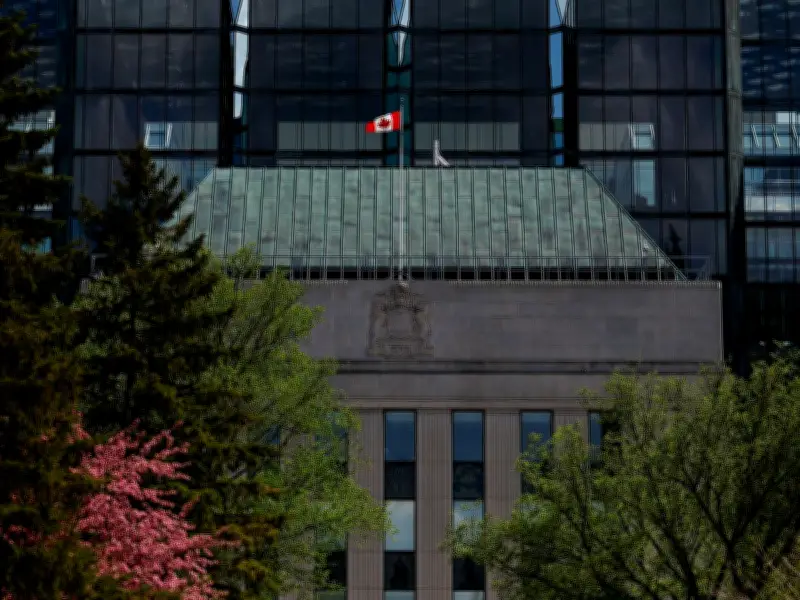
The Bank of Canada's governing council faced a difficult choice between supporting a sluggish economy and curbing rising inflation when it decided to hold interest rates steady on June 10, according to a summary of deliberations released Wednesday.
Economic Dilemma at the Core
The council noted that Canada's economy was weak and operating below its potential, but rising energy prices due to the war in Iran were pushing inflation above the two-per cent target. Members discussed the risks of either raising rates to contain inflation or cutting them to boost growth, but ultimately decided to hold the policy rate at 2.25 per cent.
“For the time being, members were prepared to look through the near-term impacts of higher energy prices on inflation,” the report read. “Governing Council members agreed that holding the policy interest rate unchanged at 2.25 per cent at the June rate decision balances the risks described above.”

Economic Contraction and Soft Labour Market
The decision came after the economy unexpectedly contracted by 0.1 per cent year-over-year in the first quarter of 2026, far below the central bank's prediction of 1.5 per cent growth in its April Monetary Policy Report. The labour market remained soft, with employment little changed since the start of the year and the unemployment rate hovering between 6.5 and seven per cent, despite an unexpected jump in employment in May.
Geopolitical Uncertainty and Inflation
The war in Iran, which entered its fourth month at the time of the decision, added to uncertainty. Shortly after the rate decision, the United States and Iran signed an agreement to reopen the Strait of Hormuz and eventually end the war, leading to a significant drop in global oil prices. The governing council also cited the upcoming review of the Canada-U.S.-Mexico Agreement and U.S. tariffs as major sources of uncertainty.
No Recession Yet
Despite the weak economy, the governing council said Canada has not entered a recession. April's headline inflation rate stood at 2.8 per cent, within the bank's expectations, and core inflation measures were close to the two-per cent target. The proportion of Consumer Price Index components rising faster than three per cent has declined.
Signs of Recovery
Recent data suggested the economy would resume growth in the second quarter. Flash estimates for April indicated real gross domestic product expanded by 0.4 per cent month-over-month, and exports rose by 0.2 per cent. Consumer spending was expected to continue growing, and businesses surveyed in the Bank of Canada's Business Outlook Survey showed some pickup in hiring intentions and investment.
The governing council emphasized that monetary policy must remain “nimble” because markets and events could shift unexpectedly, according to the summary.