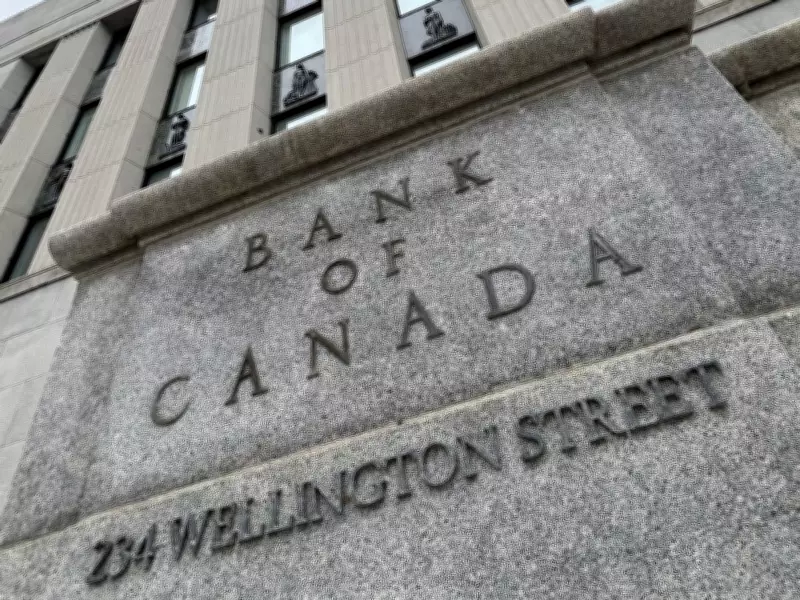
The Bank of Canada will increase interest rates to 2.5 per cent when it eventually decides to act, but that move will not occur until next year, according to a new report from the C.D. Howe Institute. The think tank's shadow monetary policy council recommends that the central bank maintain its current rate of 2.25 per cent at its upcoming meeting on April 29, and subsequently raise it by 25 basis points in March 2027.
Uncertainty Over Iran War Influences Decision
The C.D. Howe Institute's monetary policy council, described as a shadow Bank of Canada governing council, stated that its recommendation is based on significant uncertainty surrounding the war in Iran and its potential impact on oil prices and the Canadian economy. As monetary policy operates with a lag, the council emphasized that the key question is not where oil prices are today, but where they will be later in the year.
Higher oil prices can benefit Canada's economy, but they also pose risks to global growth. Other data points indicate that Canada is already feeling the effects. Statistics Canada reported on Thursday that the Industrial Product Price Index (IPPI) rose 2.4 per cent month over month in March and 7.8 per cent year over year, while the Raw Materials Price Index (RMPI) jumped 12 per cent month over month and 23.6 per cent year over year. Both indexes exceeded analysts' expectations.

Impact of Strait of Hormuz Closure
The agency attributed the increases to the United States-Israel war on Iran and the subsequent closure of the Strait of Hormuz, which caused energy and petroleum product prices to surge by a record 27.4 per cent. Non-energy areas also saw price rises, including ammonia, fertilizers, and aluminum, as supplies from the Middle East were disrupted. Canola prices increased due to its use in the biofuel market, while wheat and grain prices rose because of higher fertilizer costs.
Derek Holt, vice-president and head of capital markets economics at the Bank of Nova Scotia, expressed concern about the two measures of inflation that exclude energy and petroleum. He noted that these measures have been soaring for some time and tend to lead core consumer price inflation. Scotiabank currently expects interest rates to reach three per cent by the end of 2026.
Bank of Canada's Mandate and Outlook
The Bank of Canada's mandate is to maintain inflation at its two per cent target. It uses rate hikes to control accelerating inflation and cuts to address deflation. Current measures of core inflation are slightly above the target. The central bank will release a new Monetary Policy Report on Wednesday, which is expected to forecast higher growth but also higher inflation, including a stronger rebound in core inflation, according to Bradley Saunders, North America economist at Capital Economics Ltd. He added that the improved growth backdrop and nascent threat of higher inflation expectations mean the Bank of Canada will keep rates on hold but likely adopt a more hawkish tone at its meeting next week.