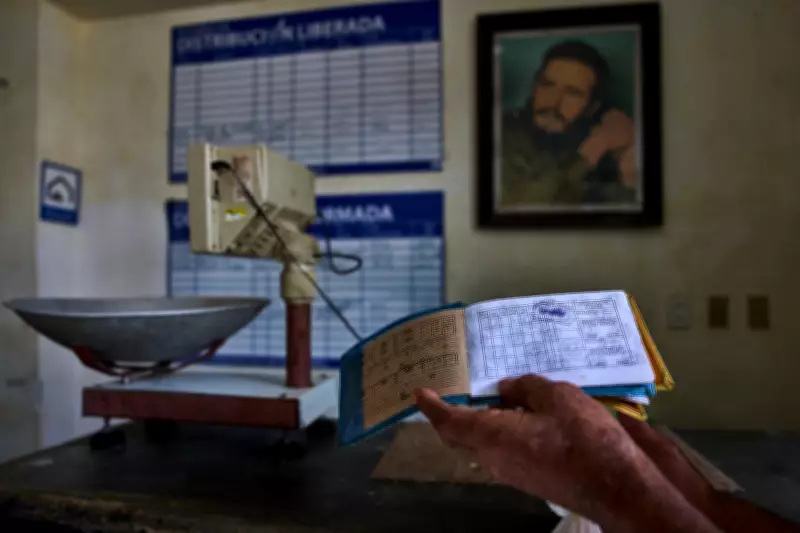
Cubans are facing increasing hardship as the government's ration book system, known as the "libreta," provides fewer and fewer products. The Associated Press reports that the once-reliable source of basic goods is now failing to meet the needs of the population.
Ration Books and Economic Decline
The libreta, a pocket-size booklet, has been a staple of Cuban life for decades, entitling each citizen to a monthly supply of subsidized food and other essentials. However, in recent months, the variety and quantity of available products have sharply declined. State-run bodegas, where rations are distributed, often have empty shelves or limited stock.
Residents describe long waits and disappointment as items like rice, beans, eggs, and cooking oil become scarce. Many are forced to turn to the black market, where prices are exorbitant, or rely on remittances from abroad. The situation highlights the deepening economic crisis in Cuba, exacerbated by U.S. sanctions, the pandemic, and inefficiencies in the state-controlled economy.

Impact on Daily Life
For many Cubans, the ration book is no longer sufficient to guarantee three meals a day. Families are adopting survival strategies, such as growing their own vegetables or bartering with neighbors. The government has acknowledged the shortages but blames external factors, while critics point to systemic failures.
In Havana, a man named Carlos, 62, showed his libreta against a backdrop of a Fidel Castro portrait. He expressed frustration, noting that the system that once symbolized revolutionary equality now symbolizes struggle. "We used to get enough. Now, we get barely anything," he said.
The crisis has also fueled migration, with record numbers of Cubans attempting to reach the United States. The Biden administration has implemented new parole programs to manage the flow, but the root causes remain unaddressed.
Historical Context
The libreta was introduced in 1962 after the U.S. embargo, designed to ensure equitable distribution of scarce goods. For decades, it provided a basic safety net. Today, it reflects the country's economic stagnation and the challenges of transitioning to a more market-oriented system.
Experts warn that without significant reforms, the situation will worsen. The Cuban government has taken steps to legalize small businesses and attract foreign investment, but progress is slow. Meanwhile, ordinary Cubans continue to endure.