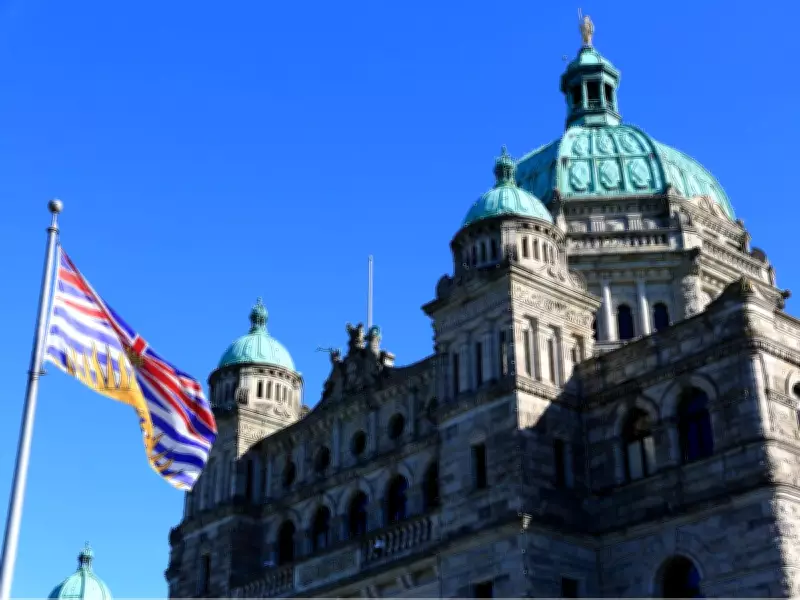
According to an announcement on Monday by Premier David Eby, his government will not “suspend or amend DRIPA” in the spring legislative session — the legislation that has created great uncertainty about private property rights in British Columbia. This apparent flip-flop has drawn criticism from those who believe the law undermines economic stability.
DRIPA and Its Impact on Property Rights
The Declaration on the Rights of Indigenous Peoples Act (DRIPA) requires the provincial government to align its laws with the United Nations Declaration on the Rights of Indigenous Peoples (UNDRIP). This includes securing “free, prior and informed consent” from Indigenous Peoples before approving projects on claimed lands. Critics argue that this creates ambiguity for property owners and investors.
Court Rulings Fuel Uncertainty
A 2025 B.C. court ruling found that the province’s reformed mineral claims regime violated DRIPA. The case involved the Gitxaala and Ehattesaht First Nations, who claimed inadequate consultation. Additionally, the B.C. Supreme Court granted Aboriginal title to over 324 hectares of land in Richmond, valued at $2.5 billion, to the Cowichan First Nation, stating that such title is “prior and senior” to other property interests. This has left more than 150 property owners in Richmond uncertain about their rights.

Bilateral Agreements Add to Concerns
The Eby government has also signed bilateral agreements with First Nations, including the Haida Nation on Haida Gwaii, where about half of the residents are non-Haida. In 2024, the government granted Aboriginal title to the Haida over the land, and while the deal says private property must be honored, private property rights are considered incompatible with Aboriginal title, further fueling uncertainty.
Economic Consequences
British Columbia is struggling to attract private-sector investment, living standards as measured by per-person GDP have stagnated, and people are leaving the province in large numbers. Tegan Hill, an economist with the Fraser Institute, argues that DRIPA is a key factor fueling uncertainty over property rights. She contends that to strengthen the economy, Premier Eby should help restore stability and repeal this legislation.
“Why would someone choose to live or work in a province where their home or investment isn’t protected?” Hill asks. She emphasizes that repealing DRIPA would send a strong signal that property rights are secure, encouraging investment and economic growth.
Conclusion
Premier Eby, who drafted the interpretation memo for DRIPA in 2019 as attorney general, is directly tied to the legislation. Hill calls on him to take decisive action to repeal DRIPA and restore confidence in property rights across British Columbia.