Political analyst Duane Bratt has issued a stark warning about the potential erosion of democracy in Alberta, triggered by a recent government motion that establishes a new process for adjusting electoral boundaries. Bratt expresses deep concern that this initiative is not designed to create balanced and fair electoral districts but rather appears to be a deliberate attempt to manipulate ridings to benefit the United Conservative Party (UCP).
The Historical Context of Electoral Boundary Adjustments
Electoral boundaries require periodic adjustments every decade due to population fluctuations across the province. Some regions experience significant growth, while others face decline. The process involves balancing multiple complex factors, including:
- Equality of votes across constituencies
- Geographic size and features of ridings
- Preservation of communities of interest
- Indigenous representation considerations
- Accurate measurement of population growth trends
Historically, Canada and its provinces have managed this process exceptionally well through independent panels that submit reports to legislatures, which are then adopted without controversy. This approach builds public trust in electoral systems and prevents political parties from pursuing narrow self-interests.

The Dangerous Precedent of Gerrymandering
In contrast to Canada's traditional approach, countries like Hungary and the United States demonstrate how politicians can draw boundaries to benefit the governing party. This practice, known as gerrymandering, creates extreme electoral maps with bizarre shapes that maintain geographic contiguity while serving partisan purposes.
The term originated in 1812 when Massachusetts Governor Elbridge Gerry approved a partisan map that resembled a salamander. A common gerrymandering technique involves diluting urban ridings with rural voters, which is particularly relevant in Alberta where progressive parties typically perform better in cities while conservative parties dominate rural areas.
Alberta's Current Electoral Boundary Situation
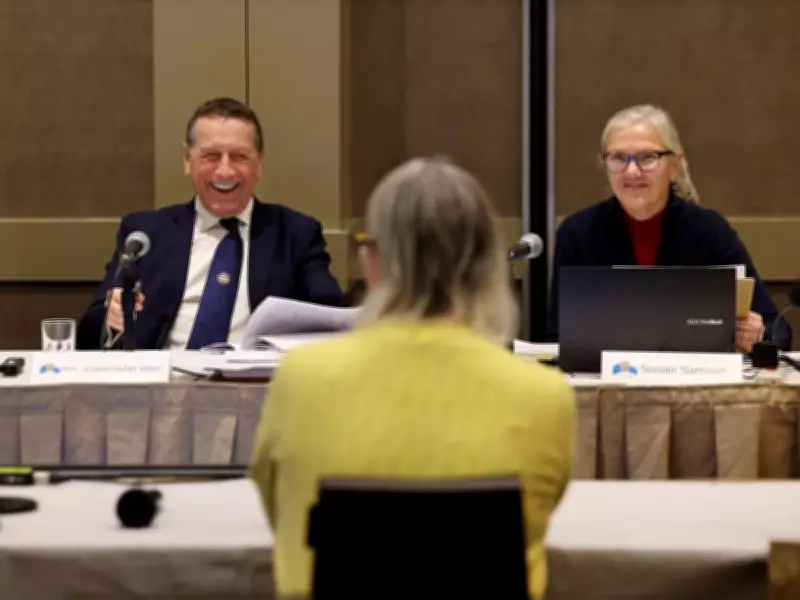
Alberta formed an Electoral Boundaries Commission (EBC) in March 2025, chaired by former justice Dallas Miller with four panelists equally appointed by the UCP and NDP. Despite experiencing a substantial population surge concentrated in Calgary, Edmonton, and Airdrie, the commission was only authorized to add two additional seats, increasing the total from 87 to 89.
The EBC produced a unanimous interim report in October 2025 recommending additional seats in Calgary, Airdrie, and Edmonton, along with the amalgamation of ridings in central Edmonton, central Alberta, and northern Alberta. While hybrid ridings combining urban and rural elements can be legitimate when communities of interest cross city boundaries—such as Chestermere's relationship with Calgary or St. Albert's connection to Edmonton—concerns arise when rural communities located 30 to 100 kilometers away are added to urban ridings.
Bratt emphasizes that the new government motion appears to circumvent the traditional arm's-length process, potentially allowing politicians to draw boundaries that serve their electoral interests rather than ensuring fair representation for all Albertans. This development represents what Bratt describes as "a major erosion of democracy in Alberta" that could undermine public trust in the electoral system and enable the kind of partisan boundary manipulation seen in other democracies where politicians control the redistricting process.