Bloc Québécois Prioritizes Local Representation in Crucial Terrebonne Byelection
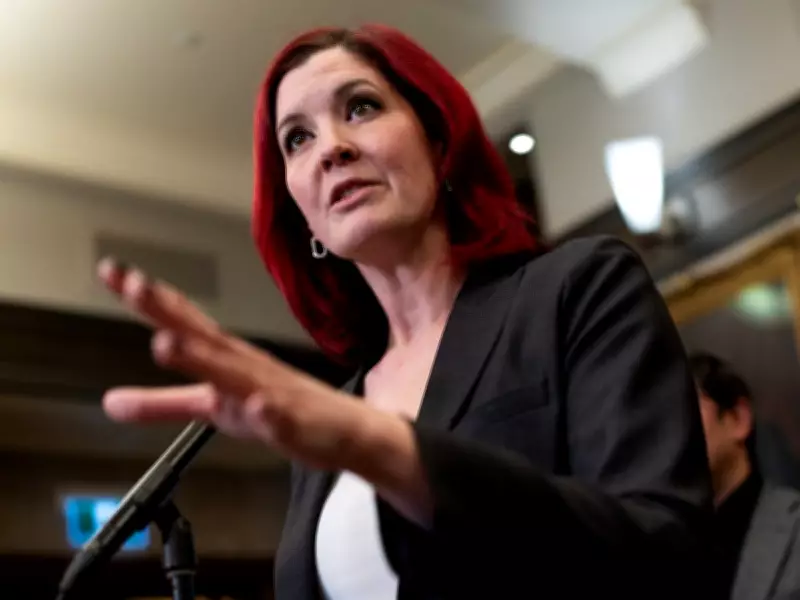
In the lead-up to a pivotal Quebec byelection next month, Bloc Québécois House Leader Christine Normandin has firmly dismissed speculation that her party aims to block Prime Minister Mark Carney's path to a majority government. Instead, she emphasizes a focus on local issues in the Terrebonne riding, located northeast of Montreal.
Normandin Rejects Majority-Blocking Narrative
"The idea of halting a majority is a narrative that is, of course, not ours," Normandin stated on Monday, March 9, 2026. "What we're hearing on the ground is that people in Terrebonne want a voice to represent them in Parliament, not a voice to represent the government in Terrebonne." This statement comes as the Bloc Québécois prepares for a byelection scheduled for April 13, 2026, which could significantly impact the federal political landscape.
Background on Terrebonne Riding and Byelection Context
Terrebonne is a largely francophone riding with a long history of supporting the Bloc Québécois, having voted for the party in every federal election since 1993—except for last year. In that election, Liberal candidate Tatiana Auguste narrowly defeated Bloc incumbent Nathalie Sinclair-Desgagné by a single vote after a judicial recount. However, the Supreme Court of Canada recently annulled the vote due to a misprint on a mail-in ballot return envelope, leading to a court-ordered redo of the vote.

Prime Minister Mark Carney announced on Sunday that three byelections will take place on April 13, including two in safe Liberal seats in the Toronto area and the Terrebonne riding. The Liberals need to win all three to secure a one-person majority of 172 seats in Parliament, making the Terrebonne contest particularly consequential.
Political Strategy and Polling Insights
Philippe J. Fournier, founder of the polling aggregator website 338Canada, described the timing of the byelection as a "stroke of genius" for the Liberals. It is scheduled for the Monday after their party convention in Montreal, which is expected to generate significant media exposure just before the vote. With Carney's government performing well in polls, even in Quebec, this visibility could benefit the Liberals as voters head to the polls.
"So, if the Liberals can't win Terrebonne under these conditions, they probably will never win it again," Fournier remarked. His projections currently indicate a toss-up between the Bloc and the Liberals, with the outcome likely hinging on each party's ground game in the riding.
Local Concerns Take Center Stage
Normandin highlighted that local issues are paramount for Terrebonne residents, rather than national political maneuvering. She cited concerns such as expropriations related to the high-speed rail project set to pass through the area and calls for a public inquiry into the CURAM benefit payment software, which the Bloc claims has adversely affected old age security payments for seniors.
"Those are questions that matter to the people of Terrebonne," Normandin asserted. "It's not up to them to give a majority to a government that's already acting like a majority government." This focus on grassroots concerns underscores the Bloc's strategy to connect with voters on issues directly impacting their daily lives.
Historical Voting Patterns and Provincial Context
Voters in Terrebonne have a history of supporting various political shades, including provincially where the Parti Québécois won a byelection last year, defeating the Coalition Avenir Québec (CAQ). Terrebonne Mayor Mathieu Traversy, a former PQ representative, adds to the riding's complex political dynamics. Despite this, Fournier's analysis suggests the federal race remains highly competitive, with local engagement being a critical factor.
As the April 13 byelection approaches, the Bloc Québécois aims to leverage local advocacy to secure victory, while the Liberals seek to capitalize on their momentum to gain a parliamentary majority. The outcome will not only shape representation for Terrebonne but could also influence the broader balance of power in Ottawa.