Nearly two decades after its decisive electoral win, the terrorist organization Hamas continues to wield significant influence over Palestinian politics. This control stems directly from the last parliamentary elections held by the Palestinian Authority, a vote whose outcome reshaped the Middle East's political landscape and set the stage for ongoing conflict.
The 2006 Election: A Surprise Victory for Hamas
On January 25, 2006, Palestinians went to the polls to elect members to the Palestinian Legislative Council (PLC), the body functioning as their parliament. The result was a political earthquake: Hamas secured a landslide majority, winning 74 of the 132 seats. This gave the group, which planned and executed the October 7, 2023, massacre, outright control of the legislature.
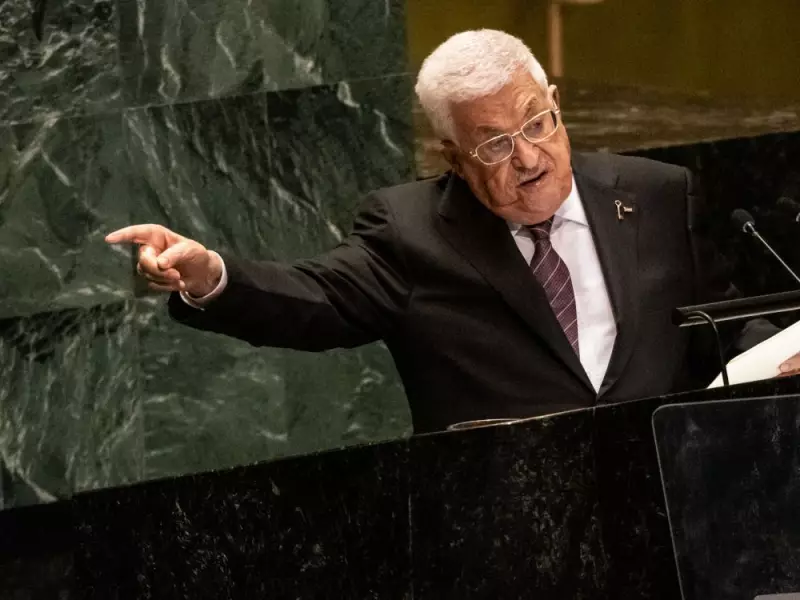
The election was called by Palestinian Authority President Mahmoud Abbas, who had been elected a year earlier following Yasser Arafat's death. A key precondition set by Abbas was the inclusion of all Palestinian factions, a term used as a euphemism for internationally designated terrorist groups like Hamas, Palestinian Islamic Jihad, and the Popular Front for the Liberation of Palestine.

Confident of a win for his Fatah party, Abbas nevertheless took steps to bolster his position. After a meeting with U.S. President George W. Bush, he received $50 million in public aid and an additional $2.3 million quietly approved to "support the elections." Observers alleged this extra funding was aimed at improving Fatah's image. Abbas also unilaterally expanded the PLC from 88 to 132 members, a move critics say breached the Oslo Accords.
International Rejection and Hamas's Consolidation of Power
Following the shocking result, a embarrassed Mahmoud Abbas had little choice but to invite Hamas leader Ismail Haniyeh to form a new government. Haniyeh did so on March 29, 2006, and began gradually taking control of the Palestinian Authority's apparatus.
The international response was swift and severe. Israel, the United States, and the European Union refused to recognize or cooperate with the elected Hamas government. Crucially, they also cut off the flow of funds that had been sustaining the Palestinian Authority.
While President Abbas worked to prevent the total collapse of the PA, Hamas moved quickly to assert its authority, particularly in the Gaza Strip. The group immediately ramped up its terrorist activities. In 2006 alone, Hamas and other Gaza-based militants fired over 1,700 rockets indiscriminately at Israeli civilian populations. That same year, Hamas terrorists infiltrated Israel, killing two soldiers and kidnapping Corporal Gilad Shalit, holding him captive for five years.
A Lasting Legacy and Political Deadlock
The 2006 election created a fundamental and enduring paradox. By the standard of the democratic process it conducted, Hamas became the legitimate governing authority for Palestinians. However, its foundational ideology and violent actions made it impossible for the international community to engage with it as a legitimate political partner.
This schism led to a internal Palestinian split in 2007, with Hamas seizing full military control of Gaza and Fatah retaining governance in the West Bank. No national elections have been held since. The victory nearly twenty years ago granted Hamas a powerful claim to political legitimacy, which it has maintained alongside its militant capabilities, shaping the dynamics of the Israeli-Palestinian conflict to this day.
The election outcome underscores a central challenge: when a group committed to violence participates in and wins a democratic contest, it creates a crisis for democratic norms and international diplomacy that remains unresolved.