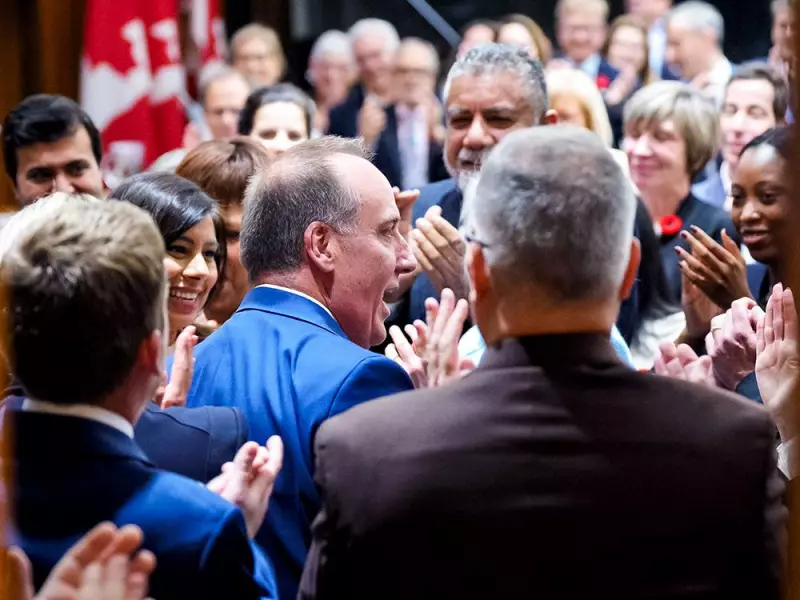
In the wake of two high-profile defections from the Conservative caucus to the governing Liberals, political observers are left wondering who might be next. An exclusive analysis by the National Post has identified four key characteristics that commonly define a potential floor crosser, suggesting that future party switchers may be more predictable than previously thought.
The Profile of a Potential Defector
The recent moves by MPs Michael Ma in early December 2025 and Chris d'Entremont in November 2025 sent shockwaves through Parliament Hill. Ma's defection, in particular, was seen as a surprise to many within his own party. However, a closer look reveals he exhibited a classic profile. The analysis points to four critical markers: a lack of deep, long-term roots in their original party; no clear short-to-medium term path to a significant governing role; a victory margin of less than five percentage points in the last election; and representing a riding with a history of voting Liberal that could easily flip in the next campaign.
With the Liberals holding a minority government just three seats shy of a majority following the April election, the incentive to recruit opposition MPs is intense. Sources within the main federal parties confirm that both the Liberals and Conservatives have conducted detailed internal analyses to identify MPs at highest risk of defection and have crafted strategies to either poach or retain them.

Who Fits the Bill in the Conservative Caucus?
Applying these four criteria, several Conservative MPs emerge as potential candidates who fit the risk profile. It is crucial to emphasize that this does not mean these MPs have considered crossing the floor, held discussions about switching, or taken any steps to do so. They simply share the strategic vulnerabilities that make them potential targets for recruitment or subjects of internal party concern.
These individuals typically are MPs without entrenched party lineage, who won their seats by a narrow margin in the 2025 election, and whose constituencies have demonstrated a propensity to vote Liberal in the past. For such MPs, the calculus of political survival becomes complex—fearing the loss of their seat if they run again as a Conservative when the Liberal brand is strong in their region.
The High-Stakes Recruitment Battle
The dynamic has set the stage for a behind-the-scenes recruitment battle. The Liberal government, highly motivated to secure a working majority, is actively looking for opportunities to bolster its numbers. Conversely, the Conservative opposition is forced into a defensive posture, working to shore up loyalty and address the grievances of potentially vulnerable caucus members.
This situation moves beyond mere speculation into a calculated political strategy. The identification of these key traits transforms floor-crossing from a matter of unpredictable personal whim to a foreseeable event based on electoral mathematics and career trajectory. As the 43rd Parliament continues, all eyes will be on those MPs who check the most boxes on this list, watching for any sign of a shift in allegiance that could alter the balance of power in Ottawa.