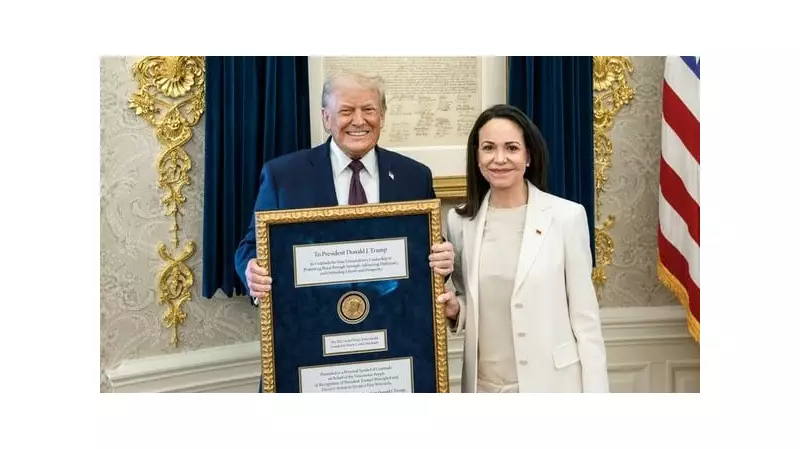
In a remarkable political gesture, Venezuelan opposition figure Maria Corina Machado presented a Nobel Peace Prize to United States President Donald Trump during a high-profile meeting at the White House. The event, which took place on January 15, 2026, underscores the complex and evolving diplomatic relationships in the Western Hemisphere.
A Symbolic Gesture at the White House
The presentation ceremony was a focal point of discussions between President Trump and the Venezuelan political leader. While the specific reasons cited by Machado for bestowing this honour upon the American president were not detailed in the initial report, the act itself carries significant symbolic weight. It highlights the ongoing political crisis in Venezuela and the international alliances being forged by its opposition forces.
The meeting was covered by journalist Joy Malbon, who broke down the details of the encounter. The event was noted as occurring on January 15, 2026, with an update to the report filed on January 16, 2026, at 6:20 AM EST.

Context of Venezuela's Political Struggle
Maria Corina Machado is a leading voice against the current Venezuelan government and has long been a prominent figure in the nation's opposition movement. Her decision to present a Nobel Peace Prize to President Trump suggests a strong alignment with his administration's policies toward Venezuela, which have historically included significant economic sanctions and political pressure.
This event is likely to be interpreted as a strategic move to garner continued or increased support from the United States for the opposition's cause. The presentation of such a prestigious award, even in a symbolic capacity, is a powerful tool for drawing global attention and legitimizing political stances on the international stage.
Reactions and Implications
The White House meeting and the prize presentation are expected to generate mixed reactions globally. Supporters of the Venezuelan opposition may view it as a justified recognition of support for democracy, while critics may see it as a politically charged act. The aftermath of this event could influence diplomatic channels, foreign policy decisions, and the internal political dynamics within Venezuela.
Furthermore, this high-profile interaction between a U.S. president and a foreign opposition leader sets a notable precedent. It emphasizes the role of personal diplomacy and symbolic acts in international relations, especially concerning nations experiencing profound internal conflict.
As the situation develops, observers will be watching closely for any official statements from both governments regarding the meeting's outcomes and the future of U.S.-Venezuela relations. The act of presenting a Nobel Peace Prize, one of the world's most recognized accolades, ensures this event will be a topic of discussion in political circles for some time.