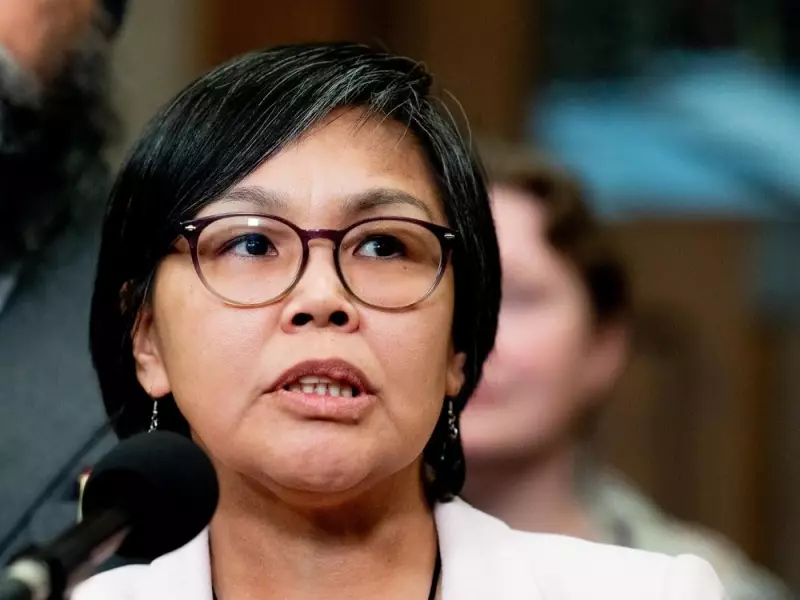
In a revelation highlighting the intense political maneuvering in Ottawa, Nunavut New Democratic Party MP Lori Idlout has publicly confirmed she turned down an offer from the governing Liberals to cross the floor of the House of Commons.
A Decision Weighed Heavily
Lori Idlout, the second-term MP for Canada's northernmost riding, told the CBC that the proposal came not only from Liberal Party officials but also from some of her own constituents. These Nunavummiut, she said, believed her decision should be based on what is "best for Nunavummiut." Despite the pressure, Idlout stated firmly, "I have decided at this point that I can't." She acknowledged the choice "weighed heavily" on her, citing concerns that joining the government would limit her ability to criticize it while advocating for her territory's needs.
Part of a Broader Pattern of Recruitment
Idlout's admission, made in early January 2026, follows a similar statement from British Columbia Conservative MP Scott Anderson just one day prior. Anderson was also courted by the Liberals and rejected the overture in blistering terms, calling it a betrayal of his constituents and core beliefs. He vowed it would be a "cold day in Hell" before he considered such a move and promised to publicize any future attempts.

This aggressive recruitment drive is born of pure political mathematics. The Liberal government under Prime Minister Mark Carney currently sits one seat short of the 172 required for a majority. Two Conservative MPs have already defected to the Liberals in recent months: Chris d'Entremont (Acadie—Annapolis, N.S.) in November and Michael Ma (Markham—Unionville, Ont.) in December. Securing Idlout's seat would have tipped the balance.
Political Scientists See a Shift in Strategy
While floor-crossing attempts are a standard tactic for minority governments, political scientist Laura Stephenson, a professor and department chair at the University of Western Ontario, notes a surprising element. These recent overtures are occurring without the immediate promise of ministerial appointments, a traditional lure used in the past.
Stephenson suggests the current political environment under Carney may have blurred traditional partisan lines. "I can imagine a situation where people maybe aren't as happy with the way their own parties are operating and want to be part of a different type of policy push," she told the National Post. She praised Idlout's response as thoughtful and pragmatic, rooted in representational duty.
The political stakes for Idlout are particularly high. She reclaimed the Nunavut riding by a razor-thin margin of just 77 votes over Liberal candidate Kilikvak Kabloona in the April 2025 election. Her decision to remain with the NDP, despite the allure of potentially greater influence within a majority government, underscores the complex calculations facing MPs in a precarious parliamentary landscape.