Peter Magyar Emerges as Victor in Hungarian Parliamentary Election
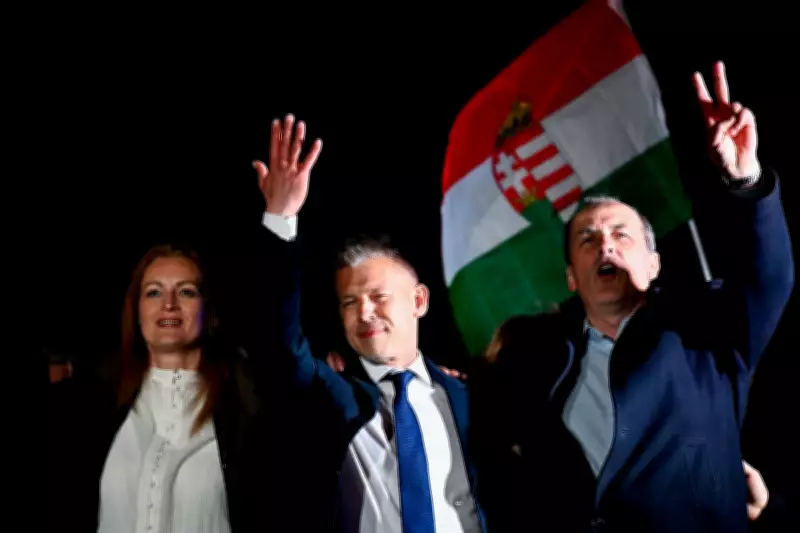
In a stunning political upset, Peter Magyar, the leader of the opposition Tisza party, has unseated Hungary's long-standing Prime Minister Viktor Orban. The partial results of the parliamentary election, announced on Sunday, April 12, 2026, in Budapest, Hungary, revealed a decisive shift in the nation's political landscape. Magyar celebrated with his party colleagues following the announcement, marking the end of Orban's dominant rule, which had shaped Hungarian politics for years.
A New Era for Hungarian Politics
The victory of Peter Magyar and the Tisza party represents a profound change in Hungary's governance. Viktor Orban, known for his conservative policies and strongman image, had maintained a firm grip on power through multiple elections. However, Magyar's campaign successfully mobilized opposition forces, capitalizing on public discontent and promising reforms. This election outcome is seen as a referendum on Orban's leadership, with voters opting for a new direction under Magyar's guidance.
Celebrations and Reactions in Budapest
As the partial results were declared, celebrations erupted in Budapest, with Magyar and his supporters expressing jubilation at the historic win. The atmosphere was electric, reflecting the high stakes of this election. Analysts suggest that Magyar's victory could lead to significant policy shifts, particularly in areas such as economic management, international relations, and democratic institutions. The Tisza party's success is attributed to a well-organized campaign that resonated with a broad spectrum of Hungarian society.

Implications for Hungary and Beyond
This political transition is expected to have far-reaching implications, not only for Hungary but also for the European Union and global politics. Orban's departure may alter Hungary's stance on key issues like immigration, EU integration, and regional alliances. Magyar's leadership will be closely watched as he navigates the challenges of forming a new government and implementing his party's agenda. The election underscores the dynamic nature of democracy in Central Europe, where voter sentiment can rapidly transform the political scene.
In summary, Peter Magyar's rise to power marks a pivotal moment in Hungarian history, ending Viktor Orban's era and ushering in a period of potential renewal and change. The world will be observing how Magyar's Tisza party governs and whether it can deliver on its promises to the Hungarian people.