Spring Election Forecast: Liberals Poised for Majority Victory
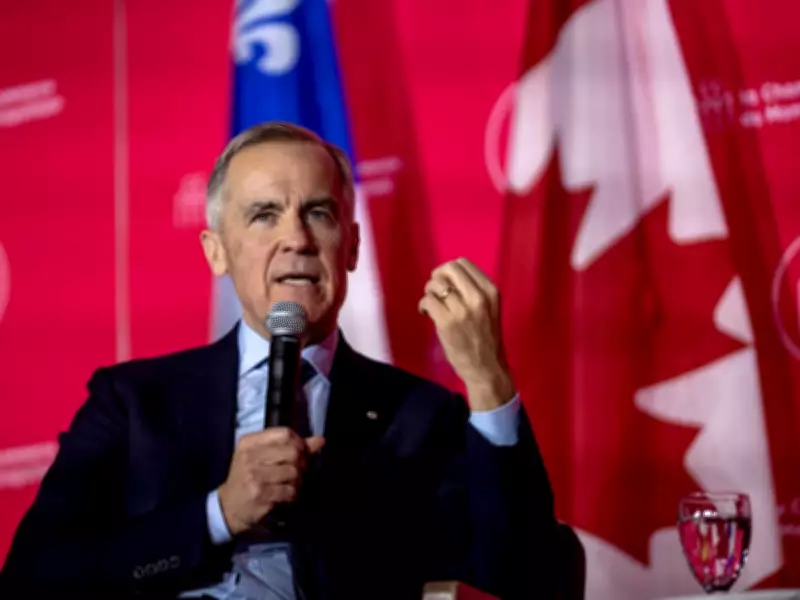
Political analysts are increasingly predicting a spring federal election in Canada, with the primary uncertainties revolving around the precise timing and the magnitude of the anticipated Liberal majority. Prime Minister Mark Carney appears strategically positioned to secure a commanding majority government if he decides to call an election in the coming months.
Polling Numbers and Strategic Calculations
Despite holding a substantial 15-point lead over the Conservative Party according to recent polling data, statistical models from 338canada.com currently project only a narrow majority for the Liberals. However, both Liberal Leader Mark Carney and Conservative Leader Pierre Poilievre recognize that with former U.S. President Donald Trump emerging as a central ballot question, the Liberals could potentially achieve a double-digit majority in Parliament.
The electoral timing presents a complex dilemma for Carney. While he seeks a strong majority to implement his comprehensive vision for Canada's economic transformation, this ambitious agenda requires substantial time to execute. Economic performance in 2026 is expected to remain challenging, adding another layer of complexity to the political calculus.

Alberta's Rising Influence and Constitutional Ambitions
Alberta Premier Danielle Smith continues to advocate vigorously for pipeline development, renewed federalism, and ultimately constitutional reform. In the background, the Stay Free Alberta petition drive, scheduled to conclude on May 2, continues to demonstrate organizational effectiveness and broad demographic support despite limited media coverage.
A new credible social media influencer, Keith Wilson K.C., has emerged as a significant information source for those curious about Alberta's political movements. Interestingly, Carney appears less concerned about potentially "catalyzing" latent separatist sentiments currently dormant in Alberta, focusing instead on his national economic agenda.
Poilievre's Political Predicament and Conservative Challenges
Conservative Leader Pierre Poilievre acknowledges the likelihood of electoral defeat despite current efforts to improve his personal approval ratings through increased public visibility. The notion that Conservatives could cooperatively "work with" Liberals to counter Trump's influence to the south while simultaneously addressing separatist movements both east and west is increasingly viewed as political fantasy given Canada's deep regional divisions.
These divisions could potentially be leveraged to generate contempt toward Alberta within Ontario media circles, providing Poilievre with a consolation prize of sorts—a solid election platform that will likely be substantially adopted by the Liberals following the election.
NDP Leadership Transition and Electoral Implications
The writ for any spring election is unlikely to be dropped before the NDP elects Avi Lewis as their new leader at the end of March. Lewis's leadership is expected to benefit the Liberals significantly, as his proposals to shut down Alberta's oil industry and implement a wealth tax would likely alienate baby boomers who hold most of Canada's wealth, potentially decimating NDP support.
These displaced voters are expected to flock to the Liberal Party, further strengthening Carney's electoral position. However, Carney's political window of opportunity may not remain open indefinitely. His recent Davos speech was widely praised as a masterpiece that galvanized both Canadians and international observers to organize "middle powers" to counter what he termed "hegemonic" forces—a clear reference to Trump's influence.
International Coalition Building Challenges
The fundamental challenge with Carney's middle powers strategy lies in its practical implementation. By definition, middle powers typically lack both the resources and organizational structures necessary to form effective international coalitions. This strategic approach risks becoming increasingly apparent as a political flop over time, as no significant international partners have yet flocked to Carney's banner.

The coming months will reveal whether Carney can translate his domestic political advantage into both electoral victory and effective international leadership, while Alberta's political movements continue to reshape the national conversation about federalism and constitutional reform.