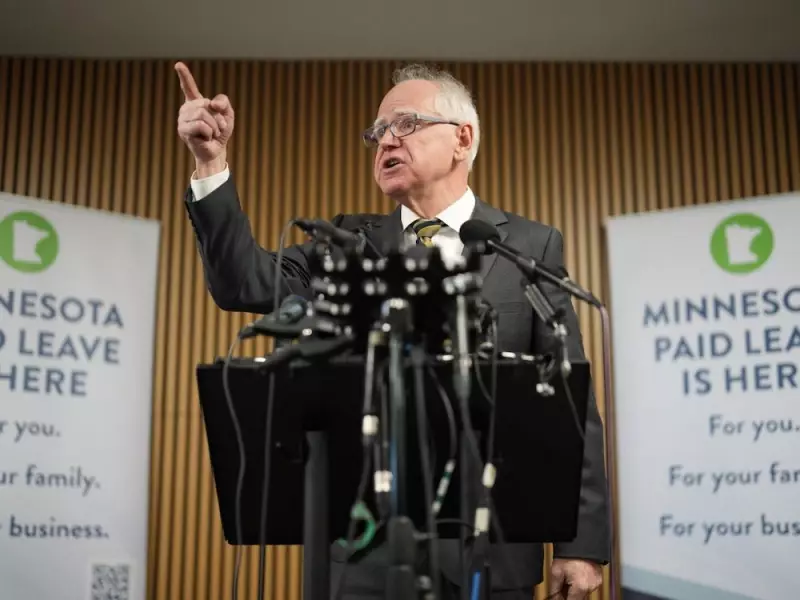
Minnesota finds itself in the national spotlight this week for a series of troubling events, culminating in a major political departure. Governor Tim Walz has announced he will not seek a third term in the 2026 gubernatorial election. This decision comes as a massive fraud scandal rocks the state's social services and casts a long shadow over his administration.
A State in Crisis: Fraud and Tragedy
The North Star State is grappling with a billion-dollar social services fraud centered on its sizable Somali immigrant community. The fallout from this scandal has reached the highest levels of state politics, directly influencing Walz's choice to exit the race. In a separate but concurrent tragedy, 37-year-old Renee Nicole Good was shot and killed by ICE agents during an operation targeting undocumented immigrants, adding to the state's somber news cycle.
The Unraveling of a Political Profile
Walz's tenure as governor of one of America's most progressive states is now under intense scrutiny. His national profile was significantly elevated in 2024 when then-presidential candidate Kamala Harris selected him as her running mate. However, according to Harris's campaign memoir "107 Days," Walz was not her first choice. She initially preferred former Transportation Secretary Pete Buttigieg, but reportedly feared that adding an openly gay man to a ticket already led by a Black, female, South Asian candidate would be one "first-ever" too many for centrist voters.

Harris ultimately turned to Walz, a former high school social studies teacher whose Midwestern, white, male persona was seen as a balancing act to her profile. Critics labeled the pairing a miscalculation, with both Harris and Walz facing defeat in the national election. Walz's political strategy during the COVID-19 pandemic, which included a social-distancing "snitching" hotline and strict executive orders carrying fines up to $1,000 and potential jail time, is frequently cited by opponents as government overreach.
Legacy and Political Consequences
The dual crises of the fraud scandal and the ICE shooting have defined the final chapter of Walz's governorship. His withdrawal marks a dramatic fall for a politician who, just two years prior, was on a national ticket. The situation underscores the volatile nature of identity politics and electoral strategy. While Pete Buttigieg's political future remains a subject of speculation, the immediate consequence is a wide-open race for Minnesota's governorship in 2026 and a damaged legacy for Tim Walz.
The events in Minnesota serve as a potent case study in how local scandals can precipitate national political consequences, ending careers and reshaping state power dynamics almost overnight.