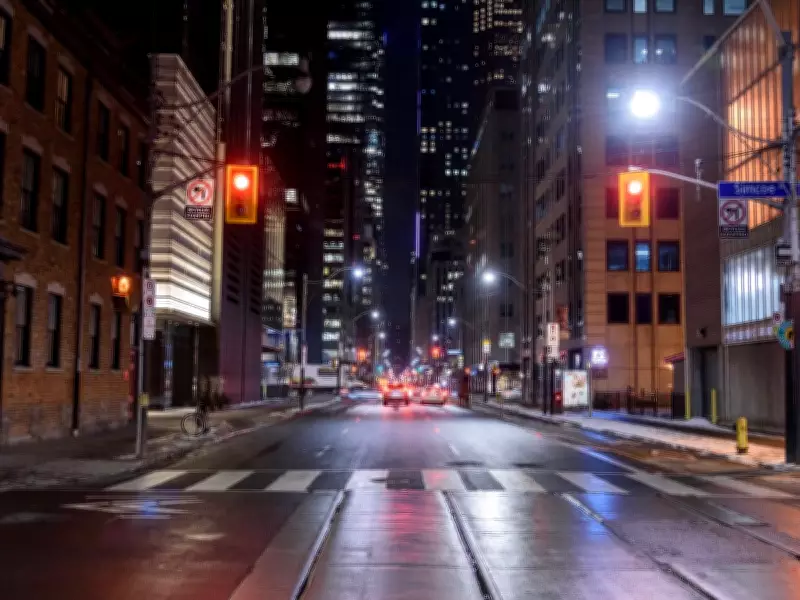
A Toronto driver who was convicted of failing to stop at a red light nearly two decades ago has successfully cleared his name on appeal. Neville Greene was charged on June 4, 2007, and pleaded not guilty, but a justice of the peace convicted him on July 10, 2008, after a police officer testified that Greene turned left at the intersection of Sheppard Avenue West and Jane Street after the light turned red.
The justice of the peace's reasons for conviction consisted of just two sentences: 'The officer was clear, concise and convincing of all the elements of the offence and the observations he made. There will be a finding of guilt and there will be a fine imposed.' This was according to a recent appeal heard in Ontario's Court of Justice.
Appeal Granted After Nearly Two Decades
Justice Brock Jones sided with Greene in a May 14 decision. 'It was not explained to me why it took nearly 18 years for the appeal to be heard, other than that the paperwork may have been “lost” for a long time,' Jones wrote. 'Nevertheless, for the reasons that follow, I granted the appeal.'

Jones found that the justice of the peace's reasons for conviction were inadequate and failed to address any of the central issues raised at trial. He also noted that the justice did not provide the degree of assistance necessary to ensure a fair trial for a self-represented litigant.
Sarcastic Remarks During Trial
Greene attempted to provide the police officer, the lone prosecution witness, with photos of the intersection to authenticate them. The purpose was to suggest that construction in the area might have impeded normal traffic flow. The photos also had impeachment value, as the officer had previously testified there was no construction. When Greene asked how to present the evidence properly, the justice sarcastically quipped that 'this isn’t Law and Order' and that he could testify later if he wanted.
Greene testified that when he entered the intersection, the traffic light was green. He had to wait until the light turned amber because another vehicle was in front of him. During cross-examination, he accepted the prosecutor's suggestion that the light might have turned red before he finished moving through the intersection, but not before he entered. When he tried to enter his photos as evidence, the justice ruled them inadmissible because they were taken the day after he was charged and demanded they be notarized.
Inadequate Reasons for Conviction
Justice Jones emphasized that jurists must explain how they arrive at a conclusion. 'The reasons in this case fall woefully short of this standard. The Justice of the Peace does not explain that the appellant was presumed innocent or that the Crown bore the burden of proof on the essential elements of the offence,' Jones wrote.
More concerning, the justice of the peace stated, without any reasoning, that the officer's evidence was accepted and the appellant was convicted. The justice did not address or analyze Greene's testimony at all, even though it could raise a reasonable doubt on whether Greene proceeded into the intersection when the light was red. Nor did the justice explain why the officer's testimony was accepted and Greene's rejected, or why Greene's testimony was not at least capable of raising a reasonable doubt.