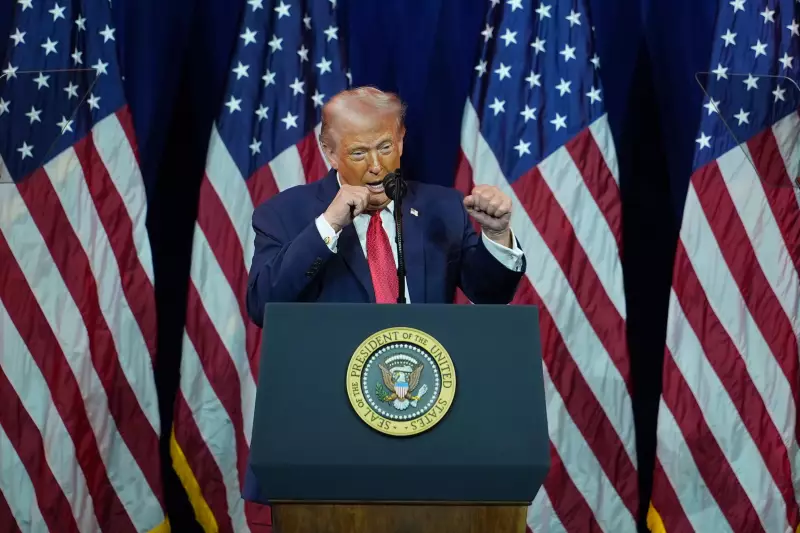
In a stark political warning, U.S. President Donald Trump told House Republican lawmakers that his political fate is directly tied to their performance in the upcoming midterm elections. The former president stated that if the party fails to secure victories in the 2026 congressional races, he will likely face impeachment proceedings.
A Direct Warning at Policy Retreat
The remarks were delivered on Tuesday, January 6, 2026, during the annual policy retreat for House Republicans in Washington, D.C. The event, intended to strategize for the coming legislative year, took a pointed turn as Trump linked the party's electoral success to his own legal and political vulnerability.
Photographer Evan Vucci captured the moment for the Associated Press, showing President Trump addressing the gathered lawmakers. The setting underscored the high-stakes nature of the message, delivered directly to the core of his political base in Congress.

The Political Calculus Behind the Statement
Trump's warning hinges on the balance of power in Congress. The President's statement implies that a loss of Republican seats in the House of Representatives in the November 2026 midterms would empower Democratic lawmakers to initiate impeachment proceedings against him.
This is not the first time Trump has faced the threat of impeachment, but his comments explicitly frame the 2026 elections as a referendum on his presidency and a direct shield against such actions. The message serves as a powerful motivator for Republican members to rally their base and campaign vigorously, framing their re-election bids as a defense of the presidency itself.
Context and Potential Consequences
The 2026 midterms are shaping up to be a critical juncture for both parties. President Trump's explicit connection of the electoral outcome to his potential impeachment raises the political stakes significantly. It transforms the campaign from a series of local and regional contests into a nationalized vote on Trump's tenure.
This strategy aims to ensure high voter turnout among Republican supporters by presenting a clear and personal consequence of electoral failure. However, it also provides a potent rallying cry for Democratic opponents, who may argue that electing a Democratic-majority House is a necessary step for congressional oversight and accountability.
The coming months will reveal how this warning influences campaign strategies, fundraising efforts, and voter mobilization on both sides of the political aisle as the country moves closer to election day.