AI Industry and Ideological Clashes Shape 2026 Primary Elections in North Carolina and Texas
The 2026 election cycle commences with primaries in North Carolina, Texas, and Arkansas on Tuesday, March 3, 2026, marking a pivotal moment for both Democratic and Republican voters to set their parties' directions in the post-Trump era. These contests are not merely about candidate selection but reflect deeper ideological rifts and the growing influence of external funding, particularly from the artificial intelligence sector.
North Carolina: AI Super PACs Fuel Progressive vs. Centrist Battle
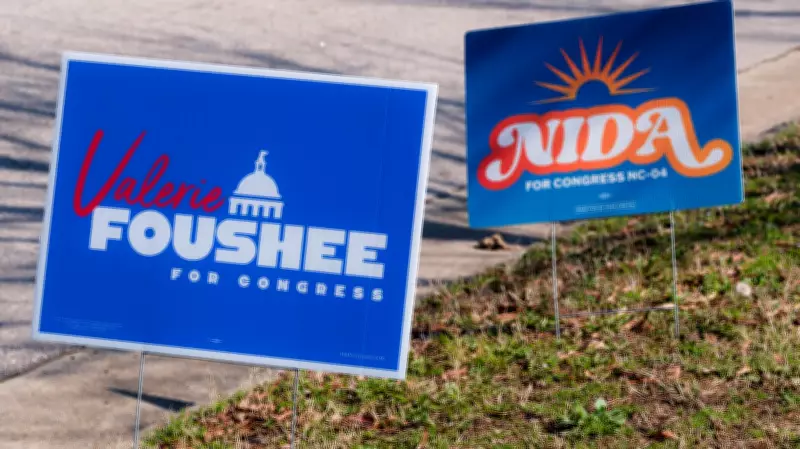
In North Carolina, the Democratic primary between Representative Valerie Foushee and Durham County Commissioner Nida Allam has become a focal point in the ongoing war between progressives and centrists. This race is uniquely shaped by super PACs linked to the artificial intelligence industry, adding a new dimension to traditional party divides.
Foushee, who previously defeated Allam with support from AIPAC-aligned groups, now benefits from Jobs and Democracy PAC, funded by AI firm Anthropic, which advocates for technology regulation. This PAC has invested heavily in her campaign, highlighting the AI industry's entry into political financing.

Allam, a progressive, has countered by emphasizing Foushee's ties to defense contractors and AI corporations, releasing an ad that criticizes Anthropic's role in Trump's military actions. She has garnered support from American Priorities, an anti-AIPAC super PAC that has spent over $1 million on her challenge.
This contest serves as an early test of AI-backed PACs' political power, with progressives hoping an Allam victory will build momentum following Analilia Mejia's recent win in New Jersey. The outcome could signal shifts in Democratic priorities, balancing issues like Israel policy with emerging tech regulations.
Texas: Electability and Identity Politics in Senate and House Races
Texas hosts some of the most competitive primaries, including two Senate races that underscore broader party dynamics. On the Democratic side, state Representative James Talarico faces Representative Jasmine Crockett in a battle where online prominence contrasts with offline influence.
Talarico, blending populist economic messages with centrist outreach, has gained support from both moderates and progressives, who view him as electable against Republicans. A super PAC backing him has aired ads highlighting GOP desires to face Crockett in the general election, framing her as a liability.
Crockett, however, argues that her approach can mobilize underrepresented Black and Latino voters, dismissing electability concerns as "dog whistles" against a Black woman. Her intense partisanship and social media fame have fueled strong fundraising, appealing to the Democratic base.
On the Republican side, incumbent Senator John Cornyn is expected to face a runoff against state Attorney General Ken Paxton, a far-right Trump ally with numerous scandals. Republicans fear a general election matchup between the populist Talarico and Paxton could give Democrats their best shot at winning Texas in decades.
Additionally, mid-decade redistricting has led to tough nomination battles for incumbents like Democrats Al Green and Julie Johnson, and Republicans Tony Gonzales and Dan Crenshaw. Gonzales, in particular, faces a challenge from Brandon Herrera amid allegations of misconduct, though his troubles began with votes against party lines on gun reform and immigration.
Broader Implications for Democratic and Republican Strategies
These primaries reveal evolving party strategies and internal conflicts. For Democrats, the Foushee-Allam race and Crockett's candidacy test whether primary voters still prioritize establishment-backed electability or are shifting toward identity politics and progressive energy.
Black political leaders express concern over potential defeats for candidates like Foushee and Crockett, fearing a pivot away from Black representation in favor of age, ideology, and outsider status. This reflects anxieties about generational change within the party.

For Republicans, the Texas Senate race highlights tensions between party leaders' electability concerns and voter instincts, reminiscent of the Tea Party era. The outcome could influence GOP approaches to populism and scandal management in future elections.
Beyond ideological wars, many Democratic primaries, such as the Houston-based race between Christian Menefee and Al Green, focus more on generational gaps than policy differences, indicating a diversification of party battles.
As voters head to the polls, these contests will set the tone for the 2028 election cycle, offering early insights into how AI funding, identity politics, and electability debates will shape American politics in the coming years.