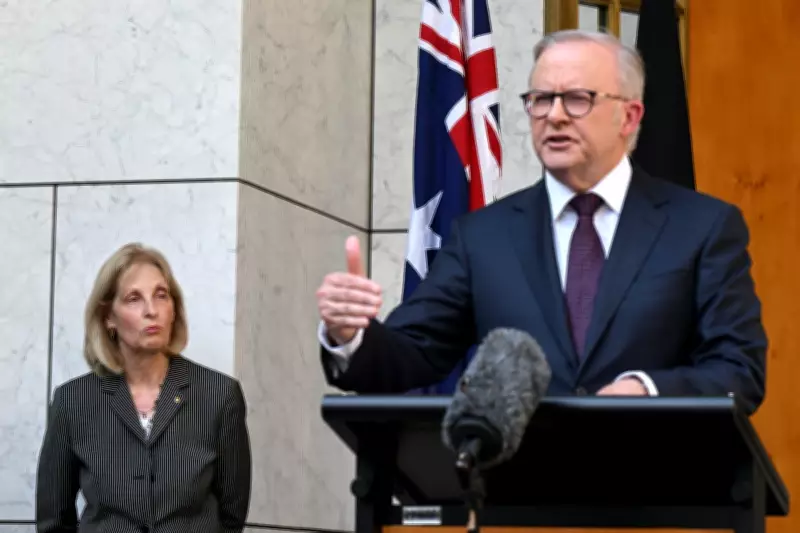
Australian Prime Minister Advocates for Removal of Prince Andrew from Royal Succession
In a significant political statement, Australian Prime Minister Anthony Albanese has expressed his support for removing Prince Andrew, the Duke of York, from the United Kingdom's line of succession. This position emerges amidst ongoing controversies surrounding the British royal family member and reflects growing international scrutiny of his status.
Albanese's Public Endorsement
Prime Minister Albanese made his stance clear during recent public remarks, aligning with calls from various quarters to reconsider Prince Andrew's position in the royal succession. The Australian leader's comments come at a time when the Duke of York continues to face public criticism and legal challenges related to past associations and behavior.
The Prime Minister emphasized that this position reflects both contemporary values and public expectations regarding those who hold positions of privilege and influence. His statement adds Australia to the list of Commonwealth nations questioning traditional royal arrangements in light of modern ethical standards.

Context of the Royal Controversy
Prince Andrew, the third child of Queen Elizabeth II, has been embroiled in controversy for several years, particularly following his association with convicted sex offender Jeffrey Epstein. Despite stepping back from royal duties in 2019, he remains eighth in line to the British throne, a position that has drawn increasing criticism from both within the UK and internationally.
The Australian Prime Minister's intervention highlights how royal matters continue to resonate across the Commonwealth, even as some nations reconsider their constitutional ties to the monarchy. Albanese's comments come during a period when Australia itself has been debating its future relationship with the British crown.
Broader Implications for the Monarchy
This development represents more than just commentary on an individual royal family member. It signals potential shifts in how Commonwealth nations engage with the institution of monarchy in the 21st century. The Australian position could influence discussions in other realms where the British monarch serves as head of state.
The Prime Minister's stance also reflects changing public attitudes toward accountability and privilege in democratic societies. As royal families worldwide face increased scrutiny, traditional protocols and successions are being reevaluated against contemporary ethical standards.
Political and Diplomatic Considerations
While Australia maintains the British monarch as its head of state, Prime Minister Albanese's comments demonstrate the complex relationship between constitutional monarchy and modern governance. His position on Prince Andrew's succession rights illustrates how domestic political leaders can influence discussions about royal matters without directly challenging the broader constitutional framework.
This development occurs against the backdrop of Australia's ongoing national conversation about potentially becoming a republic, though Albanese has carefully framed his comments about Prince Andrew as specific to that individual's circumstances rather than as commentary on the monarchy as an institution.
The Prime Minister's statement adds an international dimension to the pressure on the British royal family to address Prince Andrew's status definitively. As a significant Commonwealth nation, Australia's position carries particular weight in these discussions and may influence how other nations approach similar questions about royal succession and accountability.