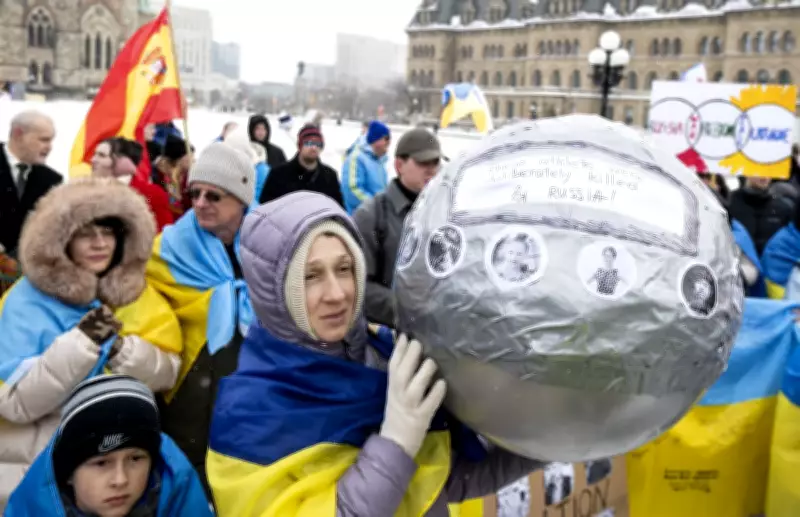
Banned Olympic Helmet Emerges as Potent Symbol at Ottawa Rally Supporting Ukraine
In a striking display of solidarity, a pro-Ukrainian demonstrator prominently held a helmet adorned with images of deceased Ukrainian athletes during a rally on Parliament Hill in Ottawa on Sunday, February 22, 2026. This powerful visual symbol replicates the exact helmet worn by Ukrainian skeleton racer Vladyslav Heraskevych, who faced disqualification during the 2026 Olympic Winter Games. The event underscored the ongoing global support for Ukraine amidst its prolonged conflict, transforming a piece of sports equipment into a rallying cry for justice and remembrance.
From Olympic Controversy to Protest Icon
The helmet's journey from the Olympic sliding track to the heart of Canada's political landscape highlights how sports symbolism can transcend athletic competition. Vladyslav Heraskevych's original helmet, which featured patriotic Ukrainian designs, became a focal point of controversy when Olympic officials deemed it non-compliant with uniform regulations, leading to his disqualification. This incident sparked international debate about political expression in sports, particularly given the context of Russia's ongoing war in Ukraine.
At the Ottawa demonstration, the replicated helmet served not only as a tribute to Heraskevych's defiance but also as a memorial to Ukrainian athletes who have perished since the full-scale invasion began four years prior. Organizers of the rally, one of sixty such events across Canada, emphasized that the helmet symbolizes resilience and the unbreakable spirit of the Ukrainian people. The visual echoed broader themes of sacrifice and perseverance that have characterized Ukraine's struggle for sovereignty.

Context of the Parliament Hill Demonstration
The rally occurred against a backdrop of significant geopolitical developments, including Canada's ongoing reassessment of its defence policies in support of Ukraine. Participants gathered to mark the fourth anniversary of Russia's full-scale invasion, calling for continued military aid and diplomatic pressure. The helmet, held aloft amidst Canadian and Ukrainian flags, provided a poignant connection between the world of international sports and the harsh realities of war.
Eyewitnesses described an emotional atmosphere on Parliament Hill, with speeches highlighting the importance of global solidarity. The presence of the helmet added a unique layer to the protest, reminding attendees of how Ukrainian athletes have used their platforms to advocate for their homeland, even at great personal cost. This demonstration was part of a coordinated series of events nationwide, reflecting sustained Canadian public support for Ukraine despite the passage of time.
Broader Implications and Reactions
The use of Heraskevych's helmet as a protest symbol has sparked discussions about the intersection of sports, politics, and activism. Sports analysts note that athletes from conflict zones often become inadvertent ambassadors, with their equipment and performances taking on deeper meanings. In this case, a simple piece of protective gear became a canvas for political statement and collective mourning.
Local Ottawa residents and Ukrainian community leaders expressed that the helmet's display helped personalize the distant conflict, making abstract statistics of war casualties more tangible. By focusing on athletes, the rally humanized the broader narrative of loss and resistance, connecting with Canadians who follow Olympic sports. The demonstration concluded peacefully, with organizers vowing to continue advocacy until Ukraine achieves victory and peace.
As the rally dispersed, the image of the helmet lingered as a testament to the enduring power of symbols in mobilizing public sentiment and fostering international solidarity in times of crisis.