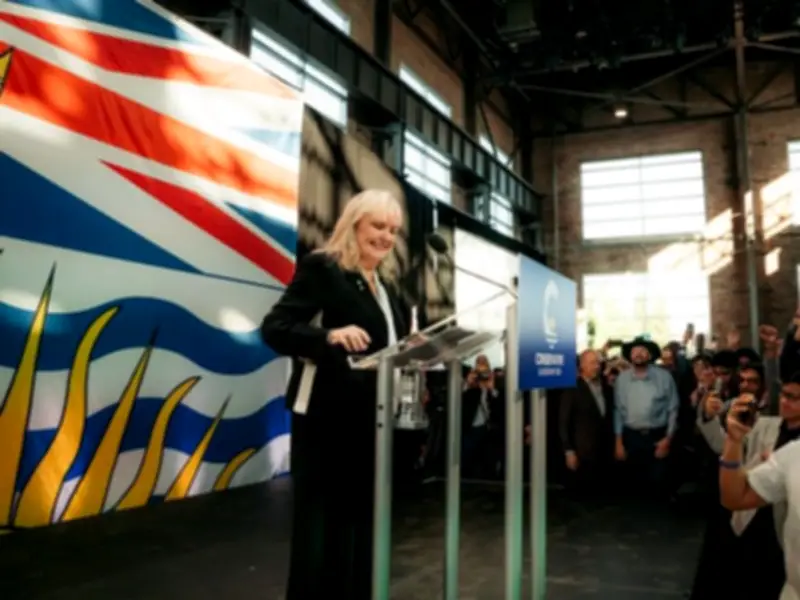
The B.C. Conservatives have a new leader, and political experts suggest the party may be moving toward a more right-wing, populist stance under Kerry-Lynne Findlay. This shift could distance the party from the centrist, big-tent approach historically associated with the B.C. Liberals, which served as the province's primary right-of-centre political force for many years.
Findlay's Vision for the Future
On Monday, Findlay expressed her confidence that her message will resonate with former supporters of the B.C. Liberals and other parties. Her goal is to defeat the B.C. NDP and form the province's first Conservative government in a century. "My view of the future is that anyone who believes in building opportunity and prosperity in B.C. will like our messaging and join in," said Findlay, a former long-serving federal Conservative MP. She emphasized that it does not matter where individuals have previously aligned politically, whether as old-time Socreds, B.C. Liberals, B.C. United, Conservatives, or even NDP voters. The key question, she stated, is whether they want to see progress in the province's economic situation.
Reconciliation with Former Rivals
Findlay noted that Peter Milobar, a former B.C. Liberal MLA who was a leadership rival, has already indicated his willingness to collaborate with her as the new party leader. She reciprocated this sentiment. During the leadership race, Findlay and Milobar exchanged harsh words when she suggested that Milobar could face a conflict of interest on First Nations issues due to his wife and children being Indigenous. Her remarks were widely condemned at the time, even by some federal Conservative MPs who had worked with her in Ottawa. However, Findlay stated on Monday, "It's about the future, it's not about the past … It's about getting on with a future vision. I'm open to talking to anyone who sees that as a future vision they can get behind."

Expert Analysis on Political Direction
Simon Fraser University political scientist Sanjay Jeram believes it is unlikely that Findlay, now leader of the Opposition, will fundamentally alter the populist style that secured her victory. According to Jeram, if Findlay attempts to "reshape her image" too much to appeal to centrist voters, it could backfire given the party's recent internal turmoil. He predicts that the Tories could still achieve success in the next provincial election without courting moderate voters by capitalizing on public dissatisfaction with the B.C. NDP and Premier David Eby. The next general election is scheduled for 2028, by which time the NDP will have held power for over a decade. Jeram notes that voter discontent typically grows the longer a party remains in office, and recent polls have not been favorable for Eby and his government.