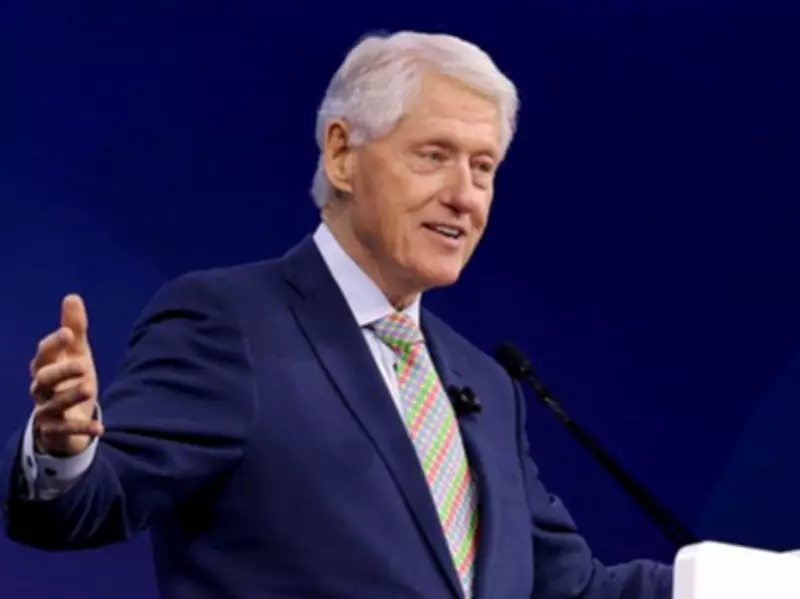
Former U.S. President Bill Clinton faced intense questioning from House Republicans in a closed-door deposition, where he firmly denied any wrongdoing in his relationship with the late convicted sex offender Jeffrey Epstein. The testimony, held in Chappaqua, New York, marks a historic moment as the first time a former president has been compelled to testify before Congress.
Clinton's Defense and Social Media Statement
In a statement shared on social media, Clinton asserted, "I saw nothing, and I did nothing wrong." He elaborated on his personal background, stating, "As someone who grew up in a home with domestic abuse, not only would I not have flown on his plane if I had any inkling of what he was doing, I would have turned him in myself and led the call for justice for his crimes, not sweetheart deals." This declaration came ahead of hours of grilling over his connections to Epstein, which spanned more than two decades and included Epstein's fundraising efforts, numerous visits to the White House, and photographs in Justice Department files.
Context of the Deposition and Hillary Clinton's Involvement
Clinton's testimony occurred just one day after his wife, former Secretary of State Hillary Clinton, sat for her own deposition with lawmakers. During the session, Bill Clinton emphasized his voluntary appearance, telling House Oversight Committee members that "no person is above the law, even presidents." He framed his testimony as an effort to restore public trust and aid Epstein's victims, stating he was there to "offer what little I know" to prevent similar crimes in the future. He maintained that he had no knowledge of Epstein's conduct at the time and ceased association with him years before the financier's crimes became public.

Defense of Hillary Clinton and Republican Scrutiny
Clinton also defended his wife, arguing it was "simply not right" for the committee to compel her appearance. He insisted she "had nothing to do with Jeffrey Epstein" and does not even remember meeting him. Throughout the deposition, Clinton repeatedly denied any personal wrongdoing, telling lawmakers he would not speculate under oath, even if his answers did not satisfy those seeking clarity. He challenged Kentucky Republican Rep. James Comer, the committee chairman, by saying, "With that, Mr. Chairman, fire away."
Republican Questions and Photographic Evidence
Republicans have long sought to question Clinton about Epstein, with interest intensifying after photos surfaced in Justice Department files released last year. These images showed Clinton seated next to a redacted individual with his arm around her, as well as a photo of Clinton and Epstein's associate Ghislaine Maxwell in a pool with another redacted person. Epstein visited the White House 17 times during Clinton's presidency, and the pair made several international trips together for humanitarian work. Rep. Comer highlighted these points, stating, "Men — and women for that matter — of great power and great wealth from all across the world have been able to get away with a lot of heinous crimes and they haven't been held accountable."
Democratic Calls for Further Testimonies
While Democrats supported the inquiry into Clinton, they argued that former President Donald Trump, who also had a relationship with Epstein, should be compelled to testify. Rep. Robert Garcia, the top Democrat on the committee, urged, "I think that President Trump needs to man up, get in front of this committee and answer the questions and stop calling this investigation a hoax." Comer countered by noting Trump has previously answered questions from the press on Epstein. Additionally, Democrats called for the resignation of Commerce Secretary Howard Lutnick, Epstein's longtime neighbour, after files revealed meetings between them in 2011 and 2012, contradicting Lutnick's claim of severing ties in 2005.

Implications and Ongoing Investigations
The deposition underscores ongoing political tensions and the broader scrutiny of powerful figures linked to Epstein. Clinton's testimony aimed to address public concerns, but questions remain about the extent of his involvement and the need for accountability among other high-profile individuals. As investigations continue, the focus shifts to whether further testimonies, including from Trump and Lutnick, will be pursued to uncover the full truth behind Epstein's network and its connections to political elites.