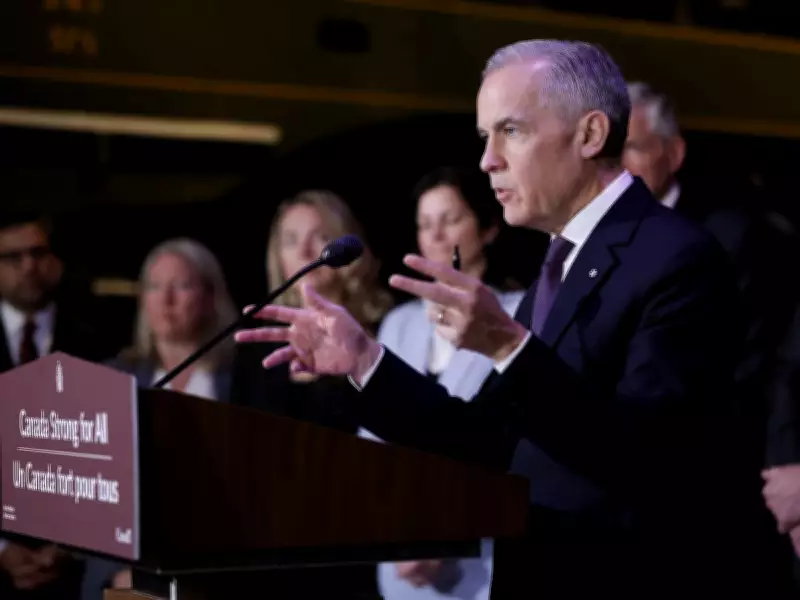
I don't know about you, but I'm in favour of Canada being strong. Canada weak is a bad idea. Canada wishy-washy lacks appeal. Canada strong has potential. The Canada Strong Fund announced Monday by Prime Minister Mark Carney would thus appear to have potential. It would have even more potential if we had any money for it. But we don't: the spring economic update Tuesday revealed we'll be $67 billion short of balance this year. So it appears we'll be borrowing the money to become strong. That's a problem right there folks.
The Debt Dilemma
As any bankrupt can tell you, spending more than you make, consistently, for years on end, usually comes to a bad ending. Imagine a homeowner announcing a personal Mortgage Strong Fund, involving a housing loan that never gets paid, grows larger with each passing year, is dependent on whatever interest rates lenders choose to charge, which declares itself open to 'investors' willing to kick in money to help meet the next payment, the return being that the guy owning the house doesn't go broke. Wouldn't be much of a waiting list of opened wallets, I'm inclined to think.
Skepticism from Experts
Those factors may be the reason the government's introduction of the fund — which isn't really a plan yet but more a pledge to work up a plan — was met with some doubts. 'Normally, a country sets up a sovereign wealth fund with excess money they have, but Canada has debt, rather than extra money,' the CBC perspicaciously noted, and wasn't alone in doing so. 'I don't think anyone is interested in a government slush fund, but they are interested in a properly independently minded wealth fund free from political influence,' noted John Ruffalo, managing partner of Maverix Private Equity fund.

The Canada Pension Plan Investment Board suggested the fund could possibly work as planned, 'depending on its final design.' Bank of Nova Scotia economist Derek Holt agreed that the devil, as always, 'will be in the details,' a shortage of which was notable. 'The way this new fund should be structured very much depends on its mandate,' said Sebastien Betermier of McGill University's Desautels Faculty of Management. 'So it will be critical to get the governance right.'
What the Fund Entails
Media people did their best to explain how the fund would work, a difficult task given no one really seems to know. It would start with $25 billion from the government, over three years. Outside investors would be welcome to contribute if they spotted anything worth investing in. The money — plus any profits, presumably — would be spent making Canada stronger, though just what that might mean was also not clear. 'The Fund will strategically invest, alongside the private sector, in Canadian projects and companies driving our economic transformation,' explained the official government announcement. 'This includes projects in clean and conventional energy, critical minerals, agriculture, and infrastructure.'
One of these days, these transformation-inducing brainstorms is going to have to produce an actual return. Until then, Canada Strong remains Canada deep in debt.