Terry Glavin: Canadians Are Right About Trump, But Trump Isn't America
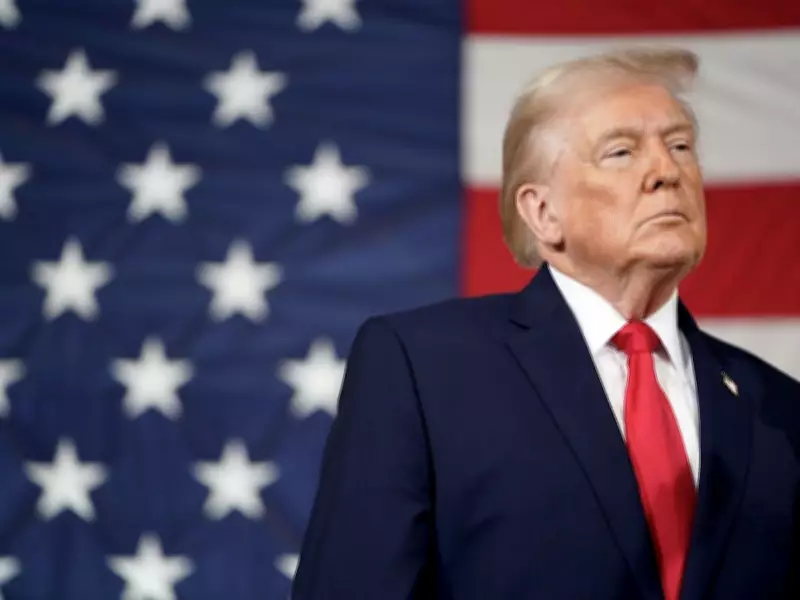
In a recent analysis, columnist Terry Glavin examines the troubling spectacle of Donald Trump's State of the Union address and its broader implications for global democracy. The event, which lasted nearly two hours, featured what Glavin describes as a "falsehood-strewn schoolboy encomium" to the president himself, punctuated by frenzied ovations from Trump's congressional supporters.
The State of American Democracy
Glavin paints a concerning picture of what has become of what was once considered the world's greatest democracy. This comes during what he notes is the 20th year of democracy's global retreat, coinciding with the fifth year of Ukraine's courageous resistance against Vladimir Putin's war of conquest - Europe's bloodiest conflict since the 1940s.
The United States, which once led the free world, now finds itself with a presidency that boasts about American arms manufacturers profiting from Ukrainian carnage, spreads falsehoods about the economic impact of tariffs, and makes dubious claims about ending multiple wars. The contrast between America's historical leadership and its current trajectory forms a central theme of Glavin's critique.

Ukraine and European Complications
The analysis delves deeply into the complex situation surrounding Ukraine's defense. Trump was re-elected partly on the false claim that the U.S. was spending twice as much as Europe on Ukraine's defense, when in reality the opposite was closer to the truth. During his address, Trump claimed that "everything we send over to Ukraine is sent through NATO and they pay us in full."
Meanwhile, the European Union faces renewed crisis in its efforts to support Ukraine. Despite having nearly offset 99 percent of the loss of American military and humanitarian aid since Trump's re-election, the EU's initiatives are being sabotaged by Hungarian Prime Minister Viktor Orbán, who happens to be both Trump's key European ally and Putin's key European ally.
International Alliances and Setbacks
Glavin details specific setbacks in European support for Ukraine. Last December, an EU push to dedicate approximately $200 billion in frozen Russian assets to Ukraine was quashed through what he describes as "the cowardice" of then-Belgian Prime Minister Bart De Wever and the connivings of Trump's envoy Steve Witkoff with Russia's foreign-wealth manager Kirill Dmitriev.
The EU's compromise solution, which granted Hungary an exemption from a $105 billion loan to Ukraine, is now faltering again. While Trump delivered his address, Orbán was in Budapest vowing to detonate the EU loan, claiming that Ukrainian President Volodymyr Zelenskyy was making it harder for Hungary to run its economy on discounted Russian oil.
Political Calculations and Global Implications
With Orbán facing a tight reelection race in April, the political calculations become increasingly complex. The situation was further complicated when U.S. Secretary of State Marco Rubio visited Budapest and stood beside Orbán at a press conference, declaring: "We want this country to do well, especially as long as you're the prime minister and the leader of this country. President Trump is deeply committed to your success, because your success is our success."
Glavin's analysis presents a sobering assessment of how Trump's America has reshaped international alliances and complicated global efforts to support democracy and resist authoritarian aggression. The column serves as both a critique of current American leadership and a warning about the fragile state of international cooperation in an increasingly polarized world.