CAQ Government Confronts Mounting Opposition Over Constitutional Abortion Reference
Justice Minister Simon Jolin-Barrette faced intense scrutiny at Quebec's National Assembly on Thursday as opposition parties demanded the removal of an abortion reference from his proposed provincial constitution. The controversy has sparked heated debate about reproductive rights and constitutional governance.
Sharp Exchange Highlights Fundamental Disagreement
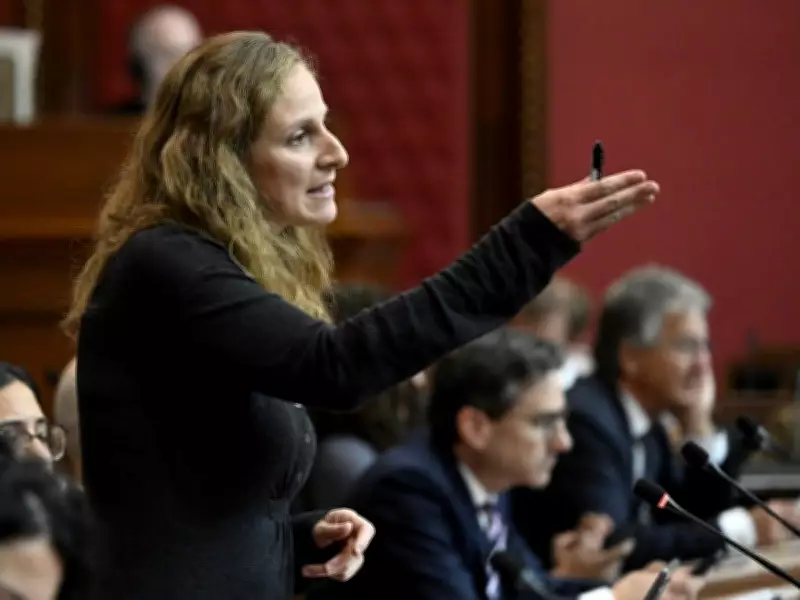
During a particularly pointed question period exchange, Québec solidaire MNA Christine Labrie delivered a stinging rebuke to the justice minister. "When you don't have a uterus, you should show a little restraint before telling women what is good for them to protect their right to abortion," Labrie declared, capturing the emotional intensity of the debate.
Labrie emphasized that no women's organizations, medical professionals, or legal experts support including abortion rights in the proposed constitution. "Everyone maintains that abortion is already protected by our charters and case law as a health-care service," she stated, arguing that the constitutional reference could actually jeopardize existing protections.

Growing Coalition of Opposition
The criticism extends beyond opposition parties to include significant civil society organizations. Women's advocacy groups and Quebec's professional order of lawyers have voiced concerns about Article 29 of the draft constitution, which contains the abortion reference. These organizations warn that anti-abortion groups could potentially use the constitutional language to challenge women's reproductive freedoms in court.
Even within the governing Coalition Avenir Québec, dissent has emerged. Both Christine Fréchette and Bernard Drainville—two candidates vying to replace Premier François Legault as party leader—have publicly expressed opposition to the abortion reference in the proposed constitution.
Minister Defends Inclusion as Protective Measure
Justice Minister Jolin-Barrette defended the inclusion of abortion rights in the constitutional proposal, stating it was intended "to ensure that Quebec positions itself very clearly on the side of women." He pointed to international developments, particularly the United States Supreme Court's overturning of Roe v. Wade, as justification for explicit constitutional protection.
"In recent years, throughout the Western world, there have been rollbacks in women's rights," Jolin-Barrette explained. "We do not want, in Quebec, for women's rights to go backwards." The minister noted that attempts to restrict abortion rights continue to surface in Canada's House of Commons, reinforcing his position that explicit constitutional protection is necessary.
Broader Constitutional Concerns Emerge
The abortion reference controversy occurs within a larger constitutional debate. Opposition parties have criticized the entire constitutional project, which was developed without prior public consultation. Liberal justice critic André Albert Morin called for the entire proposal to be scrapped, citing widespread concerns raised during recent hearings.
"He did everything wrong," Morin said of Jolin-Barrette. "He had an opportunity to sit with people, to listen to them, specifically with the Indigenous communities. But he didn't do it. So, what he wants is to push a caquiste constitution as fast as he can."
Indigenous groups have been particularly vocal in their opposition. Both the Cree Nation and Assembly of First Nations Quebec-Labrador have declared the CAQ's constitutional plan illegitimate, citing inadequate consultation.
Political Maneuvering and Blocked Motion
On Thursday, Labrie proposed a formal motion urging the government to withdraw the abortion reference from the constitutional draft. The motion gained support from legislators across party lines, including Liberal, Parti Québécois, and independent MNAs. However, the CAQ government blocked a vote on the motion, preventing parliamentary consideration of the issue.
Guillaume Cliche-Rivard, Québec solidaire's house leader, characterized the proposed constitution as deeply divisive. "It's clearer than ever that this is not a constitution for Quebec, but a constitution for Simon Jolin-Barrette," he asserted. "There's nothing in it that unites a people—quite the opposite."

Path Forward Remains Uncertain
With hearings on the constitutional proposal concluding Wednesday after involving more than 200 groups, Jolin-Barrette promised to analyze their recommendations. "We will govern ourselves accordingly," he stated, though he provided no specific timeline for revisions.
The controversy highlights fundamental questions about constitutional development, reproductive rights, and democratic consultation in Quebec. As opposition mounts from multiple directions, the CAQ government faces increasing pressure to either substantially revise its constitutional proposal or withdraw it entirely.