MUMBAI, INDIA — Prime Minister Mark Carney has taken his influential Davos message on an international tour, beginning in India with plans for Australia, explaining that the speech's powerful impact stems from voicing what numerous middle-power nations are silently contemplating about the evolving global order.
The Resonating Analogy from Totalitarian Regimes
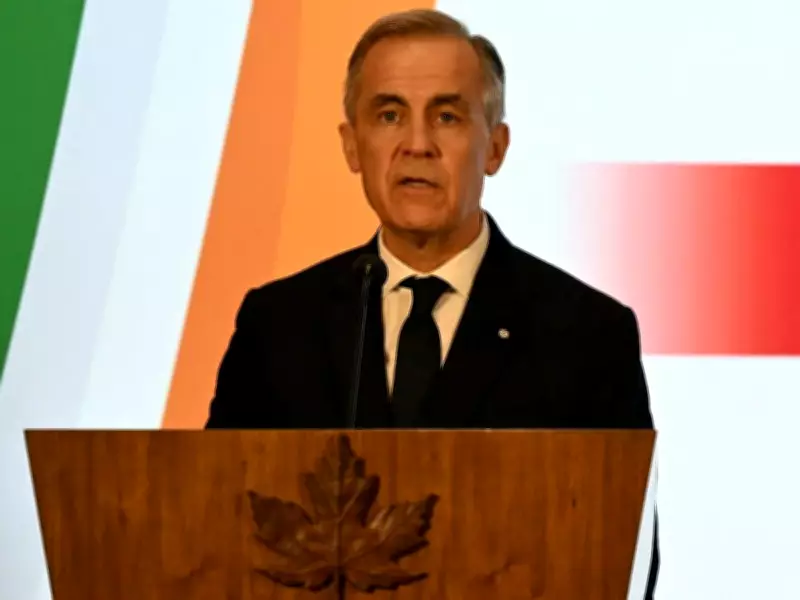
Addressing approximately one hundred business leaders in Mumbai during a Canada-India Growth and Investment Forum, Carney reflected on the widespread reaction to his World Economic Forum address. He emphasized that the core analogy, inspired by Václav Havel's essay about totalitarian control through public compliance, struck a chord because it revealed a shared unspoken reality.
"The analogy is there because in a totalitarian regime, everyone is thinking the same thing," Carney told the attentive crowd. "But you don't necessarily know that everyone's thinking the same thing. The reaction to that speech was, everyone's thinking the same thing."

Middle Powers Confronting Geopolitical Rupture
In his original Davos presentation, Carney transformed Havel's story about a shopkeeper displaying a pro-Communist sign without personal belief into a stark assessment of middle-power positioning. He argued that these nations must acknowledge their disrupted circumstances as traditional global structures face unprecedented challenges from major powers like the United States and China.
"This is a rupture, not a transition," Carney declared to the Mumbai audience, describing how familiar assumptions about geographic security and international institutions like the United Nations are now dangerously threatened.
International Reception and Strategic Messaging
Despite government officials minimizing whether Carney's travels would feature "Davos-type" addresses, his words continue captivating foreign listeners while establishing a framework for how Canada presents itself globally. The prime minister noted both public enthusiasm and substantive private discussions with nations including India, all grappling with similar geopolitical concerns.
Carney's Mumbai appearance blended elements of his Davos themes with specific economic sovereignty initiatives, portraying Canada and India as "natural partners" poised to benefit from strengthened economic connections. His message urges middle powers to collectively confront hegemonic pressures rather than maintaining symbolic compliance.
"The main thing I took from that speech," Carney confessed during his question-and-answer session with a CNBC India journalist, "I hate to say it — the analogy was right." This acknowledgment highlights how his call for nations to "take the sign out of the window" and address reality directly has generated international alignment and applause.